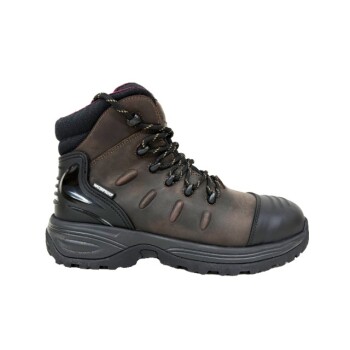
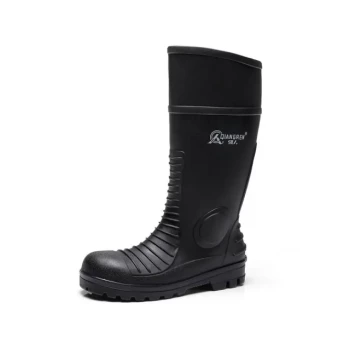
The direct correlation between mechanical precision and user safety dictates the necessity for rigorous assessment in industrial-grade equipment. Because this gear is subjected to high-frequency and heavy-load conditions, comprehensive quality checks and ongoing maintenance are essential to prevent structural failure and protect the user from irreversible physical harm.
Rigorous quality control and periodic maintenance serve as the critical defense against metal fatigue and mechanical failure. By preserving structural integrity, these processes ensure stable biomechanical feedback and prevent catastrophic injuries resulting from hidden defects.
The Mechanics of Structural Integrity
Withstanding Extreme Stressors
Industrial-grade sports and protective equipment are designed for high-frequency and heavy-load use. Unlike consumer-grade gear, these tools face constant, intense physical demands that push materials to their limits.
Without rigorous quality assessment, minute manufacturing imperfections can rapidly propagate under these loads. This transforms minor defects into critical failure points.
Combating Metal Fatigue
Over time, even the strongest materials degrade through metal fatigue. This is a cumulative process where repeated stress cycles weaken the structural cohesion of the equipment.
Periodic maintenance is the only way to detect early signs of fatigue before a fracture occurs. Ignoring this leads to sudden mechanical failure, often during peak exertion when the risk to the user is highest.
The Biomechanical Connection
Ensuring Stable Feedback
Equipment is not just a passive tool; it provides stable biomechanical feedback to the user. This feedback loop allows the user to adjust their movements and maintain control.
If mechanical precision is compromised, the equipment behaves unpredictably. This instability forces the user’s body to compensate in unsafe ways, increasing the likelihood of strain or accident.
Preventing Irreversible Injury
The ultimate goal of these protocols is the prevention of irreversible injury. When industrial-grade equipment fails, the energy release is often significant enough to cause permanent damage.
Defects that go unnoticed due to poor assessment directly endanger the user's long-term physical health.
Understanding the Trade-offs
The Cost of Downtime vs. Safety
Rigorous maintenance requires taking equipment out of service for inspection. This creates operational downtime, which can be seen as a logistical inefficiency or a financial cost.
However, this "cost" is negligible compared to the liability and human cost of an accident. Skipping maintenance to maximize uptime is a false economy that trades immediate availability for eventual catastrophic failure.
Complexity of Assessment
High-level quality assessment requires specialized knowledge and tools. It is not a casual visual check; it involves testing structural integrity and mechanical tolerances.
While this adds complexity to the management of the equipment, it is the only way to objectively verify safety. Relying on superficial inspections offers a dangerous sense of security without addressing the underlying mechanical reality.
Ensuring Reliability in High-Stakes Environments
To ensure the safety and longevity of your equipment, align your protocols with your specific operational goals:
- If your primary focus is User Safety: Implement strict, scheduled maintenance intervals to identify and mitigate metal fatigue before it compromises integrity.
- If your primary focus is Performance: Prioritize mechanical precision checks to guarantee the equipment provides consistent, stable biomechanical feedback.
- If your primary focus is Liability Management: Document every rigorous quality assessment to prove that structural integrity was verified against heavy-load standards.
True reliability is not an accident; it is the engineered result of relentless assessment and care.
Summary Table:
| Feature | Importance in Industrial Equipment | Risk of Neglect |
|---|---|---|
| Structural Integrity | Withstands high-frequency and heavy-load stress | Catastrophic material failure and fractures |
| Metal Fatigue Monitoring | Detects cumulative stress before visible damage | Sudden mechanical collapse during peak use |
| Biomechanical Feedback | Ensures stable and predictable tool behavior | Unpredictable movement leading to strain/injury |
| Maintenance Protocols | Prevents long-term liability and irreversible harm | False economy of uptime over human safety |
Partner with 3515 for Uncompromising Industrial Safety
As a large-scale manufacturer serving distributors and brand owners, 3515 offers comprehensive production capabilities for all footwear types, anchored by our flagship Safety Shoes series. We understand that in high-stakes environments, the structural integrity of protective equipment is non-negotiable.
Our extensive portfolio covers work and tactical boots, outdoor shoes, training shoes, and sneakers, as well as Dress & Formal shoes to meet diverse bulk requirements. By partnering with us, you gain access to precision-engineered products designed to withstand extreme stressors and deliver stable biomechanical feedback.
Secure your supply chain with gear that exceeds rigorous quality standards. Contact us today to discuss your bulk manufacturing needs and let us help you protect your users and your brand reputation.
References
- Chittaranjan Andrade. Physical Exercise and Health, 1. DOI: 10.4088/jcp.23f15099
This article is also based on technical information from 3515 Knowledge Base .
Related Products
- Premium KPU Athletic Safety Shoes for Wholesale
- Wholesale Customizable Safety Boots Durable & Protective Footwear Manufacturing
- Premium Waterproof High-Cut Industrial Safety Boots for Wholesale and Bulk Orders
- Wholesale Durable Safety Boots | Custom Steel Toe & Puncture-Resistant Manufacturing
- Durable Steel Toe Safety Boots Wholesale & Custom Manufacturing
People Also Ask
- What workplace hazards indicate the need for safety shoes? Identify risks to protect your workforce.
- How is the absence of PPE (safety shoes & helmets) categorized in construction motion data labeling? Unlock Real-Time Safety Insights!
- What is a recommended alternative to using hairspray for slip resistance? Ditch Unreliable Hacks for Real Safety
- What role does blockchain play in footwear supply chain transparency? Enhance Safety Shoe Traceability and Verification
- What role do specialized safety shoes play in preventing falls? Engineering Stability in Industrial Environments