
The primary reason to choose synthetic boots is their immediate, out-of-the-box performance and comfort. For many users, benefits like lighter weight, enhanced breathability, and a non-existent break-in period are more valuable for their specific needs than the absolute, long-term durability of traditional leather.
The decision between synthetic and traditional boots is a classic trade-off. Synthetics prioritize immediate, lightweight performance for a specific lifespan, while leather prioritizes long-term, repairable durability at the cost of weight and break-in time.
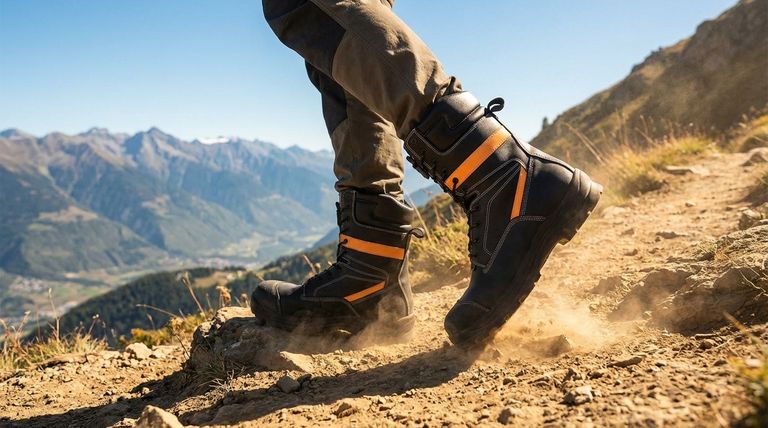
The Core Advantages of Synthetic Footwear
Modern synthetic boots are not simply a "cheaper" alternative to leather; they are engineered from the ground up to solve a different set of problems for the modern hiker. Their design philosophy centers on reducing fatigue and maximizing comfort on the trail.
Immediate Comfort and Minimal Break-In
Unlike stiff, full-grain leather boots that can take weeks of wear to mold to your feet, synthetic boots are built with more pliable materials. This means they are comfortable almost immediately, a critical advantage for occasional hikers or those buying gear for an imminent trip.
Significant Weight Reduction
Weight on your feet is exponentially more tiring than weight on your back. Synthetic materials are inherently lighter than leather, which translates directly to less energy expended with every step, reducing overall fatigue on long hikes.
Enhanced Breathability
Many synthetic boots incorporate mesh panels and advanced fabrics designed to let water vapor (sweat) escape. This superior breathability helps keep your feet drier and cooler, which is crucial for preventing blisters and maintaining comfort in warmer conditions.
Integration of Modern Technology
The synthetic platform is ideal for integrating specialized performance technologies. Features like Gore-Tex waterproof membranes and purpose-built Vibram outsoles are standard, offering reliable waterproofing and optimized traction that are engineered directly into the boot's design.
Understanding the Trade-offs
The benefits of synthetic boots come with clear and important compromises. Acknowledging these limitations is key to making an informed decision.
The Durability Compromise
This is the most significant trade-off. Synthetic fabrics, particularly at seams and high-flex points, will not withstand the same level of abrasion and long-term abuse as high-quality, full-grain leather. For rugged, off-trail scrambling, their lifespan is noticeably shorter.
Limited Repairability
Most synthetic boots are constructed in a way that makes them impossible to resole. Their lifespan is therefore tied directly to the life of the outsole. Once the tread wears down, the entire boot must be replaced, unlike traditional boots which can be resoled multiple times.
Long-Term Waterproofing
While a waterproof membrane like Gore-Tex is effective, it is not infallible. Over time, constant flexing can create microscopic tears that compromise the membrane. Furthermore, the outer synthetic fabric can wear out, exposing the delicate waterproof liner to damage.
Making the Right Choice for Your Hike
Choosing the right boot means aligning the material's strengths with your hiking goals. Neither option is universally "better," but one is likely better for you.
- If your primary focus is comfort on day hikes and weekend trips: The lightweight, breathable, and no-break-in design of synthetic boots is the clear winner.
- If your primary focus is long-term value and rugged durability: The repairability and sheer toughness of a traditional leather boot is a more suitable investment.
- If your primary focus is lightweight backpacking and covering long distances: Synthetic boots are purpose-built for this goal, where every ounce saved contributes to performance.
Ultimately, the best boot is the one that best serves the demands of your specific adventures.
Summary Table:
| Feature | Synthetic Boots | Traditional Leather Boots |
|---|---|---|
| Break-In Period | Minimal to none | Can be lengthy |
| Weight | Lighter | Heavier |
| Breathability | Generally higher | Generally lower |
| Durability | Shorter lifespan, less abrasion-resistant | Longer lifespan, more abrasion-resistant |
| Repairability | Limited, often cannot be resoled | High, can often be resoled multiple times |
| Best For | Day hikes, weekend trips, lightweight backpacking | Rugged, off-trail use, long-term investment |
Need the Perfect Boot for Your Market?
As a large-scale manufacturer, 3515 produces a comprehensive range of footwear for distributors, brand owners, and bulk clients. Our production capabilities encompass all types of shoes and boots, from high-performance synthetics to durable, full-grain leather.
We can help you:
- Source the right product for your target audience's specific needs.
- Develop custom footwear tailored to your brand's performance and design requirements.
- Ensure reliable supply with our extensive manufacturing capacity.
Let's discuss how we can support your business. Contact our team today to explore partnership opportunities!
Visual Guide
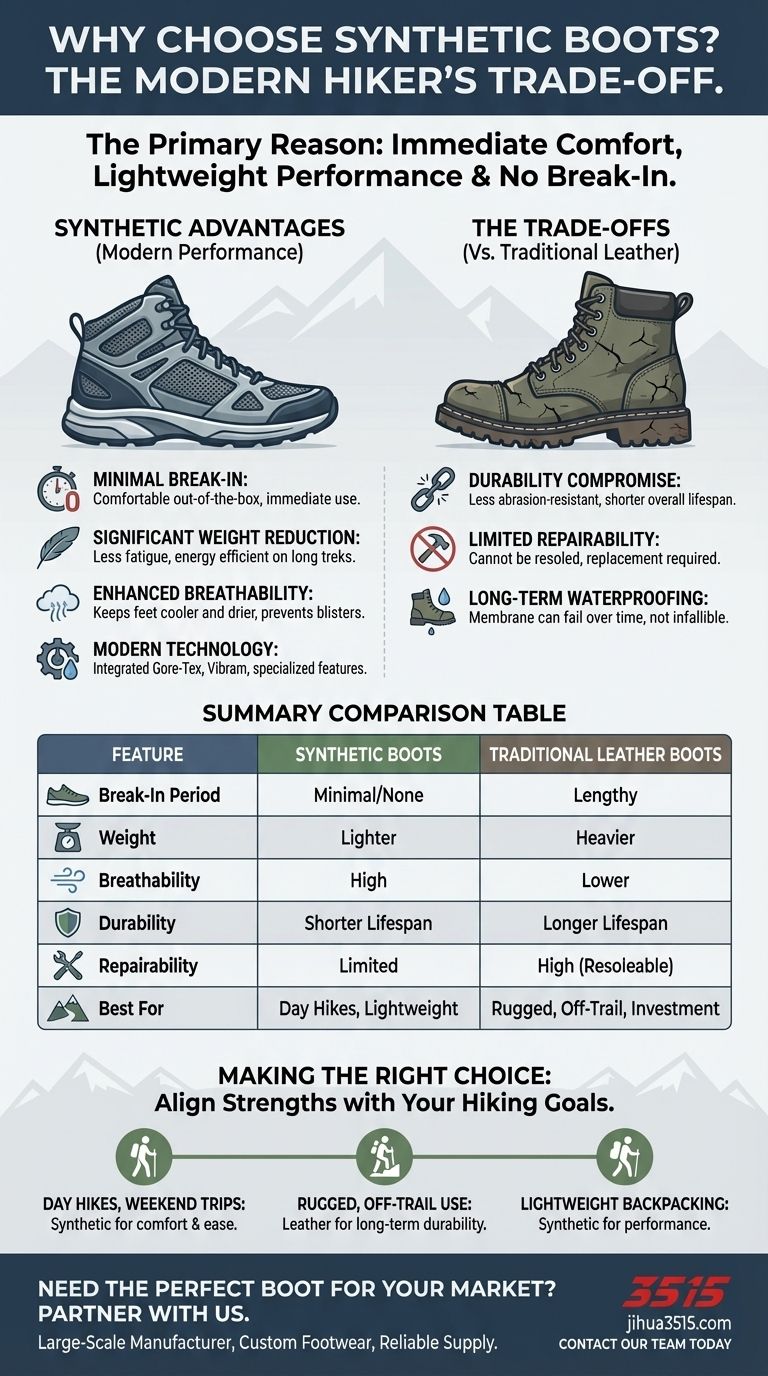
Related Products
- Durable Leather Work Boots for Wholesale & Custom OEM Manufacturing
- High-Traction Suede Tactical Boots Wholesale & Custom Manufacturing
- Durable Leather Tactical Boots Wholesale & Custom Manufacturing for Brands
- Durable Leather Work Boots for Wholesale & Custom Manufacturing
- Durable Leather Moc Toe Work Boots for Wholesale & Custom Manufacturing
People Also Ask
- What is the difference between full-grain and top-grain leather? Premium Material Guide for Boot Manufacturers
- What should you do when your work boots no longer serve their purpose? Don't Gamble with Your Safety
- What features distinguish work boots from other types of cowboy boots? A Guide to Safety vs. Riding Performance
- Why perform macrofoam swab sampling on work boots? Ensure Site Safety & Prevent Hazardous Cross-Contamination
- What are the key benefits of high-quality work boots? Unlock Safety, Comfort & Long-Term Value



















