
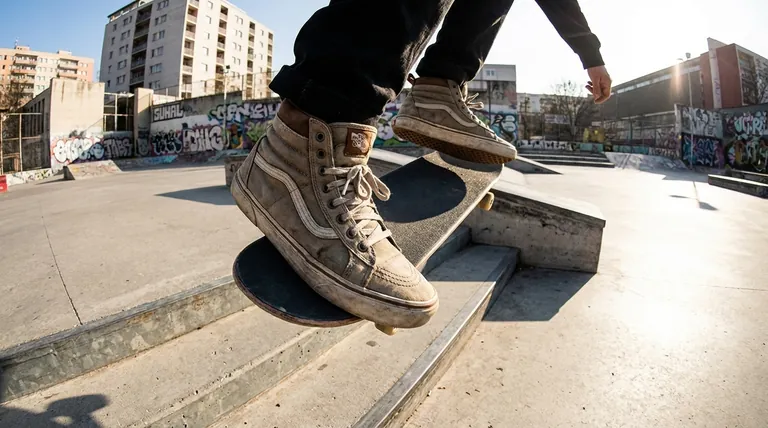
Skaters primarily choose high-top shoes for a combination of superior ankle protection and a distinct, culturally significant style. This design provides critical support and guards against common impacts, making it a functional piece of equipment, not just a fashion statement.
The decision to wear high-tops is a calculated trade-off. Skaters gain significant ankle support and impact protection in exchange for a slight reduction in flexibility, board feel, and the convenience offered by low-profile footwear.
The Functional Case for Ankle Protection
While style is a major factor, the practical benefits of a high-top are the most compelling reasons for its adoption in skateboarding. The design directly addresses the vulnerabilities of the ankle joint.
Guarding Against Impact
One of the most frequent and painful injuries in skateboarding comes from the board flipping up and striking the ankle bone. A high-top's padded collar provides a crucial layer of cushioning that can absorb or deflect this impact.
Stabilizing the Ankle Joint
The taller structure of a high-top acts as a light brace for the ankle. This added support can help prevent sprains and twists, especially when landing tricks awkwardly or bailing at high speed.
Building Confidence
For skaters tackling larger obstacles like stairs, gaps, or transition ramps, the psychological benefit is significant. The feeling of a secure, protected ankle can provide the confidence needed to commit to difficult and higher-risk maneuvers.
The Cultural Significance of Style
Beyond pure function, the high-top silhouette is deeply woven into the fabric of skate culture and history.
Roots in Basketball Heritage
Many of the most iconic skate shoes began as basketball footwear. Skaters in the '80s and '90s adopted shoes like the Nike Blazer, Air Jordan 1, and Vans Sk8-Hi for their durability and support, cementing the high-top as a classic and authentic look.
A Distinctive Aesthetic
The high-top shoe creates a specific silhouette that many skaters prefer. It interacts differently with cuffed or straight-leg pants and offers a larger canvas for colorways and design, contributing to an individual's personal style on and off the board.
Understanding the Trade-offs
Choosing a high-top shoe is not without its compromises. Skaters must weigh the benefits of protection against potential performance drawbacks.
Reduced Ankle Flexibility
The very structure that provides support also restricts the ankle's range of motion. Some skaters, particularly those focused on highly technical flatground tricks, feel this limitation hinders their board feel and the nuanced "flick" required for certain maneuvers.
Increased Heat and Weight
More material means less breathability and more weight. High-tops are noticeably warmer than their low-top counterparts, which can be a significant drawback during hot summer skate sessions.
The Convenience Factor
High-tops are simply less convenient. They take longer to put on, lace up, and take off compared to a low-profile or slip-on shoe, which can be a minor but daily annoyance for some.
Making the Right Choice for Your Skating
Your ideal shoe depends entirely on your personal priorities, skating style, and injury history.
- If your primary focus is maximum protection and support: High-tops are the definitive choice, especially if you skate stairs, gaps, or are prone to rolling your ankles.
- If your primary focus is board feel and agility: Low-tops will provide the flexibility and lightweight feel best suited for technical flatground and intricate ledge skating.
- If your primary focus is a blend of support and flexibility: Consider a mid-top shoe, which offers a compromise by protecting the ankle bone without fully restricting joint movement.
Ultimately, the best shoe is the one that gives you the confidence and comfort to step on your board and skate your way.
Summary Table:
| Feature | High-Top Shoes | Low-Top Shoes |
|---|---|---|
| Ankle Support | Excellent (stabilizes joint) | Minimal |
| Impact Protection | High (padded collar) | Low |
| Flexibility | Reduced | High |
| Board Feel | Slightly diminished | Superior |
| Style & Culture | Iconic, classic look | Sleek, modern |
| Best For | Stairs, gaps, transition, injury-prone skaters | Technical flatground, agility-focused skating |
Ready to gear up with the right skate shoes?
As a large-scale manufacturer, 3515 produces a comprehensive range of high-performance footwear for distributors, brand owners, and bulk clients. Whether you need durable high-tops for maximum protection or agile low-tops for technical skating, our production capabilities cover all types of skate shoes and boots.
Contact us today to discuss your footwear needs and leverage our expertise in creating gear that supports skaters' performance and style.
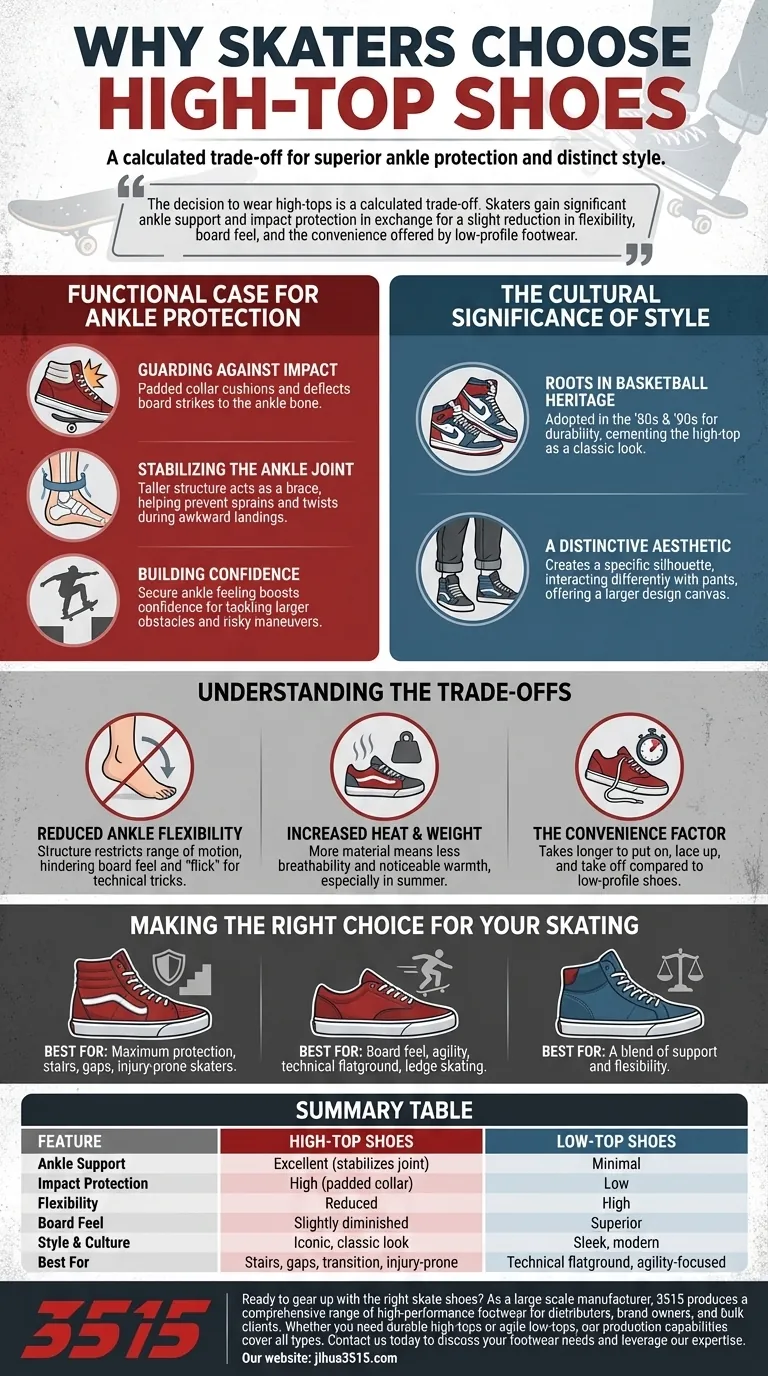
Visual Guide
Related Products
- Wholesale Durable Camouflage Canvas Shoes with High-Traction Cleated Rubber Sole
- Factory-Direct Wholesale Canvas Boots with High-Traction Rubber Soles
- Durable High-Ankle Tactical Boots Wholesale Manufacturer for Custom & Bulk Orders
- Premium Suede Sport Safety Shoes for Wholesale & Bulk Orders
- Durable High-Traction Canvas Sneakers Wholesale & Custom Manufacturing
People Also Ask
- Why is the selection of high-strength fabric materials necessary in the production of canvas shoes and training shoes?
- What are the properties of canvas as a shoe material? A Guide to Lightweight Comfort & Style
- Can canvas shoes be worn in rainy conditions? The Truth About Water Resistance
- What are some examples of vulcanized shoes? Discover the Flexibility and Board Feel of Classic Sneakers
- What are the characteristics of canvas as a shoe material? A Guide to Lightweight, Breathable Footwear



















