
At its core, proper toe room in work shoes is essential for preventing immediate pain and ensuring long-term foot health. A spacious toe box allows your toes to spread naturally as you stand and walk, accommodates the inevitable foot swelling that occurs throughout the day, and prevents painful conditions like blisters and pinching.
The need for adequate toe room is not about luxury; it is a fundamental requirement for comfort, stability, and injury prevention in any work environment that demands long hours on your feet.
The Functional Role of the Toe Box
The front of your shoe, known as the toe box, must provide enough space for your foot to function as it was designed. This becomes critically important under the stress of a long workday.
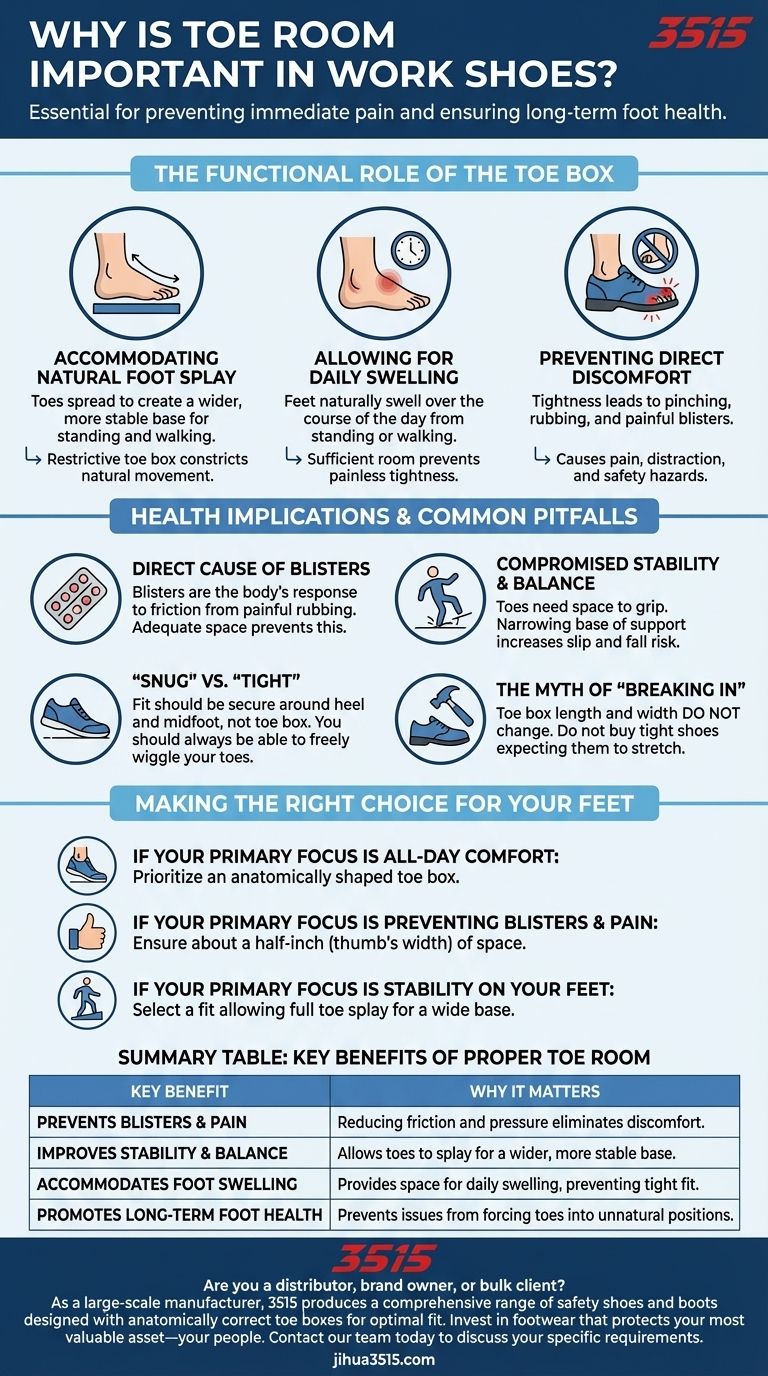
Accommodating Natural Foot Splay
When you stand, walk, or carry loads, your feet naturally splay, meaning your toes spread out to create a wider, more stable base.
A restrictive toe box constricts this natural movement, forcing your toes into a cramped, unnatural position.
Allowing for Daily Swelling
It is normal for feet to swell over the course of the day, especially if you spend hours standing or walking.
Sufficient toe room provides the necessary volume to accommodate this swelling, preventing the shoe from becoming painfully tight by the end of your shift.
Preventing Direct Discomfort
The most immediate consequence of a tight toe box is discomfort. Constant pressure and friction lead directly to pinching, rubbing, and the formation of blisters.
This not only causes pain but can also become a significant distraction and safety hazard at work.
The Health Implications of a Poor Fit
Ignoring the need for toe room can lead to issues that go beyond simple discomfort, affecting your overall foot health and stability.
The Direct Cause of Blisters
Blisters are your body's response to friction. When your toes are pressed against each other or the inside of the shoe, the resulting friction creates painful, fluid-filled sacs on the skin.
Adequate space is the simplest and most effective way to prevent this from occurring.
Compromised Stability and Balance
Your toes play a crucial role in maintaining balance. When they can spread and grip properly, you have a more stable foundation.
Forcing them together in a tight shoe narrows this base of support, which can subtly compromise your stability and increase the risk of slips or falls.
Common Pitfalls to Avoid
Choosing the right fit involves understanding the difference between a secure shoe and a damaging one.
"Snug" vs. "Tight"
A work shoe should fit securely around your heel and midfoot to prevent slipping, but this should never extend to the toe box.
You should always be able to freely wiggle your toes. If you can't, the shoe is too tight.
The Myth of "Breaking In"
While the upper materials of a shoe may soften over time, the fundamental length and width of the toe box will not change.
Never buy a shoe that feels too short or narrow with the expectation that it will stretch to become comfortable. The initial fit in the toe area is what you will have for the life of the shoe.
Making the Right Choice for Your Feet
Use your primary goal to guide your selection process for work footwear.
- If your primary focus is all-day comfort: Prioritize a shoe with an anatomically shaped toe box that mirrors the natural shape of your foot, allowing toes to rest without pressure.
- If your primary focus is preventing blisters and pain: Ensure there is about a half-inch (a thumb's width) of space between your longest toe and the front of the shoe.
- If your primary focus is stability on your feet: Select a fit that allows your toes to splay fully, creating the widest possible base to support your balance throughout the day.
Investing in footwear with proper toe room is a direct investment in your daily comfort and long-term health.
Summary Table:
| Key Benefit of Proper Toe Room | Why It Matters |
|---|---|
| Prevents Blisters & Pain | Reduces friction and pressure, eliminating a major source of discomfort. |
| Improves Stability & Balance | Allows toes to splay naturally, creating a wider, more stable base of support. |
| Accommodates Foot Swelling | Provides necessary space for normal daily swelling, preventing a tight fit by afternoon. |
| Promotes Long-Term Foot Health | Prevents long-term issues caused by forcing toes into an unnatural, cramped position. |
Are you a distributor, brand owner, or bulk client seeking reliable work footwear that prioritizes worker safety and comfort?
As a large-scale manufacturer, 3515 produces a comprehensive range of safety shoes and boots designed with anatomically correct toe boxes for optimal fit. Our production capabilities ensure every pair delivers the comfort, stability, and durability your workforce needs.
Invest in footwear that protects your most valuable asset—your people. Contact our team today to discuss your specific requirements and discover the 3515 difference.
Visual Guide
Related Products
- Durable Canvas Work Shoes with Rubber Lug Sole | Wholesale Manufacturer
- Durable Goodyear Welt Leather Work Boots for Wholesale & Private Label
- Durable Leather Work Boots for Wholesale & Custom OEM Manufacturing
- Durable Leather Work Boots for Wholesale & Custom Manufacturing
- Durable Leather Safety Boots for Wholesale & Custom OEM Manufacturing
People Also Ask
- What are the properties of canvas as a shoe material? A Guide to Lightweight Comfort & Style
- Why is the selection of high-strength fabric materials necessary in the production of canvas shoes and training shoes?
- What types of jobs are canvas work boots suitable for? Ideal for Light-Duty, High-Mobility Roles
- Can canvas shoes be worn in rainy conditions? The Truth About Water Resistance
- What are the functional advantages of choosing rubber soles over leather soles for work boots? Superior Safety & Durability
















