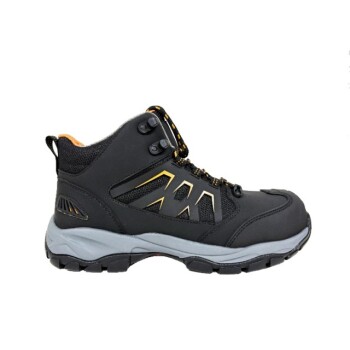
External ankle supports function as a critical barrier against injury by mechanically restricting dangerous joint movements. In the volatile environment of high-intensity sports, these devices—whether braces or specialized taping—serve a dual purpose: they provide physical stability to limit excessive inversion and enhance the athlete's sensory awareness. By constraining the joint during rapid directional changes, they form an essential component of an athlete's overall safety system.
Ankle supports are not merely passive accessories; they are active safety components that reduce injury risk by combining physical movement constraints with enhanced proprioceptive feedback during high-stress activities.
The Mechanics of Physical Stability
Limiting Excessive Joint Inversion
The primary mechanical function of external supports is to prevent the foot from rolling outward too far.
Ankle sprains occur most frequently when the ligaments are stretched beyond their natural range. Braces and tape act as a rigid check-rein, physically stopping the joint before it reaches this breaking point.
Protection During Dynamic Movement
High-intensity sports are defined by rapid changes of direction, jumping, and landing.
These specific actions place immense instantaneous torque on the ankle complex. External supports provide the necessary physical constraint to counteract these forces, keeping the joint aligned when muscle reaction time might be too slow.
The Sensory Advantage
Enhancing Proprioception
Beyond mechanical support, these devices play a vital role in the athlete's nervous system.
The pressure applied by the support enhances proprioception, which is the body's ability to sense its position in space. This heightened feedback loop allows the athlete to detect shifts in ankle position earlier, potentially triggering a protective muscular response.
Understanding the Trade-offs: Restraint vs. Freedom
The Necessity of Constraint
To provide safety, the support system must inherently limit range of motion.
This is a calculated trade-off where the prevention of excessive movement takes precedence over total joint freedom. The "physical constraint" mentioned in safety protocols is a feature, not a bug, designed specifically to mitigate risk during volatile maneuvers.
Making the Right Choice for Your Safety
Integrating Supports into Your Regimen
The use of external supports should be viewed as a standard safety protocol for high-risk environments.
- If your primary focus is Injury Prevention: Prioritize supports that offer rigid physical constraints to block excessive inversion during jumping and landing.
- If your primary focus is Movement Quality: utilize taping or bracing to enhance proprioception, giving you better awareness of your joint position during complex maneuvers.
External supports are a non-negotiable layer of protection that turns potential injuries into manageable situations.
Summary Table:
| Feature | Mechanical Function | Sensory Benefit |
|---|---|---|
| Inversion Control | Physically limits dangerous outward rolling | Prevents ligament over-stretching |
| Dynamic Support | Counteracts torque during rapid direction changes | Provides structural alignment |
| Proprioception | Constant pressure on the ankle joint | Faster neurological feedback loop |
| Impact Management | Absorbs force during jumping and landing | Reduces risk of acute joint trauma |
Partner with 3515 for Superior Footwear Safety
As a large-scale manufacturer serving distributors and brand owners, 3515 offers comprehensive production capabilities for all footwear types, anchored by our flagship Safety Shoes series. Our expert craftsmanship ensures that every pair provides the structural integrity and ankle support needed for high-intensity environments.
Our extensive portfolio covers work and tactical boots, outdoor shoes, training shoes, and sneakers, as well as Dress & Formal shoes to meet diverse bulk requirements. Let us help you deliver high-performance safety solutions to your customers—contact us today to discuss your wholesale or OEM needs!
References
- Yuta Sekine, Takayuki Komatsu. Descriptive epidemiology of injuries in Japanese collegiate men’s basketball: 2013/2014 to 2019/2020. DOI: 10.1186/s40621-022-00368-8
This article is also based on technical information from 3515 Knowledge Base .
Related Products
- Durable High-Ankle Tactical Boots for Wholesale & Custom Manufacturing
- Durable Leather High-Ankle Tactical Boots for Wholesale & Custom Manufacturing
- Wholesale Classic Leather Lace-Up Ankle Boots for Brand Manufacturing
- Durable High-Ankle Tactical Boots Wholesale Manufacturer for Custom & Bulk Orders
- Wholesale Leather Ankle Boots with Lug Soles for Custom Brand Manufacturing
People Also Ask
- How do tactical boots protect against injuries? Discover the Integrated Safety System
- What are the different types of tactical boots available? Find the Right Boot for Your Mission
- What are the main construction similarities between tactical boots and tactical sneakers? Built for Performance & Durability
- How does additive manufacturing equipment reduce environmental risks? Sustainable Tactics for Modern Footwear Production
- What is the role of high-frequency acquisition hardware in technical skill analysis for outdoor and tactical boots?