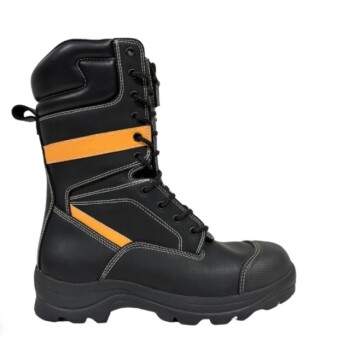
Standardized Personal Protective Equipment (PPE) is crucial because it provides verified performance reliability under stress. Unlike generic alternatives, standardized gear undergoes rigorous testing to guarantee effective isolation and cushioning against electric shocks, thermal splashes, and mechanical impacts. This validation ensures the equipment will not fail at physical limits during critical moments, effectively eliminating unsafe conditions and significantly reducing industrial disability rates.
Standardization replaces assumption with certainty. By ensuring protective gear meets rigorous performance thresholds, industrial standards transform PPE from a passive accessory into a verified isolation system that functions predictably during accidents.
The Mechanics of Verified Protection
Rigorous Performance Verification
The core value of standardization is predictability. Standardized PPE is subjected to strict verification processes to confirm it meets specific physical limits.
Non-standard or damaged equipment lacks this verification. This introduces a variable of uncertainty that can lead to catastrophic failure when protection is needed most.
Reliable Isolation and Cushioning
Welding environments present multi-faceted physical threats. Standardized gear provides a guaranteed layer of cushioning and isolation.
This includes insulation against high-voltage electric shocks and physical barriers against high-temperature splashes. It also ensures mechanical impact resistance, preventing blunt force trauma during accidents.
Mitigating Specific Welding Hazards
Blocking Radiation and Thermal Threats
Standardized equipment acts as a primary physical barrier against the unique byproducts of welding. It effectively blocks ultraviolet radiation and high-temperature splashes.
This specific protection reduces the risk of occupational injuries such as skin burns and electro-optical ophthalmia (welder's flash).
Respiratory and Chemical Defense
Beyond physical impacts, standardized PPE is essential for filtering environmental toxins. It is designed to block hazardous fumes generated during the welding process.
Enforcing the use of compliant gear directly lowers the incidence of respiratory infections and long-term lung damage.
Operational and Psychological Benefits
Ensuring Business Continuity
The use of industrial-grade PPE acts as an operational stabilizer. By preventing injuries, companies significantly reduce sick leave and personnel turnover.
This consistency protects the continuity of construction processes. It reduces the hidden costs associated with accident-related delays and retraining.
Enhancing Worker Morale
Safety is a psychological need as much as a physical one. Providing compliant, high-quality protective gear enhances worker morale and psychological security.
When workers feel physically secure, operational efficiency improves. A safe environment fosters focus and confidence among the workforce.
Understanding the Trade-offs
The Heat Encapsulation Effect
High-level protection often comes at a physiological cost. Industrial-grade PPE typically features high thermal insulation and low evaporative resistance.
While this protects against external heat, it also blocks the evaporation of sweat. Since sweat evaporation is the body's primary cooling mechanism, this can cause metabolic heat to accumulate.
Managing Physiological Strain
The result of this heat encapsulation is a potential rise in core body temperature. This increases the risk of dehydration and physiological heat strain.
Operators must balance the need for maximum external protection with the management of internal heat loads to prevent heat-related illness.
Making the Right Choice for Your Operations
To balance safety, efficiency, and worker health, consider the following specific goals:
- If your primary focus is Accident Prevention: Prioritize gear with verified ratings for thermal and electrical isolation to eliminate failure points during critical shock or splash events.
- If your primary focus is Operational Efficiency: Invest in high-quality, standardized gear to reduce turnover and sick leave, ensuring project timelines remain uninterrupted.
- If your primary focus is Worker Endurance: Select standardized equipment that balances protection with ventilation to mitigate the risk of heat encapsulation and dehydration.
Standardization is not just a regulatory check-box; it is the only way to ensure that the barrier between a worker and a hazard holds firm when it matters most.
Summary Table:
| Hazard Category | Protection Mechanism | Key Benefit of Standardization |
|---|---|---|
| Thermal & Flash | High-temperature barriers | Prevents skin burns and electro-optical ophthalmia |
| Electrical | Verified insulation layers | Guarantees protection against high-voltage electric shocks |
| Respiratory | Toxic fume filtration | Reduces long-term lung damage and respiratory infections |
| Mechanical | Impact resistance & cushioning | Minimizes blunt force trauma during industrial accidents |
| Psychological | Verified performance security | Increases worker focus, morale, and operational efficiency |
Secure Your Workforce with Certified Protection from 3515
In high-stakes industrial welding, there is no room for uncertainty. As a large-scale manufacturer serving distributors and brand owners, 3515 offers comprehensive production capabilities for all footwear types, anchored by our flagship Safety Shoes series.
Our standardized safety footwear provides the verified isolation and thermal resistance your clients need to mitigate industrial risks. Beyond safety boots, our extensive portfolio covers work and tactical boots, outdoor shoes, training shoes, and sneakers, as well as Dress & Formal shoes to meet diverse bulk requirements.
Partner with 3515 to ensure reliable protection and business continuity. Contact us today to discuss your bulk manufacturing needs and let us help you deliver excellence to your target market.
References
- Roza Asnel, Kursiah Warti Ningsih. Analisis Kecelakaan Kerja pada Pekerja Bengkel Las. DOI: 10.36763/healthcare.v12i1.376
This article is also based on technical information from 3515 Knowledge Base .
Related Products
People Also Ask
- Why are waterproof safety boots recommended for certain work environments? Essential Protection for Wet & Hazardous Jobs
- What materials are commonly used in waterproof boots? The Complete Guide to Durable, Breathable Protection
- How does boot construction affect waterproofing? The Science Behind Truly Dry Feet
- What should you look for to ensure boots are fully waterproof? The Essential 2-Part System
- What is the advantage of one-piece construction in waterproof boots? Unbeatable Seamless Protection