At its core, the lining of a shoe is the critical interface between your foot and the shoe's structure. It serves as the primary defense against discomfort and moisture, directly dictating the health and feel of your foot's environment.
While often overlooked, the shoe lining is a functional system, not just a cosmetic layer. Its primary jobs are to manage moisture, reduce friction, and regulate temperature, which are essential for both immediate comfort and long-term foot health.
The Core Functions of a Shoe Lining
A shoe's lining is the unseen workhorse responsible for the interior climate of your footwear. Its performance is tied directly to a few key responsibilities that go far beyond simple aesthetics.
Moisture Management and Breathability
Your feet can produce a surprising amount of sweat, especially during activity. A high-performance lining wicks this moisture away from your skin and allows it to evaporate.
This process is crucial for keeping your feet dry, which significantly reduces the risk of blisters and fungal growth. Materials like synthetic mesh are excellent for this purpose.
Friction Reduction and Comfort
The lining creates a smooth, consistent surface against your skin and socks. This barrier is essential for minimizing friction as your foot moves inside the shoe.
Without an effective lining, seams and rough materials from the shoe's upper would rub against your foot, creating painful hotspots and blisters.
Temperature Regulation
The right lining helps regulate the temperature inside your shoe. Breathable linings allow heat to escape, keeping your feet cool and comfortable in warm conditions.
Conversely, insulated linings, such as wool or shearling, are designed to trap heat and provide warmth in cold weather.
Common Lining Materials and Their Properties
The material used for the lining determines its performance characteristics. Understanding these materials helps you select the right shoe for your intended use.
Synthetic Mesh
This is the standard for athletic and performance footwear. Mesh is lightweight, highly breathable, and excels at wicking moisture away from the foot to keep it dry.
Leather
A traditional choice for dress and high-quality casual shoes, leather is durable and breathable. Over time, it conforms to the shape of your foot, providing a custom-fit feel.
Cotton or Canvas
Often found in casual sneakers, cotton is soft and breathable. However, its primary drawback is that it absorbs moisture rather than wicking it, which can lead to a damp feeling during prolonged wear.
Understanding the Trade-offs
Choosing the right shoe involves balancing competing factors, and the lining is no exception. There is no single "best" material, only the best material for a specific purpose.
Breathability vs. Durability
Extremely breathable and lightweight materials, like a very open mesh, might offer less long-term durability than a sturdy leather or dense synthetic lining. The constant rubbing from your foot can wear down delicate materials more quickly.
Initial Feel vs. Long-Term Performance
A very soft, plush lining might feel incredibly comfortable when you first try on a shoe. However, it may not manage moisture as effectively or hold its shape as well as a more technical, structured lining.
The Impact on Odor
Ultimately, a shoe's tendency to develop odor is almost entirely dependent on its lining's ability to manage moisture. A lining that stays damp creates the perfect environment for odor-causing bacteria to thrive.
Matching the Lining to Your Needs
To make the right choice, align the lining's properties with your primary activity.
- If your primary focus is athletic performance or use in hot weather: Prioritize a synthetic mesh lining for its superior moisture-wicking and breathability.
- If your primary focus is all-day comfort in a work or casual setting: Choose a leather lining for its balance of durability, breathability, and ability to mold to your foot.
- If your primary focus is affordability for light, casual wear: A cotton or canvas lining can be a perfectly suitable and comfortable option.
By understanding its function, you can see the lining for what it is: a critical component that defines the performance and comfort of your footwear.
Summary Table:
| Lining Material | Key Properties | Best For |
|---|---|---|
| Synthetic Mesh | Excellent moisture wicking, highly breathable, lightweight | Athletic performance, hot weather |
| Leather | Durable, breathable, molds to foot shape over time | All-day comfort, work, casual wear |
| Cotton/Canvas | Soft, breathable, affordable | Light, casual wear |
Need the Perfect Shoe Lining for Your Customers?
As a large-scale manufacturer, 3515 produces a comprehensive range of footwear for distributors, brand owners, and bulk clients. Our production capabilities encompass all types of shoes and boots, ensuring you get the ideal lining material—from high-performance mesh to durable leather—perfectly matched to your target market's needs.
Contact our experts today to discuss your production requirements and deliver superior comfort and performance.
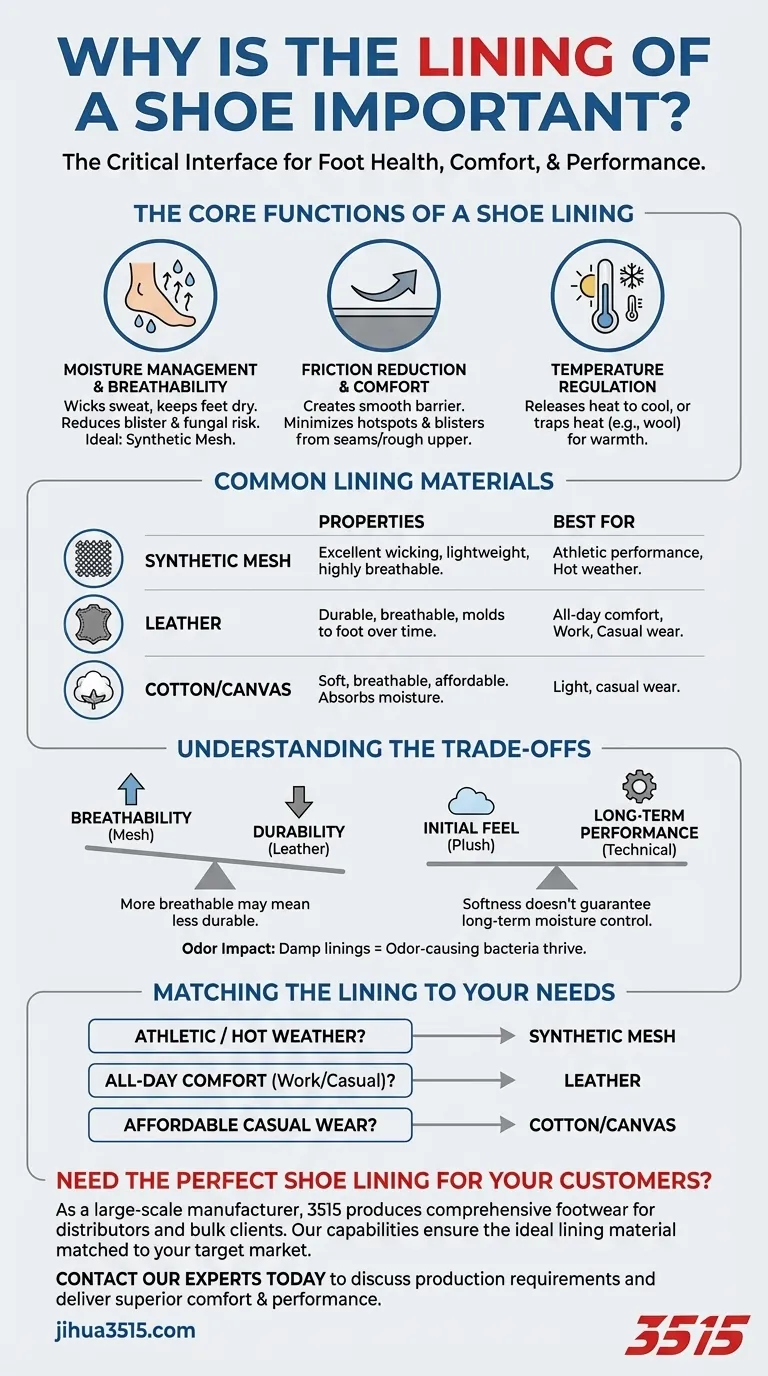
Visual Guide
Related Products
- Wholesale Durable Camouflage Canvas Shoes with High-Traction Cleated Rubber Sole
- Wholesale Breathable Perforated Leather Derby Shoes with Modern Comfort Sole
- Wholesale Modern Perforated Leather Derby Shoes with Chunky Sole for Custom Branding
- Wholesale Comfort Leather Business Shoes with Dial Lacing System
- Wholesale Leather Apron Toe Derby Shoes Custom Factory Production
People Also Ask
- Why is the selection of high-strength fabric materials necessary in the production of canvas shoes and training shoes?
- What are the properties of canvas as a shoe material? A Guide to Lightweight Comfort & Style
- Can canvas shoes be worn in rainy conditions? The Truth About Water Resistance
- What are some examples of vulcanized shoes? Discover the Flexibility and Board Feel of Classic Sneakers
- What are the characteristics of canvas as a shoe material? A Guide to Lightweight, Breathable Footwear