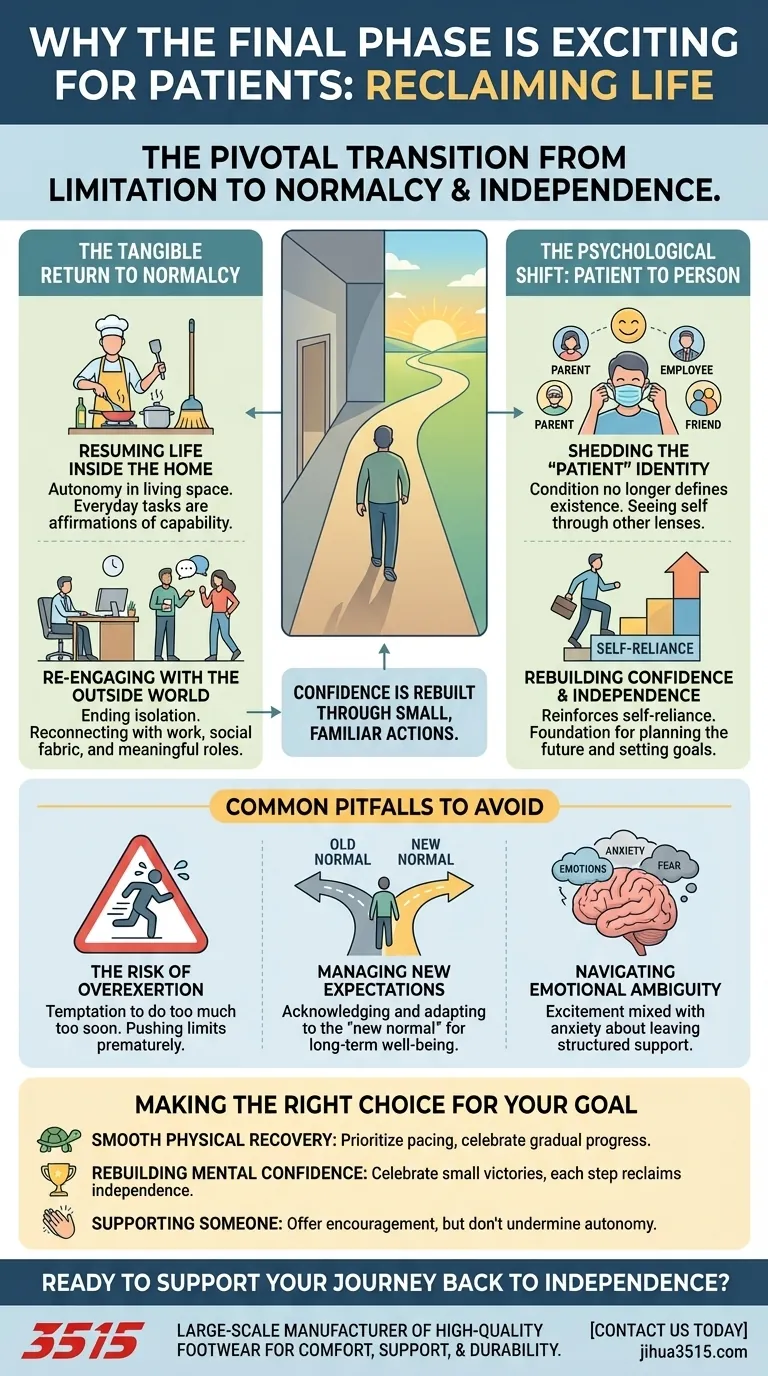
In short, the final phase is exciting for patients because it marks the pivotal transition from a period of limitation back to a life of normalcy and independence. It’s the moment they can begin resuming the regular activities, both big and small, that define their daily lives.
The excitement of this phase isn't just about doing more; it's about reclaiming a sense of self. It represents the shift from the identity of a "patient" back to being a person engaged with their world.

The Tangible Return to Normalcy
The ability to resume regular activities is the most concrete and powerful signal that a recovery or treatment journey is nearing its successful conclusion. This process unfolds both within the personal sanctuary of the home and in the wider community.
Resuming Life Inside the Home
The return of autonomy within one's own living space is a profound psychological boost.
Simple, everyday tasks like cooking, cleaning, or pursuing a hobby without assistance are not just chores; they are affirmations of capability and independence. This is where confidence is rebuilt, one small, familiar action at a time.
Re-engaging with the Outside World
Stepping back into the community marks the end of a period of isolation that often accompanies significant health challenges.
This means returning to work, socializing with friends, running errands, or simply enjoying public spaces. It's about reconnecting with the social fabric and resuming the roles and relationships that give life meaning.
The Psychological Shift: From Patient to Person
Beyond the physical actions, the final phase is defined by a critical internal transformation. It's a mental and emotional journey that runs parallel to the physical one.
Shedding the "Patient" Identity
During treatment or recovery, one's identity can become dominated by their condition. Doctor's appointments, medication schedules, and physical limitations can define one's existence.
The final phase allows this label to fall away. Resuming normal activities empowers individuals to see themselves through other lenses again: as a parent, an employee, a friend, or a hobbyist.
Rebuilding Confidence and Independence
Every activity successfully resumed is a piece of evidence that reinforces self-reliance. This process directly counters the feelings of helplessness or dependence that may have developed.
This renewed confidence is the foundation upon which individuals can begin to plan for their future again, setting new goals with the assurance that they are capable of achieving them.
Common Pitfalls to Avoid
While overwhelmingly positive, this exciting phase comes with its own set of challenges. Navigating it wisely is key to a sustainable and successful transition.
The Risk of Overexertion
The sheer excitement and relief can lead to a temptation to do too much, too soon. Pushing physical or mental limits prematurely can lead to setbacks, frustration, and even reinjury.
Managing New Expectations
"Normal" may not feel exactly as it did before. There may be new limitations, lingering effects, or a different level of energy. Acknowledging and adapting to this "new normal" is crucial for long-term well-being.
Navigating Emotional Ambiguity
Excitement is often mixed with other emotions, such as anxiety about leaving the structured support of a medical team or fear of a potential relapse. These feelings are a normal part of the process and should be acknowledged.
Making the Right Choice for Your Goal
Successfully navigating this phase is about balancing enthusiasm with self-awareness.
- If your primary focus is a smooth physical recovery: Prioritize pacing and listen to your body, celebrating gradual progress over immediate, all-out effort.
- If your primary focus is rebuilding mental confidence: Acknowledge and celebrate small victories, as each one is a step toward reclaiming your independence.
- If your primary focus is supporting someone in this phase: Offer encouragement and practical help, but be careful not to undermine their growing sense of autonomy.
This final phase is a testament to resilience and marks the true beginning of the next chapter.
Summary Table:
| Key Aspect | Why It's Exciting |
|---|---|
| Return to Normalcy | Resuming daily activities and routines that define your life. |
| Psychological Shift | Transitioning from a "patient" identity back to being yourself. |
| Rebuilding Confidence | Each small success reinforces independence and self-reliance. |
| Re-engaging with the World | Ending isolation and reconnecting with community, work, and social life. |
Ready to support your journey back to independence?
At 3515, we understand that the final phase of recovery is about reclaiming your life. As a large-scale manufacturer, we produce a comprehensive range of high-quality footwear designed for comfort, support, and durability, helping you confidently resume your daily activities.
Whether you are a distributor, brand owner, or a bulk client seeking reliable footwear for those taking their first steps back to normalcy, our production capabilities encompass all types of shoes and boots to meet your needs.
Contact us today to learn how our footwear can support your goals and the people you care for.
Visual Guide