
In short, technical motorcycle footwear is critical because your feet and ankles are exceptionally vulnerable to catastrophic injury from abrasion, impact, and crushing forces during both a crash and routine stops. Standard shoes offer virtually no protection and can disintegrate on impact, whereas certified motorcycle boots are engineered and rigorously tested to shield you from these specific, high-risk dangers.
The core reason for specialized motorcycle footwear is that it acts as a structural safety cell for your feet and ankles. Unlike regular shoes, it is designed to withstand the unique physics of a motorcycle incident—sliding on asphalt, being struck by objects, or being crushed under the weight of the bike itself.
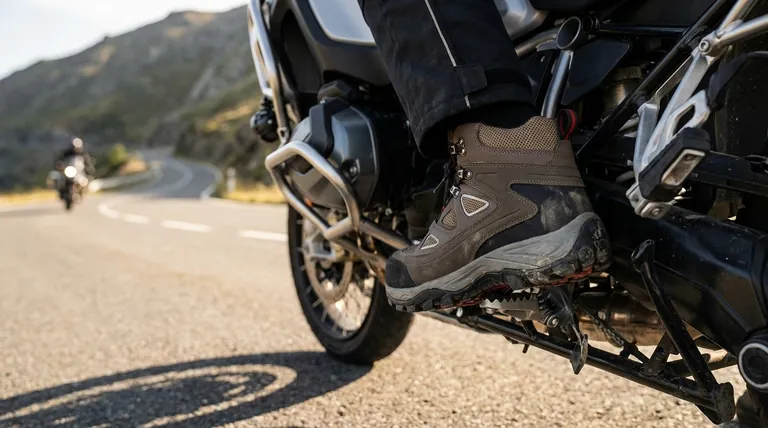
The Unique Dangers Your Feet Face on a Motorcycle
To understand the need for protective gear, we must first appreciate the specific risks involved. Your feet are on the front line of danger in almost any motorcycle incident, from a minor slip to a high-speed crash.
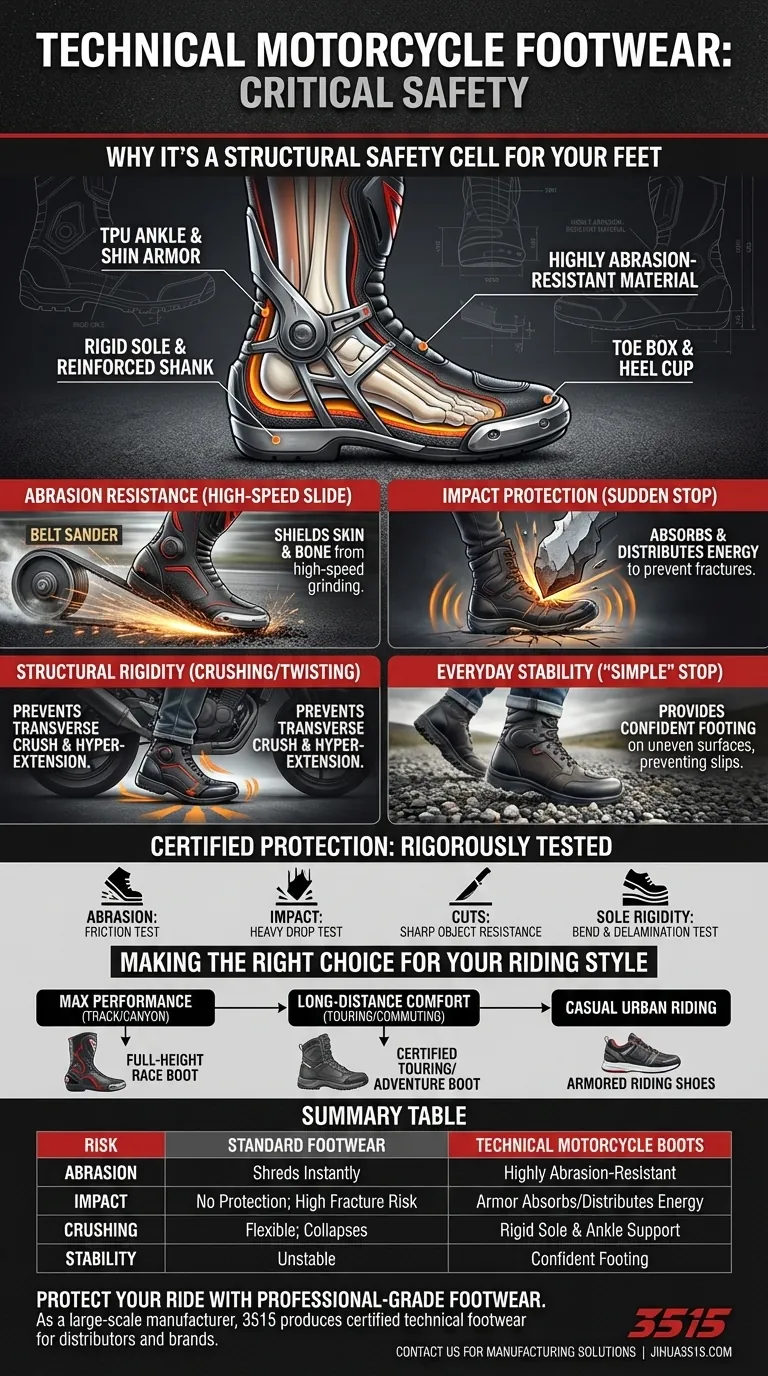
The High-Speed Slide: Abrasion Resistance
When you fall, your body will slide across the pavement. Asphalt acts like a high-speed belt sander, and materials like canvas, mesh, or even standard leather are shredded in seconds.
Certified motorcycle boots are built from highly abrasion-resistant materials and are tested to ensure they don't wear through, protecting your skin and bone from being ground away.
The Sudden Stop: Impact Protection
During an accident, your feet can strike the ground, another vehicle, or road debris with immense force. Even a low-speed tip-over can bring the full weight of the motorcycle down on your ankle.
Technical footwear incorporates armor, often made of thermoplastic polyurethane (TPU), over the ankles, heel, and shin. This armor is designed to absorb and distribute the energy from a sudden impact, preventing fractures.
The Twisting and Crushing: Structural Rigidity
Your foot and ankle are complex structures with many small bones and ligaments that are not meant to bend sideways or be compressed.
Motorcycle boots are engineered with a rigid sole and reinforced ankle construction to prevent transverse crush (crushing from the side) and hyper-extension. This structural integrity is a key feature that separates them from any other type of footwear.
The "Simple" Stop: Everyday Stability
The references correctly highlight the danger of frequent stops. Placing your foot down on an uneven surface, loose gravel, or an oil slick can cause a slip that snaps an ankle under the bike's weight.
The stiff sole and robust ankle support in a proper boot provide the stability needed to manage the motorcycle's weight confidently, turning a potential injury into a non-event.
What "Certified Protection" Really Means
When you see a boot labeled as certified, it means it has passed a series of standardized, brutal tests. This certification is your assurance that the gear will perform when you need it most.
Resistance to Abrasion
The boot's material is subjected to intense friction to simulate a long slide on pavement, ensuring it won't tear open and expose your foot.
Protection from Impact
Key areas like the ankle and shin are tested by dropping heavy, sharp objects onto them to measure how well the armor dissipates the force and prevents penetration.
Resistance to Cuts
The boot's upper materials are tested for their ability to resist being cut by sharp objects, a common hazard in a crash scene.
Sole Rigidity and Delamination
The sole is tested to ensure it won't bend unnaturally or peel away from the boot under stress, which is crucial for preventing your foot from being crushed or twisted.
Making the Right Choice for Your Riding Style
Choosing the right footwear involves balancing protection with the demands of your specific type of riding.
- If your primary focus is maximum performance and safety (track days, aggressive canyon riding): A full-height race boot with extensive external armor is the only acceptable choice.
- If your primary focus is long-distance comfort and all-weather capability (touring, commuting): Look for certified touring or adventure boots that offer a balance of robust protection, waterproofing, and off-bike walkability.
- If your primary focus is casual urban riding: Armored riding shoes that look like sneakers or casual boots provide a critical baseline of ankle armor, abrasion resistance, and crush protection that regular shoes completely lack.
Ultimately, investing in certified motorcycle footwear is one of the most important safety decisions a rider can make.
Summary Table:
| Risk | Standard Footwear | Technical Motorcycle Boots |
|---|---|---|
| Abrasion (Sliding) | Shreds instantly on asphalt | Highly abrasion-resistant materials |
| Impact (Crash) | No protection; high fracture risk | Armor (TPU) absorbs/distributes energy |
| Crushing/Twisting | Flexible; collapses under weight | Rigid sole & ankle support prevents injury |
| Everyday Stability | Unstable on uneven surfaces | Stiff sole provides confident footing |
Protect Your Ride with Professional-Grade Footwear
As a large-scale manufacturer, 3515 produces a comprehensive range of certified technical footwear for distributors, brand owners, and bulk clients. Our production capabilities encompass all types of motorcycle boots, from full-height race boots to armored casual shoes, ensuring your customers get the critical protection they need.
Let us help you equip riders with safety gear that performs when it matters most.
Contact us today to discuss your footwear needs and explore our manufacturing solutions.
Visual Guide
Related Products
- Wholesale Tactical Boots High-Traction & Reflective for Bulk & Brand Orders
- High Performance Fire-Retardant Waterproof Safety Boots
- Durable Goodyear Welt Leather Work Boots for Wholesale & Private Label
- Wholesale High-Traction Camo Boots - Custom Manufacturer for Brands
- Heavy-Duty Waterproof Nubuck Safety Boots Safety Shoes for Bulk Supply
People Also Ask
- How do tactical boots protect against injuries? Discover the Integrated Safety System
- How does creative short video content support functional footwear sales? Boost Trust and Traffic with Visual Proof
- What features enhance breathability and comfort in tactical boots? A Guide to Superior Footwear Performance
- How should you break in and clean tactical boots? A Step-by-Step Guide for Peak Performance
- Why are tactical work boots ideal for law enforcement? Boost Performance & Safety



















