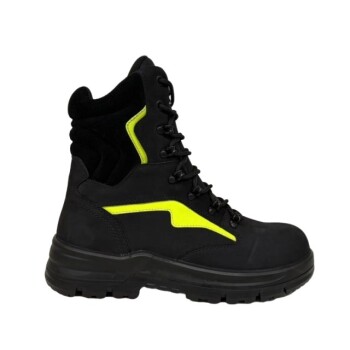
At its core, protective footwear is a critical engineering control designed to prevent debilitating and often life-altering injuries in heavy work environments. It serves as the last line of defense between a worker and a range of severe physical hazards, from crushing impacts and sharp object punctures to electrical shocks and slips on hazardous surfaces.
The true importance of protective footwear is not just in preventing a single type of accident, but in providing a comprehensive safety system that mitigates multiple, simultaneous risks while also reducing the long-term physical strain that leads to chronic injury and fatigue.
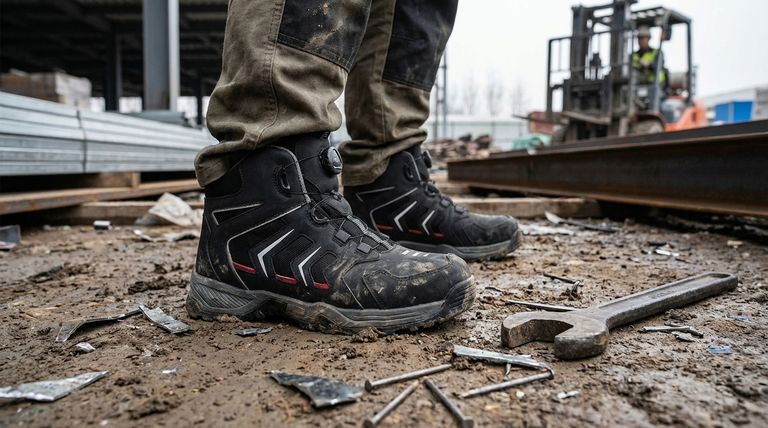
The Primary Layers of Protection
Understanding why safety footwear is essential requires looking at the specific, distinct hazards it is engineered to defeat. Each feature addresses a common and potentially severe workplace danger.
Impact and Compression
This is the most well-known function. Safety toes, made from steel, aluminum, or composite materials, are designed to protect the foot from falling objects and the immense pressure of rolling equipment, such as forklifts or carts.
Without this protection, a dropped tool or a rolling cart wheel can easily result in crushed bones, leading to long-term disability.
Puncture and Penetration
Construction sites, demolition areas, and maintenance floors are often littered with sharp objects like nails, screws, and metal shards.
Puncture-resistant footwear contains a special plate—often made of steel or a flexible composite material like Kevlar—in the midsole that prevents these objects from piercing the sole and injuring the foot.
Slips, Trips, and Falls
According to safety regulators, slips, trips, and falls are among the most common causes of workplace injuries.
Protective footwear addresses this with specialized slip-resistant outsoles. The material compound and tread pattern are engineered to maintain grip on wet, oily, or uneven surfaces, dramatically reducing the risk of a fall.
Electrical Hazards
For electricians, maintenance staff, and anyone working near live circuits, electrical shock is a deadly risk.
Electrical Hazard (EH) rated footwear is constructed with non-conductive materials for the sole and heel. This design insulates the wearer from the ground, significantly reducing the chance of completing an electrical circuit and suffering a severe shock.
Beyond Immediate Injury: The Ergonomic Imperative
The importance of protective footwear extends beyond preventing acute injuries. For anyone who spends hours on their feet, the right footwear is a crucial tool for long-term health and daily performance.
Reducing Fatigue and Strain
Standing and walking on hard surfaces like concrete for long periods sends repetitive stress through the feet, legs, and up into the lower back.
Quality protective footwear incorporates proper arch support, cushioning, and shock absorption. These ergonomic features reduce muscle fatigue, minimize joint strain, and can prevent chronic conditions like plantar fasciitis and back pain.
The Link Between Comfort and Safety
Discomfort is a major distraction. When a worker is focused on their aching feet, their situational awareness decreases, making them more susceptible to other accidents.
By providing a stable and comfortable platform, proper footwear allows workers to focus entirely on the task at hand, creating a safer overall environment.
Common Pitfalls to Avoid
Simply mandating "safety shoes" is not enough. To truly capture the benefits, you must avoid common misunderstandings and mistakes.
The Myth of "Clunky and Heavy"
Early safety boots were notoriously heavy and uncomfortable. However, modern materials have changed the game. Composite safety toes offer robust protection at a fraction of the weight of steel, and advanced ergonomic designs make many safety shoes as comfortable as athletic footwear.
Choosing the Wrong Tool for the Job
Not all protective footwear is the same. An electrician wearing steel-toed boots without an EH rating is poorly protected from their primary hazard. A warehouse worker in boots without adequate slip resistance is vulnerable.
The specific hazards of the job must dictate the specific features of the footwear. Always check the ASTM (American Society for Testing and Materials) or other relevant safety rating labels inside the shoe.
Neglecting Proper Fit and Maintenance
Even the most advanced safety boot is rendered ineffective if it doesn't fit correctly. A poor fit can cause blisters, reduce stability, and create a dangerous distraction.
Furthermore, worn-out soles or exposed safety toes are signs that the footwear's protective capabilities are compromised and that it needs to be replaced immediately.
Making the Right Choice for Your Environment
To ensure maximum safety and effectiveness, match the footwear's features to the primary risks of the work environment.
- If your primary focus is construction or heavy manufacturing: Prioritize footwear with the highest impact/compression ratings (I/75, C/75) and puncture resistance (PR).
- If your primary focus is electrical work: Insist on footwear with a certified Electrical Hazard (EH) rating and avoid conductive materials like steel toes if possible.
- If your primary focus is a wet or oily environment: The most critical feature is a highly-rated, slip-resistant outsole designed specifically for those conditions.
- If your primary focus is all-day standing or walking: Look for ergonomic designs that emphasize anti-fatigue insoles, arch support, and lightweight construction.
Ultimately, viewing protective footwear as an essential piece of personal protective equipment is fundamental to creating a safe and productive workplace.
Summary Table:
| Hazard Type | Protective Feature | Key Benefit |
|---|---|---|
| Impact & Compression | Safety Toe (Steel, Composite) | Protects against crushing injuries from falling objects. |
| Puncture & Penetration | Puncture-Resistant Midsole | Prevents sharp objects like nails from piercing the sole. |
| Slips, Trips & Falls | Slip-Resistant Outsole | Provides grip on wet, oily, or uneven surfaces. |
| Electrical Hazards | EH (Electrical Hazard) Rating | Insulates the wearer to reduce the risk of electric shock. |
| Fatigue & Strain | Ergonomic Design & Cushioning | Reduces long-term strain and increases comfort for all-day wear. |
Ensure your team is equipped with the right protective footwear for their specific hazards.
As a large-scale manufacturer, 3515 produces a comprehensive range of safety footwear for distributors, brand owners, and bulk clients. Our production capabilities encompass all types of safety shoes and boots, engineered to meet the highest safety standards (like ASTM) while providing superior comfort and durability.
We help you protect your workforce effectively. Contact our experts today to discuss your specific needs and receive a customized solution.
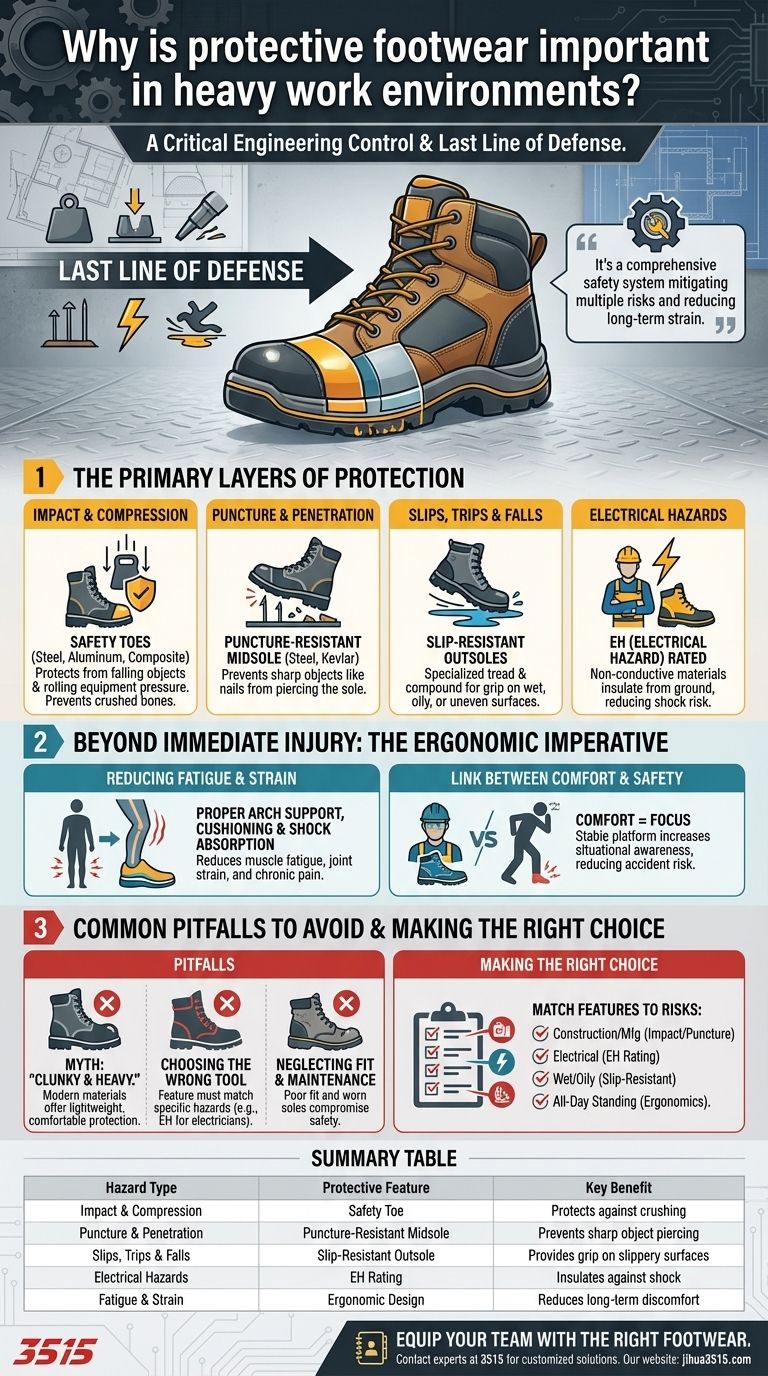
Visual Guide
Related Products
- Premium Suede Sport Safety Shoes for Wholesale & Bulk Orders
- Premium Lightweight Safety Shoes for Wholesale & Bulk Orders
- Premium Waterproof Nubuck Safety Boots for Wholesale
- Wholesale Customizable Safety Boots Durable & Protective Footwear Manufacturing
- Wholesale Anti-Smash & Puncture-Proof Safety Shoes Custom Manufacturing for Brands
People Also Ask
- What industries have specific OSHA footwear requirements? Ensure Compliance & Protect Your Workforce
- What are the primary functions of professional safety shoes? Maximize Safety in Water Supply Confined Spaces
- What role do specialized safety shoes play in preventing falls? Engineering Stability in Industrial Environments
- What core functions do professional safety shoes serve? Enhance Construction & Industrial Safety Standards
- What are the technical advantages of integrating sensors into safety shoes? Achieve Superior Motion Capture Precision