
Proper footwear is one of the most critical factors in a toddler's healthy physical development. Because their feet are primarily soft, pliable cartilage, the shoes they wear can either support the natural formation of strong, healthy feet or inadvertently hinder it, leading to potential issues later in life.
The goal of a toddler's shoe is not to "support" the foot in a rigid structure, but to protect it from the environment while allowing it to move, flex, and grow as if it were barefoot.
The Unique Anatomy of a Toddler's Foot
To understand why footwear choices are so impactful, we first need to appreciate what makes a toddler's foot different from an adult's.
Soft Cartilage, Not Hard Bone
A toddler’s foot is not a miniature version of an adult foot. The 26 bones in each foot begin as soft cartilage and slowly harden (ossify) over several years.
This extreme pliability means the foot can easily be molded or misshapen by pressure from ill-fitting shoes.
The Developing Arch
Toddlers are born with flat feet. The arch develops gradually throughout childhood as muscles and ligaments in the foot strengthen through use.
Shoes that are too stiff or have built-in "arch support" can prevent these muscles from doing the work they need to do, effectively weakening the foot over time.
The Need for Sensory Feedback
The soles of the feet are rich with nerve endings that send crucial information to the brain about balance, pressure, and terrain. This feedback is essential for developing coordination and a stable gait.
Thick, rigid soles numb this connection, much like trying to type with thick gloves on. This is why being barefoot in a safe environment is considered the gold standard for development.
What Defines a "Developmentally Sound" Shoe?
When a shoe is necessary for protection, it should mimic the experience of being barefoot as closely as possible. Look for these key characteristics.
Maximum Flexibility
The shoe should bend easily in your hand, especially at the ball of the foot.
A flexible sole allows the small muscles in the foot to engage, flex, and strengthen naturally with every step.
A Wide, Foot-Shaped Toe Box
Toddlers' feet are naturally widest at the toes. Their shoes should reflect this shape.
Many conventional shoes taper at the front, which can squeeze the toes together, potentially affecting their alignment and natural splay.
A Flat, "Zero-Drop" Sole
The sole should be the same thickness from heel to toe.
Even a small, elevated heel can shift a toddler's center of gravity forward, altering the alignment of their posture and gait.
Common Pitfalls to Avoid
Navigating the children's shoe market can be confusing. Many features marketed as beneficial can actually be detrimental to natural foot development.
The Myth of "Ankle Support"
Unless recommended by a pediatric specialist for a specific condition, most toddlers do not need rigid, high-top shoes for "ankle support."
The ankle gains strength by moving freely and stabilizing itself. A stiff boot acts like a cast, preventing the muscles and ligaments from doing their job and becoming strong on their own.
Prioritizing Fashion Over Function
Many stylish shoes, particularly those that are miniaturized versions of adult footwear, are far too stiff, heavy, and narrow for a developing foot.
Always check a shoe's flexibility and shape before considering its appearance.
Infrequent Size Checks
Toddler feet grow at an astonishing rate. A shoe that fit perfectly two months ago may now be constricting growth.
Check the fit every 6-8 weeks by removing the shoe's insole and having your child stand on it. There should be about a thumb's width of space between their longest toe and the end of the insole.
Making the Right Choice for Your Toddler
Your choice of footwear should align directly with your child's developmental stage and environment.
- If your child is a new walker: Prioritize as much barefoot time as possible indoors. For outdoor protection, select the softest, most flexible, and lightest shoe you can find.
- If your toddler is an active runner and climber: The core principles remain the same. Look for a durable but highly flexible sole with good ground-feel and a non-slip tread.
- If you are choosing weather-specific footwear (like boots): Do not compromise on the core principles. Even boots should be as lightweight and flexible as possible to support natural movement.
By choosing footwear that allows the foot to function freely, you are investing in the foundation of your child's healthy movement for a lifetime.
Summary Table:
| Feature | Why It Matters for Toddlers | What to Look For |
|---|---|---|
| Flexibility | Allows foot muscles to strengthen naturally | The shoe should bend easily at the ball of the foot |
| Wide Toe Box | Prevents toe crowding and supports natural splay | Foot-shaped, not tapered at the front |
| Flat, Thin Sole | Promotes balance and proper gait alignment | 'Zero-drop' sole, same thickness from heel to toe |
| Lightweight & Soft | Mimics barefoot experience for better sensory feedback | Avoids heavy, rigid materials that restrict movement |
As a large-scale manufacturer, 3515 produces a comprehensive range of developmentally-sound footwear for distributors, brand owners, and bulk clients. We specialize in creating toddler shoes that adhere to the highest standards of healthy foot development, combining safety, flexibility, and durability. Our production capabilities encompass all types of children's shoes and boots designed to support natural growth.
Let us help you provide the best foundation for healthy movement. Contact our team today to discuss your manufacturing needs and learn how our expertise can benefit your business and the families you serve.
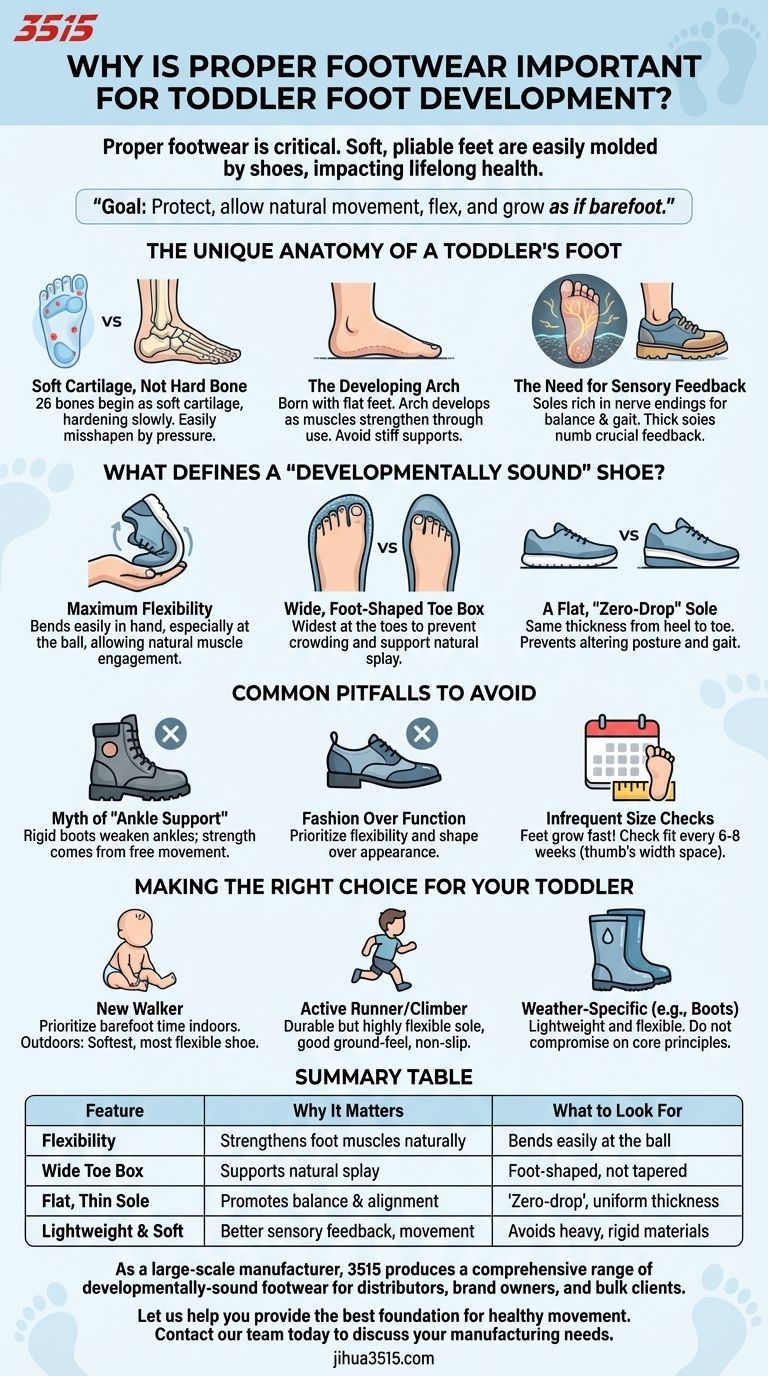
Visual Guide
Related Products
- Wholesale Durable Camouflage Canvas Shoes with High-Traction Cleated Rubber Sole
- Lightweight Breathable Training Shoes for Wholesale & Custom OEM Manufacturing
- Premium Lightweight Safety Shoes for Wholesale & Bulk Orders
- Premium Suede Sport Safety Shoes for Wholesale & Bulk Orders
- Customizable Slip-On Safety Shoes Direct from the Factory for Wholesale
People Also Ask
- Why is the selection of high-strength fabric materials necessary in the production of canvas shoes and training shoes?
- What are the properties of canvas as a shoe material? A Guide to Lightweight Comfort & Style
- Can canvas shoes be worn in rainy conditions? The Truth About Water Resistance
- What are some examples of vulcanized shoes? Discover the Flexibility and Board Feel of Classic Sneakers
- What are the characteristics of canvas as a shoe material? A Guide to Lightweight, Breathable Footwear



















