Beyond just comfort, the right fit in hiking footwear is your primary defense against injury. An improper fit is the direct cause of painful blisters, black toenails, and general misery on the trail. A correct fit, by contrast, locks your heel and midfoot securely in place while giving your toes ample room, preventing the harmful friction and impact that can ruin a hike and compromise your safety.
A proper fit is not about your standard shoe size; it's a precise balance of securing your heel to prevent blisters while allowing enough space in the front for your toes to splay and your feet to swell, ensuring stability and comfort over long distances.
The Anatomy of a Perfect Fit
Understanding what a "good fit" feels like is crucial. It's a combination of security in some areas and freedom in others, working together to support your foot's natural mechanics.
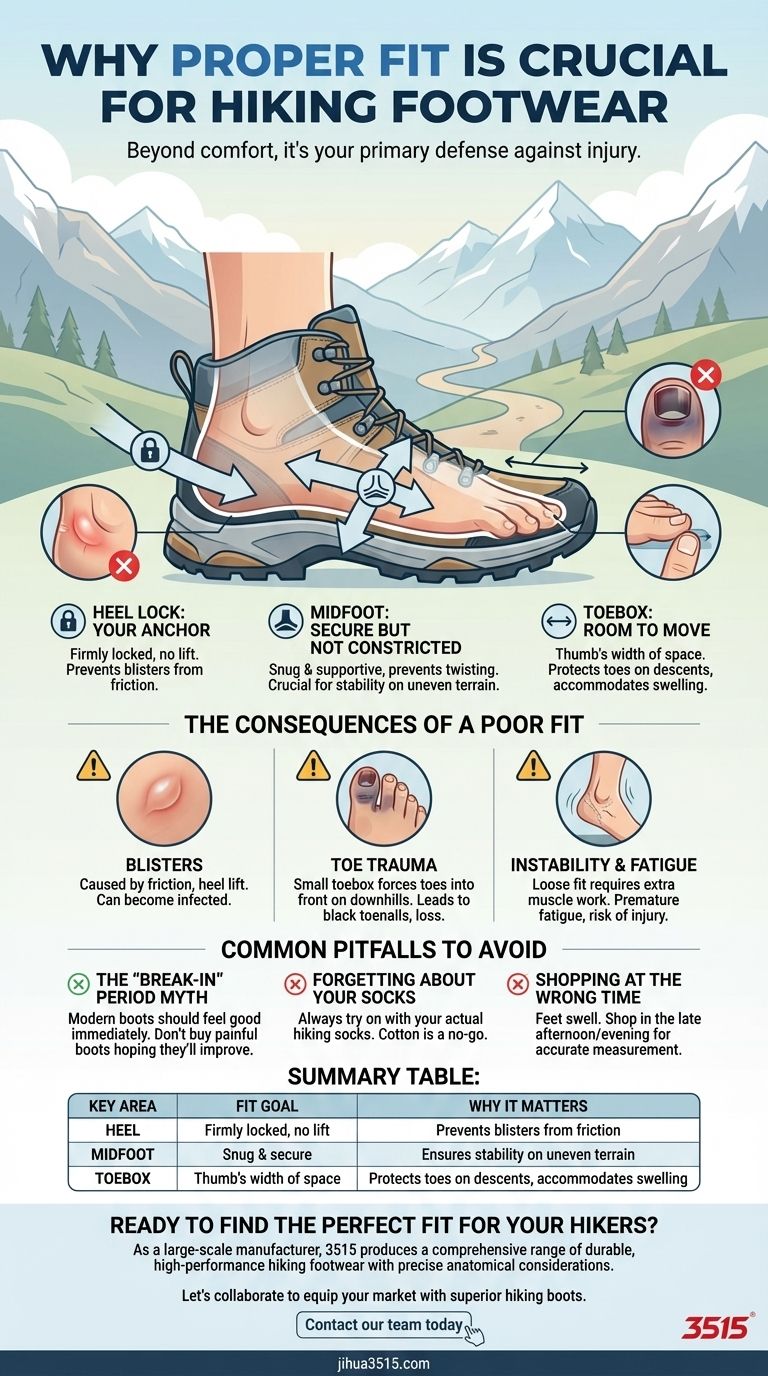
The Heel Lock: Your Anchor on the Trail
Your heel should be firmly locked into the back of the shoe or boot. When you walk, it should not lift or slide up and down.
This stability is non-negotiable. Heel lift is the primary cause of blisters, as the repeated rubbing creates intense friction against your skin.
The Midfoot: Secure But Not Constricted
The top and sides of your footwear should hold your midfoot securely. This prevents your foot from twisting or tipping inside the shoe, which is critical for stability on uneven terrain.
The fit should be snug and supportive, but not so tight that it causes pressure points or cuts off circulation.
The Toebox: Why Your Toes Need Room
You must have adequate space in front of your toes. A common rule of thumb is to have about a thumb's width of space between your longest toe and the end of the shoe.
This room is vital for two reasons. First, your feet naturally swell on long hikes. Second, and most importantly, it prevents your toes from smashing into the front of the shoe during steep descents, which can cause severe pain and black toenails (subungual hematomas).
The Consequences of a Poor Fit
Ignoring the principles of a good fit doesn't just lead to minor discomfort; it can result in trail-ending injuries and a genuinely miserable experience.
Blisters: The Most Common Culprit
Blisters are caused by friction. If your heel lifts with every step or your foot slides around inside the shoe, the resulting friction will quickly create painful blisters that can become infected.
Toe Trauma: The Downhill Dilemma
A toebox that is too small is a recipe for disaster on downhills. Each step forces your toes into the front of the footwear, leading to bruising, pain, and eventual toenail loss. This is why specialty retailers use incline boards to simulate downhill walking during a fitting.
Instability and Fatigue
If your footwear is too loose, your muscles have to work overtime to stabilize your foot with every step. This leads to premature fatigue in your feet, ankles, and legs, and increases the risk of a rolled ankle or a fall.
Common Pitfalls to Avoid
Achieving the right fit requires navigating a few common misconceptions and challenges.
The "Break-In" Period Myth
While heavy, all-leather boots require a break-in period to conform to your foot, most modern synthetic hiking shoes and boots should feel comfortable right out of the box. Do not buy footwear that is painful or has obvious pressure points, hoping it will "get better."
Forgetting About Your Socks
Always try on footwear with the exact type of moisture-wicking hiking socks you plan to wear. Cotton socks should be avoided, and the thickness of a good hiking sock can significantly alter the fit compared to a thin athletic sock.
Shopping at the Wrong Time
Your feet swell throughout the day, and they are at their largest in the late afternoon or evening. Shopping for footwear at this time gives you the most accurate measurement of your foot under load, preventing you from buying a pair that will become too tight mid-hike.
Making the Right Choice for Your Hike
- If your primary focus is day hiking on gentle trails: Prioritize immediate comfort and ensure you can wiggle your toes freely, as even short hikes can cause blisters with a poor fit.
- If your primary focus is backpacking with a heavy pack: A secure heel lock is your most critical requirement to prevent blisters caused by the downward pressure of the pack.
- If your primary focus is hiking in steep, mountainous terrain: Confirm you have a thumb's width of space in the toebox to protect your toes during long, punishing descents.
A properly fitted shoe is an investment in your safety and enjoyment, transforming the trail from a challenge into an experience.
Summary Table:
| Key Area | Fit Goal | Why It Matters |
|---|---|---|
| Heel | Firmly locked, no lift | Prevents blisters from friction |
| Midfoot | Snug and secure | Ensures stability on uneven terrain |
| Toebox | Thumb's width of space | Protects toes on descents, accommodates swelling |
Ready to Find the Perfect Fit for Your Hikers?
As a large-scale manufacturer, 3515 produces a comprehensive range of durable and high-performance hiking footwear for distributors, brand owners, and bulk clients. Our expertise ensures every pair is built with the precise anatomical considerations detailed above, helping your customers enjoy the trail in safety and comfort.
Let's collaborate to equip your market with superior hiking boots.
Contact our team today to discuss your manufacturing needs and how we can support your business.
Visual Guide
Related Products
- Wholesale High-Traction Camo Boots - Custom Manufacturer for Brands
- Durable Rubber Sole Outdoor Shoes Wholesale & Custom Manufacturing
- Durable Spiked Camouflage Boots Wholesale & Factory Production
- Wholesale Lightweight Tactical Boots Custom Manufacturer for Desert & Combat Use
- Wholesale Waterproof Tactical Boots Custom Suede & High-Traction Soles
People Also Ask
- What are the key features of the new line of camo boots? Built for Extreme Cold & Rugged Terrain
- Are camo boots necessary for hunting success? Prioritize Performance Over Pattern
- What is the technical logic behind using closed-eye testing for tactical boots? Unlocking Peak Footwear Stability
- How does the Rank Score Test identify the primary causes of premature failure in tactical and work boots? Key Insights
- What shoes to wear for a security job? Durable, Protective Footwear for Long Shifts