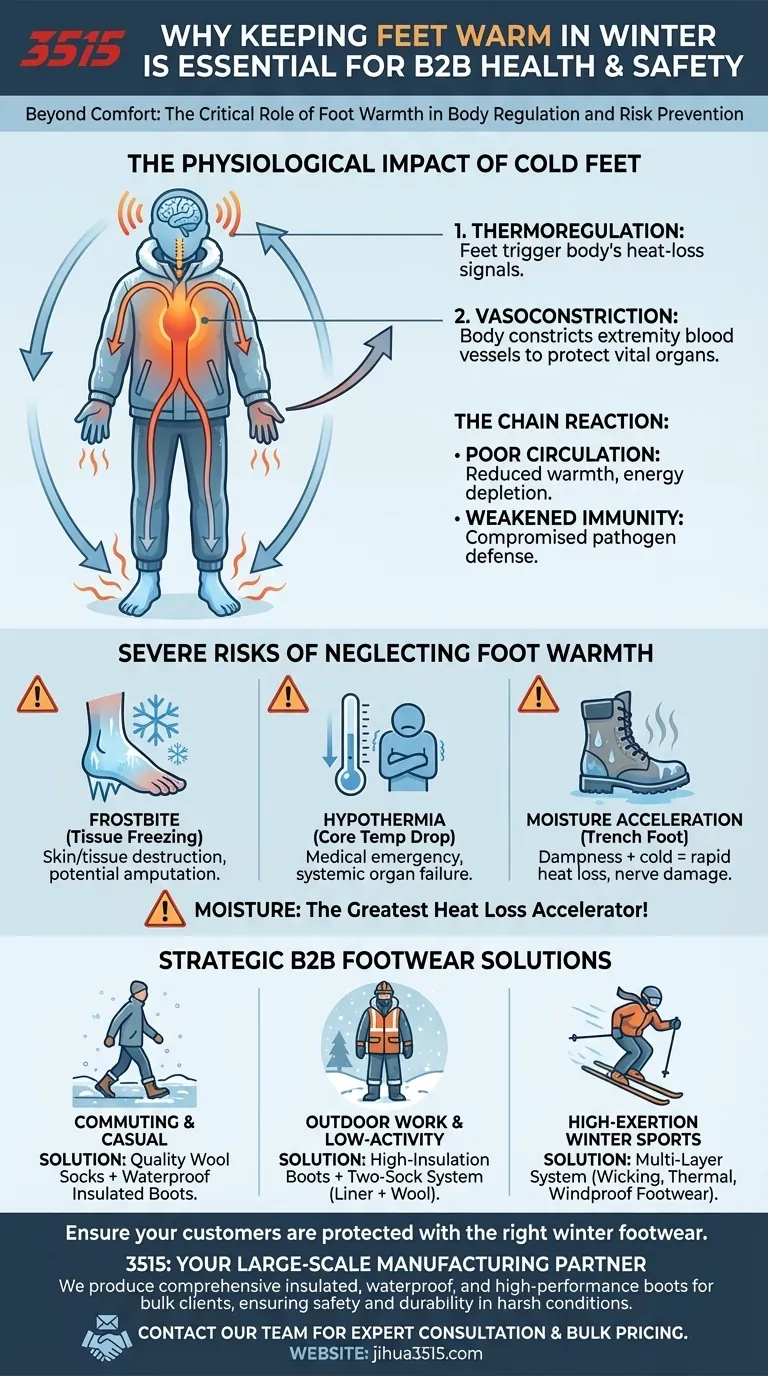
Beyond simple comfort, keeping your feet warm in winter is a critical component of your body's overall health and safety. Your feet are key to regulating your body's core temperature, and when they become cold, it triggers a systemic response that can compromise blood flow, weaken your immune system, and lead to severe medical conditions far worse than simple discomfort.
Cold feet are not a localized inconvenience; they are an early warning signal that your body is struggling to conserve heat. This protective reaction, which restricts blood flow to your extremities, paradoxically leaves them vulnerable to tissue damage while simultaneously straining your entire system.
The Physiological Impact of Cold Feet
To understand why foot warmth is so essential, we must first look at how the body manages temperature. Your extremities—particularly your feet—play an outsized role in this complex process.
Your Body's Thermoregulation System
Your body works to maintain a stable core temperature. When your feet get cold, they send signals to your brain that the entire system is losing heat. This initiates a self-preservation response.
The body begins to constrict blood vessels in the extremities, a process called vasoconstriction. This reduces blood flow to your hands and feet to keep more warm blood circulating around your vital organs.
The Chain Reaction of Poor Circulation
While vasoconstriction is a smart survival tactic, it has significant consequences. Reduced blood flow means less warmth reaches your feet, making them even colder and more susceptible to the environment.
This impaired circulation is the root cause of the most severe dangers. It also means your body has to work harder to distribute heat, which can deplete your energy levels.
The Link to Your Immune System
Effective blood flow is crucial for a healthy immune system, as it transports white blood cells throughout thebody to fight off pathogens.
When circulation is compromised by cold, your immune response can be suppressed. This is why prolonged exposure to cold is often linked to a higher susceptibility to illnesses like the common cold and flu.
The Severe Risks of Neglecting Foot Warmth
Ignoring cold feet can lead to serious and sometimes permanent damage. The combination of low temperatures and moisture creates a dangerous environment for your skin, nerves, and tissues.
The Danger of Frostbite
Frostbite is the literal freezing of skin and underlying tissues. As reduced blood flow lowers the temperature in your feet, ice crystals can form in your cells, causing severe damage.
This can destroy skin, muscles, blood vessels, and nerves, leading to numbness, swelling, and in the worst cases, tissue death that requires amputation.
The Systemic Threat of Hypothermia
Consistently cold feet are a symptom that your body is losing heat faster than it can produce it. If this continues, it can lead to hypothermia, a dangerous drop in core body temperature.
Hypothermia affects your brain, nervous system, and other organs. It is a medical emergency that requires immediate attention.
The Insidious Threat of Moisture
Moisture is the single greatest accelerator of heat loss. Feet can become damp from external sources like snow and slush, or from internal sweat during physical activity.
Wet socks and boots pull heat away from your skin far more rapidly than dry materials. This can lead to conditions like trench foot, a serious nerve and tissue-damaging condition that can occur even in temperatures above freezing.
How to Apply This to Your Goal
Protecting your feet involves a strategic approach to insulation and moisture management. The right strategy depends entirely on your activity and environment.
- If your primary focus is daily commuting or casual walks: A single pair of high-quality wool socks paired with waterproof, insulated boots is your most effective defense against slush and cold.
- If your primary focus is outdoor work or extended, low-activity exposure: Prioritize boots with a high insulation rating and a two-sock system—a thin, moisture-wicking liner sock beneath a thicker wool sock—to manage sweat.
- If your primary focus is high-exertion winter sports: A multi-layer system is non-negotiable, often including wicking socks, thermal booties or overshoes, and ensuring your footwear is windproof to combat wind chill.
Ultimately, protecting your feet is a foundational step in maintaining your overall health, safety, and ability to thrive throughout the winter.
Summary Table:
| Key Risk | Consequence | Prevention Strategy |
|---|---|---|
| Poor Circulation | Reduced warmth, energy depletion | Insulated, waterproof footwear |
| Weakened Immunity | Higher susceptibility to illness | Maintain core temperature via warm feet |
| Frostbite | Tissue damage, potential amputation | Avoid prolonged exposure; use moisture-wicking socks |
| Hypothermia | Dangerous drop in core body temperature | Layer footwear appropriately for activity |
Ensure your customers are protected with the right winter footwear.
As a large-scale manufacturer, 3515 produces a comprehensive range of insulated, waterproof, and high-performance boots and shoes for distributors, brand owners, and bulk clients. Our production capabilities encompass all types of footwear designed to combat winter's harsh conditions, ensuring safety, comfort, and durability.
Let's discuss your specific needs and how we can support your inventory with reliable, health-focused footwear.
Contact our team today for expert consultation and bulk pricing.
Visual Guide