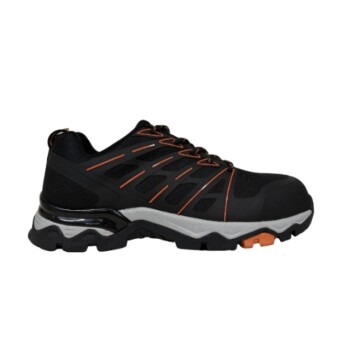
Referencing established standards is the only way to validate protective capabilities. Relying on ANSI (American National Standards Institute) and ASTM (American Society for Testing and Materials) standards provides the necessary quantitative technical indicators to measure safety objectively. Without these benchmarks, evaluating barrier performance, tear resistance, and fluid resistance becomes a matter of guesswork rather than science.
These standards transform safety claims into verifiable data, ensuring footwear can withstand the physical and microbial risks found in high-pressure clinical environments.
The Necessity of Quantitative Technical Indicators
Establishing an Objective Baseline
Visual inspection is insufficient for determining if footwear can survive hazardous environments.
ANSI and ASTM standards replace subjective opinions with quantitative technical indicators. These metrics allow safety officers to compare different footwear options based on hard data rather than marketing claims.
Ensuring Microbial and Physical Blocking
In high-risk clinical environments, the primary goal is preventing contamination and injury.
Adherence to these standards ensures that the footwear achieves specific microbial and physical blocking efficacy. This guarantees that the barrier between the user and the hazard is scientifically proven to hold.
Critical Performance Metrics
Barrier and Fluid Resistance
Safety footwear must often act as a shield against biological fluids and chemicals.
Standards quantify exactly how much pressure or exposure a material can withstand before permeation occurs. This is essential for confirming fluid resistance in environments where liquid hazards are prevalent.
Physical Durability and Tear Resistance
Protective equipment is useless if it compromises structurally under stress.
Testing protocols measure tear resistance to ensure the footwear maintains its integrity during rigorous use. This prevents sudden failures that could expose the wearer to immediate danger.
Slip Resistance and Stability
Beyond barrier protection, the footwear must facilitate safe movement.
Slip resistance is a key quantitative indicator measured by these standards. It ensures the footwear provides adequate traction to prevent falls in dynamic, often slick environments.
Understanding the Limitations
Lab Testing vs. Field Conditions
While standards like ASTM F-2412 and ASTM F-2413 provide rigorous testing methods and performance specifications, they represent controlled laboratory conditions.
A shoe may pass a standard test but fail to perform in unique, real-world scenarios. Therefore, the primary reference notes that evaluations should be based on standards and field observations to ensure true safety.
The Scope of Certification
Meeting a standard does not mean a shoe is appropriate for every hazard.
A common pitfall is assuming that a "certified" shoe protects against all risks. You must verify that the specific standard referenced (e.g., fluid resistance vs. impact resistance) aligns with the specific hazards of your environment.
Making the Right Choice for Your Environment
To ensure your team is adequately protected, you must match the specific standard to the specific risk profile of your facility.
- If your primary focus is Infection Control: Prioritize standards that explicitly measure fluid resistance and microbial blocking efficacy to prevent contamination.
- If your primary focus is Physical Safety: Look for compliance with ASTM F2413-2005 to ensure fit, function, and resistance to physical hazards like impact or compression.
- If your primary focus is General Stability: Verify the slip resistance ratings to reduce fall liabilities in slick clinical areas.
True safety is achieved when you validate technical certifications with observation of how the equipment performs in your daily operations.
Summary Table:
| Standard Category | Key Performance Metric | Primary Protective Benefit |
|---|---|---|
| Physical Safety | Impact & Compression (ASTM F2413) | Protects against falling objects and heavy pressure |
| Hazardous Fluids | Fluid Resistance & Permeation | Prevents chemical and biological liquid penetration |
| Durability | Tear Resistance & Tensile Strength | Ensures structural integrity in high-stress environments |
| Workplace Safety | Slip Resistance Ratings | Minimizes fall risks on slick or unstable surfaces |
| Infection Control | Microbial Blocking Efficacy | Creates a scientific barrier against clinical contaminants |
Secure Your Global Distribution Supply Chain with Certified Footwear
As a large-scale manufacturer serving distributors and brand owners worldwide, 3515 offers comprehensive production capabilities for all footwear types, anchored by our flagship Safety Shoes series. We understand that meeting ANSI and ASTM standards is non-negotiable for your reputation and user safety. Our extensive portfolio covers work and tactical boots, outdoor shoes, training shoes, and sneakers, as well as Dress & Formal shoes to meet diverse bulk requirements.
Partner with us to leverage our rigorous testing protocols and high-volume manufacturing expertise. Whether you are expanding your brand's safety line or stocking high-performance tactical gear, 3515 delivers the verifiable quality your customers demand.
Ready to upgrade your inventory with certified performance? Contact us today to discuss your bulk requirements." Form)!"
References
- Pattikan Damrongkhunawut, Withaya Chanchai. Effectiveness of Personal Protective Equipment in Preventing Coronavirus Infection and Emerging Infectious Diseases among Central Service Technicians in Thailand. DOI: 10.29011/2688-9501.101394
This article is also based on technical information from 3515 Knowledge Base .
Related Products
- Premium Suede Sport Safety Shoes for Wholesale & Bulk Orders
- Premium Lightweight Safety Shoes for Wholesale & Bulk Orders
- Wholesale Anti-Smash & Puncture-Proof Safety Shoes Custom Manufacturing for Brands
- Premium KPU Injection Athletic Style Safety Shoes
- Premium Safety Shoes with Rotating Buckle Safety Sneakers
People Also Ask
- What are the primary functions of professional safety shoes? Maximize Safety in Water Supply Confined Spaces
- What industries have specific OSHA footwear requirements? Ensure Compliance & Protect Your Workforce
- What role do specialized safety shoes play in preventing falls? Engineering Stability in Industrial Environments
- How do specialized safety shoes protect against battery maintenance injuries? Prevent Impact and Chemical Burns
- Why are customized foot sensors or professional safety shoes incorporated into biomechanical testing? Precision Insights