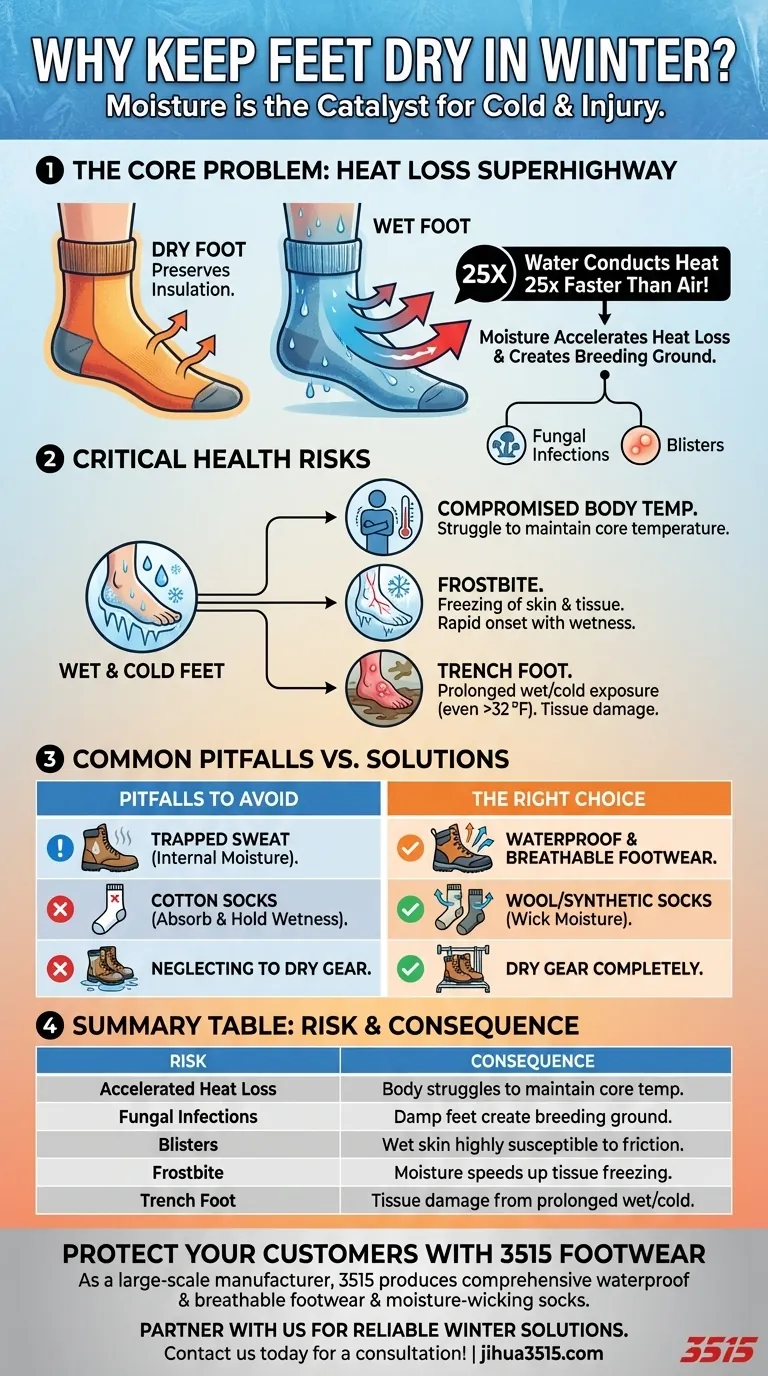
Keeping your feet dry in winter is critical because moisture is the primary catalyst for both immediate discomfort and serious medical harm. Wet feet lose heat exponentially faster than dry feet, creating a dangerous pathway to fungal infections, painful blisters, and severe cold-weather injuries like frostbite and trench foot.
The core problem is not just wetness itself, but how moisture acts as a superhighway for heat loss. By keeping your feet dry, you preserve your body's natural insulation and dramatically reduce the risk of tissue damage caused by cold.
The Vicious Cycle of Moisture and Cold
When your feet get wet in the winter, two distinct but related problems begin immediately. Both work together to compromise your health and safety.
Moisture Accelerates Heat Loss
Your body heat is a finite resource. Water conducts heat away from the body up to 25 times faster than air, meaning wet socks and skin will drain your body's warmth at an alarming rate.
This rapid heat loss makes it incredibly difficult for your body's core temperature regulation system to keep up, leaving you feeling cold and vulnerable.
Moisture Creates a Breeding Ground for Problems
Damp, warm environments are ideal for microbial growth. The space between your toes, when trapped in a wet sock, becomes a perfect incubator.
This directly leads to a higher risk of fungal infections, such as athlete's foot. Furthermore, wet skin is softer and much more susceptible to friction, which is why painful blisters form so easily on damp feet.
The Critical Health Risks of Wet Feet
Ignoring damp feet in cold weather moves beyond simple discomfort and into the realm of significant medical risk. The consequences can range from systemic issues to permanent tissue damage.
Compromised Body Temperature
Your extremities—head, hands, and feet—are key points of heat regulation. If your feet become intensely cold because they are wet, your entire body will struggle to maintain its core temperature, increasing your overall risk in cold environments.
The Threat of Frostbite
Frostbite is the freezing of skin and the underlying tissues. While it requires freezing temperatures, wetness is a powerful accelerator.
Because wet skin loses heat so quickly, frostbite can set in at much milder temperatures or in a fraction of the time it would take with dry feet. This condition can cause permanent damage to skin, nerves, and blood vessels.
The Danger of Trench Foot
Distinct from frostbite, trench foot is a serious condition caused by prolonged exposure to cold, wet conditions—even those above freezing.
This sustained dampness damages the skin, nerves, and blood vessels, leading to swelling, numbness, and potentially tissue death. It underscores that the combination of "cold and wet" is the true enemy.
Common Pitfalls to Avoid
Simply wearing "winter boots" is not enough. Several common mistakes can undermine your efforts to stay dry and warm.
Overlooking Internal Moisture (Sweat)
Waterproof boots are excellent at keeping snow and slush out, but if they aren't breathable, they also trap sweat in. This internal moisture is just as dangerous as external moisture, soaking your socks from the inside and accelerating heat loss.
Choosing the Wrong Socks
The single biggest mistake is wearing cotton socks. Cotton is highly absorbent and loses all insulating properties when wet, holding cold moisture directly against your skin. Wool or synthetic socks are essential as they wick moisture away from your skin, keeping you drier even if you sweat.
Neglecting to Dry Your Gear
Putting on damp boots from the day before starts you at a significant disadvantage. Always allow footwear to dry completely between uses to prevent moisture buildup, which degrades insulation and promotes bacterial growth.
Making the Right Choice for Your Goal
Your strategy for keeping feet dry should match your activity and environment.
- If your primary focus is daily commuting: Prioritize waterproof footwear to block out slush and snow, paired with moisture-wicking wool socks to manage sweat.
- If your primary focus is extended outdoor recreation: A layered approach is best, using high-quality waterproof and breathable boots with a two-sock system (a thin synthetic liner and a thicker wool sock) to manage moisture effectively.
- If your primary focus is health and safety: Make a habit of changing your socks immediately if they feel damp and thoroughly drying your feet and footwear at the end of each day.
Ultimately, managing moisture is the most crucial step you can take to ensure your feet remain warm, healthy, and comfortable all winter long.
Summary Table:
| Risk of Wet Feet | Consequence |
|---|---|
| Accelerated Heat Loss | Body struggles to maintain core temperature |
| Fungal Infections | Damp feet create a breeding ground for athlete's foot |
| Blisters | Wet, soft skin is highly susceptible to friction |
| Frostbite | Moisture drastically speeds up tissue freezing |
| Trench Foot | Tissue damage from prolonged cold, wet exposure |
Protect Your Customers This Winter with the Right Footwear
As a large-scale manufacturer, 3515 produces a comprehensive range of waterproof and breathable footwear for distributors, brand owners, and bulk clients. Our production capabilities encompass all types of winter boots and moisture-wicking socks designed to keep feet dry, warm, and safe.
Partner with us to provide your customers with reliable winter footwear that combats the dangers of moisture. Let's discuss how our products can meet your specific needs.
Contact us today for a consultation and to explore our product catalog!
Visual Guide