
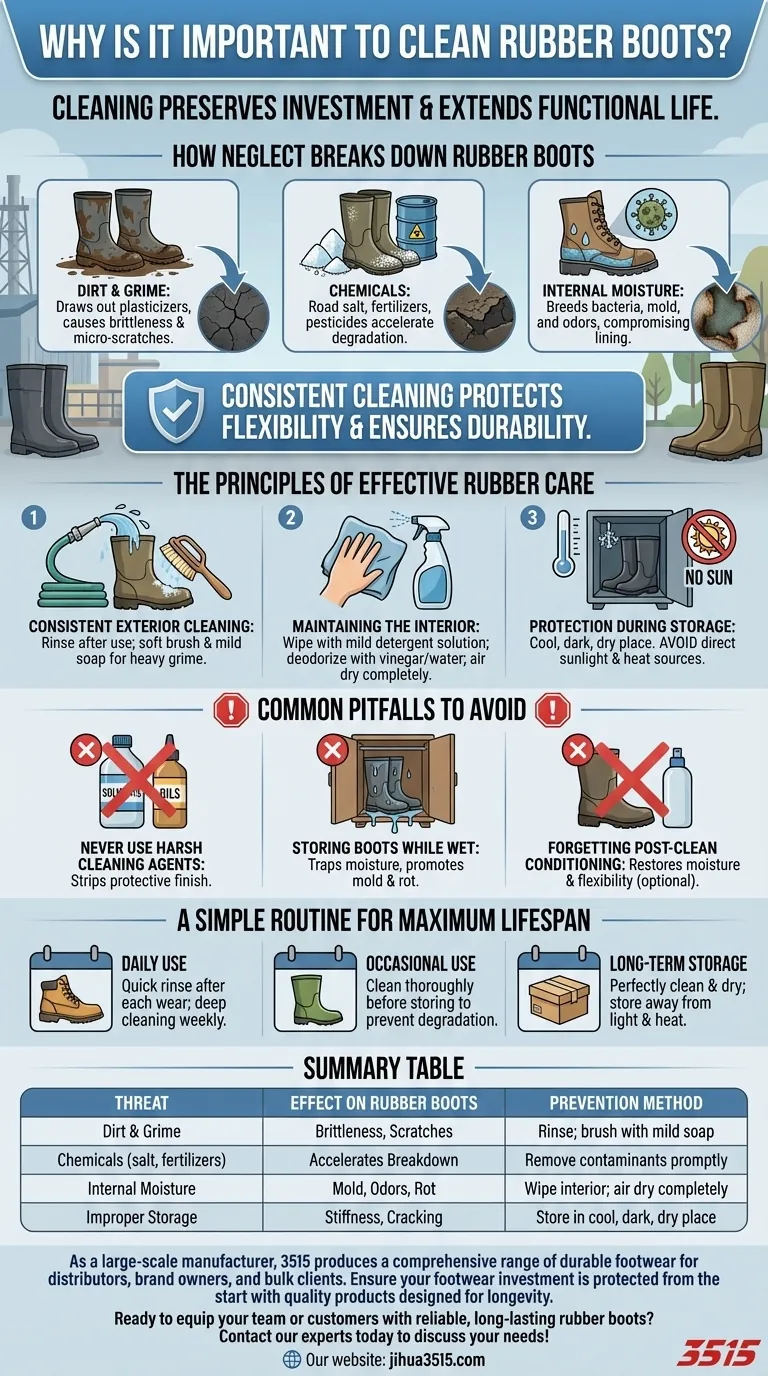
Cleaning your rubber boots is the most critical factor in preserving your investment. It is not simply about aesthetics; regular cleaning directly prevents the buildup of dirt and chemicals that cause the rubber to dry out, crack, and lose its waterproof integrity, significantly extending the functional life of your footwear.
Neglecting rubber boots allows abrasive dirt, environmental chemicals, and moisture to degrade the material, leading to premature failure. Consistent cleaning is the single most important action you can take to protect the rubber's flexibility and ensure long-term durability.
How Neglect Breaks Down Rubber Boots
Understanding what damages rubber is the first step toward proper care. The threats are often simple, everyday substances that accumulate over time.
The Impact of Dirt and Grime
When mud and dirt are left on your boots, they draw out the natural plasticizers that keep the rubber supple. This process causes the material to become brittle.
Additionally, abrasive particles in dried soil act like sandpaper, creating micro-scratches that weaken the boot's surface with every step you take.
The Threat of Chemical Exposure
Boots are frequently exposed to more than just dirt. Common substances like road salt, fertilizers, pesticides, and oils can chemically react with the rubber.
These reactions accelerate the degradation process, breaking down the material's composition far faster than physical wear alone.
The Hidden Damage Inside
While the exterior is waterproof, the interior is vulnerable to trapped moisture from sweat.
This internal dampness creates a breeding ground for bacteria and mold, leading to persistent odors and compromising the integrity of the boot's lining and footbed.
The Principles of Effective Rubber Care
A proper maintenance routine addresses both the exterior and interior of the boot, protecting it from all angles.
Consistent Exterior Cleaning
The goal of washing the outside is to remove all foreign materials. A simple rinse with water after light use is often sufficient.
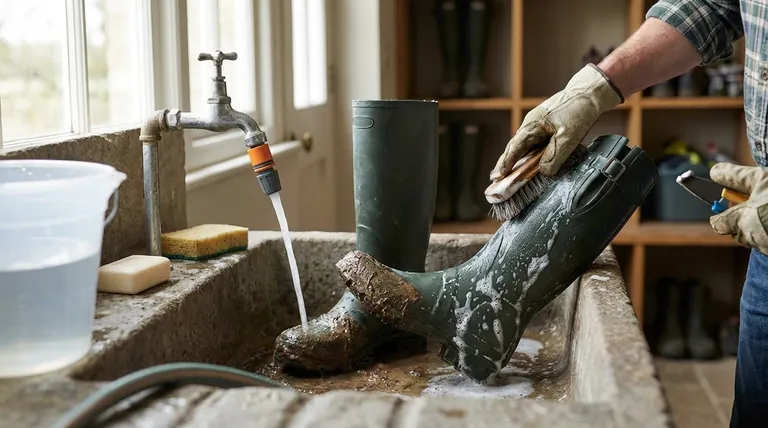
For heavy grime, a soft brush and mild soap are necessary to dislodge embedded dirt without damaging the rubber's surface.
Maintaining the Interior
To clean and deodorize the inside, use a cloth with a mild solution of one teaspoon of heavy-duty laundry detergent in two cups of warm water.
Follow this by wiping the interior with a second cloth dampened with plain water. To combat odors, a light spray of equal parts white vinegar and water can be used before air-drying completely.
Protection During Storage
Proper storage is as crucial as cleaning. Always store your boots in a cool, dark, and dry place.
Direct sunlight and proximity to heat sources (like vents or radiators) will rapidly degrade the rubber, causing it to become stiff and crack, regardless of how well you clean them.
Common Pitfalls to Avoid
Simple mistakes can unintentionally shorten the lifespan of your boots, undoing the benefits of cleaning.
Using Harsh Cleaning Agents
Never use solvents, oils, or harsh chemical cleaners. These products can strip the protective finish and essential compounds from the rubber, leading to immediate damage. Stick to mild soap and water.
Storing Boots While Wet
Putting boots away before they are completely dry—both inside and out—is a critical error. This traps moisture, promoting mold and causing the lining materials to rot over time.
Forgetting Post-Clean Conditioning
While not required for all boots, many benefit from a specialized rubber conditioner after a thorough cleaning. This product restores moisture and flexibility, keeping the material pliable and resistant to cracking.
A Simple Routine for Maximum Lifespan
Tailor your maintenance schedule to your usage patterns to ensure your boots are always protected.
- If your primary focus is daily or heavy use: Perform a quick rinse after each wear and a deep cleaning weekly to combat the constant exposure to damaging materials.
- If your primary focus is occasional use: Clean the boots thoroughly before storing them to prevent dirt from setting in and degrading the rubber over time.
- If your primary focus is long-term storage: Ensure boots are perfectly clean and completely dry, then store them away from light and heat to prevent environmental decay.
By treating cleaning as essential maintenance, you ensure your boots remain a reliable and comfortable tool for many seasons.
Summary Table:
| Threat | Effect on Rubber Boots | Prevention Method |
|---|---|---|
| Dirt & Grime | Draws out plasticizers, causes brittleness, abrasive scratches | Rinse after use; brush with mild soap |
| Chemicals (salt, fertilizers) | Accelerates material breakdown, weakens rubber | Remove contaminants promptly with water |
| Internal Moisture | Promotes mold, bacteria, odors, liner rot | Wipe interior; air dry completely |
| Improper Storage | Heat/light cause stiffness and cracking | Store in cool, dark, dry place |
As a large-scale manufacturer, 3515 produces a comprehensive range of durable footwear for distributors, brand owners, and bulk clients. Our production capabilities encompass all types of industrial and safety boots built to last. Ensure your footwear investment is protected from the start with quality products designed for longevity.
Ready to equip your team or customers with reliable, long-lasting rubber boots? Contact our experts today to discuss your needs and discover our full product range!
Visual Guide
Related Products
- Factory Direct Wholesale Rain Boots Durable Waterproof & Fully Customizable
- Durable Rubber Sole Outdoor Shoes Wholesale & Custom Manufacturing
- Wholesale Durable Camouflage Canvas Shoes with High-Traction Cleated Rubber Sole
- Wholesale Durable Leather Work Boots | 8-Inch Goodyear Welt Manufacturer
- Durable Goodyear Welt Leather Work Boots for Wholesale & Private Label
People Also Ask
- What are the characteristics of rain boots? A Guide to Waterproof Footwear for Every Need
- What factors should be considered when choosing rain boots? Find the Perfect Boot for Your Needs
- What are the main differences between rain boots and snow boots? Choose the Right Boot for Your Climate
- How should one decide between PVC and rubber for rain boots? A Guide to Choosing the Right Material
- Why are rain boots more flexible and comfortable than snow boots? The Key Differences Explained
















