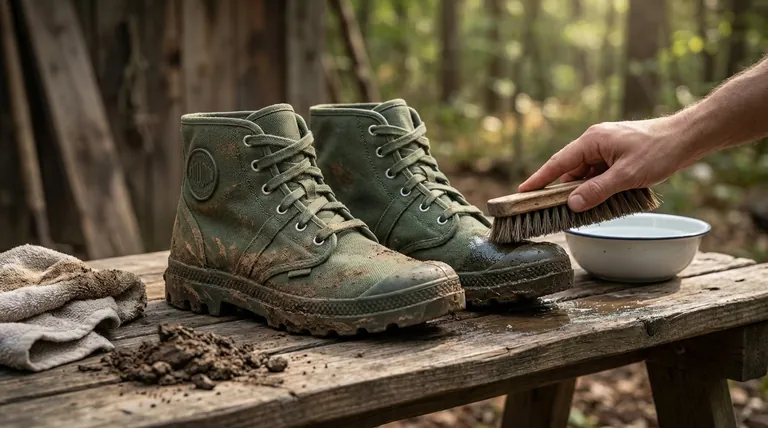
In short, cleaning your hiking boots regularly is the single most important factor in extending their lifespan and preserving their on-trail performance. Failing to do so allows seemingly harmless dirt and mud to actively degrade the materials, leading to premature aging, cracking, and failure.
The core reason to clean your boots is not about aesthetics; it's about preventative maintenance. Dirt and mud are abrasive agents that physically damage boot materials and strip them of essential moisture, significantly shortening their functional life.
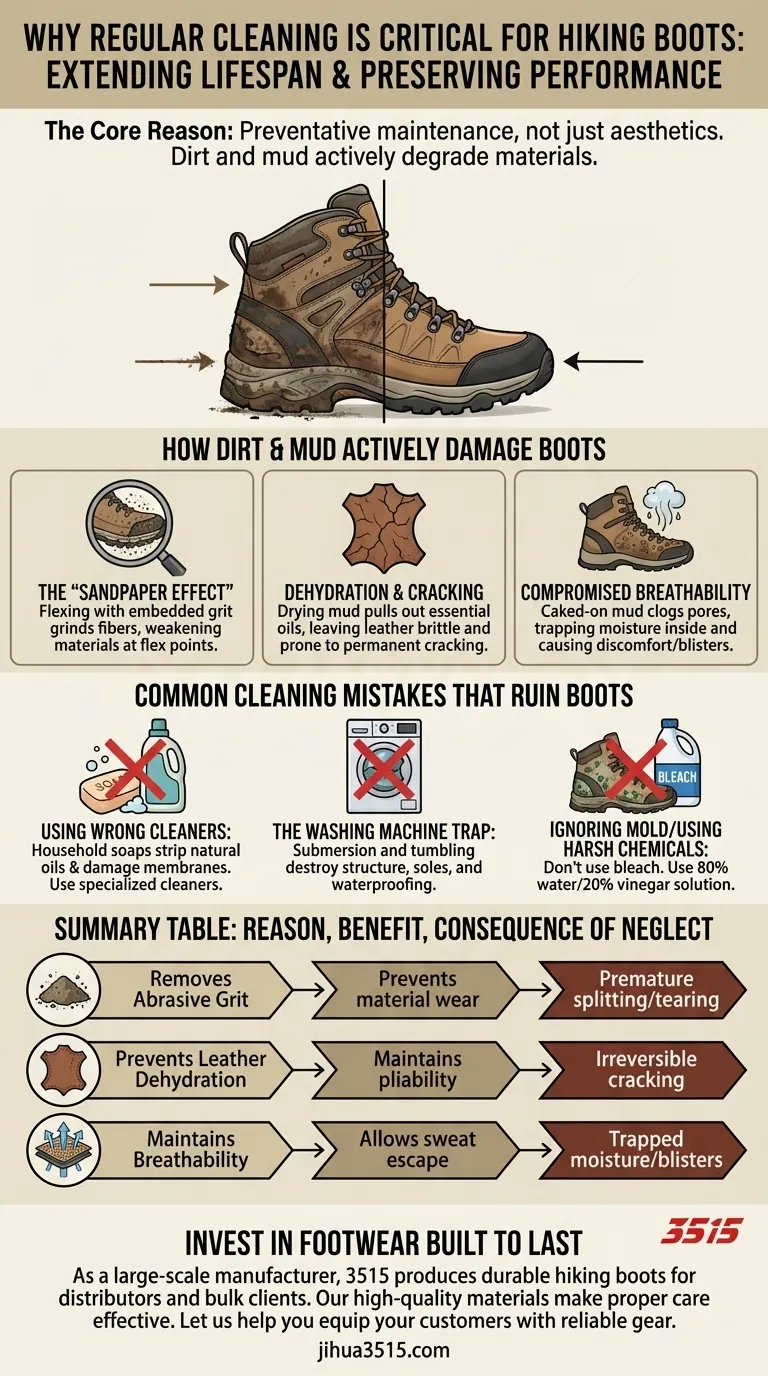
How Dirt and Mud Actively Damage Your Boots
Understanding the specific mechanisms of damage reveals why a quick post-hike clean is so critical. It's not a passive process; the debris is actively working against the integrity of your footwear.
The "Sandpaper Effect"
With every step you take, your boots flex. Embedded dirt, grit, and sand particles act like sandpaper, grinding away at the fibers of the leather or synthetic fabric.
This constant abrasion is especially damaging at flex points and seams, leading to weakened materials and eventual splits or tears.
Dehydration and Cracking
Mud is particularly destructive to leather boots. As mud dries, it pulls essential moisture and conditioning oils out of the leather.
This process leaves the leather dry, brittle, and far less pliable. Over time, this dehydration leads to cracking and permanent damage that cannot be reversed.
Compromised Breathability
Modern hiking boots, especially those with waterproof membranes, are designed to be breathable. They let sweat vapor escape to keep your feet dry and comfortable.
A layer of caked-on mud or dirt clogs these microscopic pores, trapping moisture inside. This not only leads to discomfort but can also contribute to blisters and other foot-related issues.
Common Cleaning Mistakes That Ruin Boots
How you clean your boots is as important as whether you clean them. Using the wrong methods or products can cause as much damage as the dirt itself.
Using the Wrong Cleaners
Never use standard bar soaps or household detergents. Many contain additives and surfactants that can strip the natural oils from leather or damage the delicate waterproof membranes.
Stick to cleaners specifically formulated for footwear.
The Washing Machine Trap
It may seem like an easy solution, but putting hiking boots in a washing machine is a guaranteed way to destroy them. The combination of submersion, tumbling, and harsh detergents can delaminate soles, destroy waterproofing, and ruin the boot's structure.
Ignoring Mold and Mildew
If you store your boots while they're still damp, mold or mildew can develop. Do not use harsh chemicals like bleach to remove it, as this will damage the boot materials.
A simple solution of 80% water and 20% vinegar is effective at killing mold without harming the footwear.
Making the Right Choice for Your Gear
Your approach to boot care directly impacts your experience on the trail. Frame your cleaning habits around your primary goals.
- If your primary focus is maximizing lifespan: Clean your boots after every major hike to remove abrasive grit and prevent leather from drying out and cracking.
- If your primary focus is on-trail performance: Keep your boots clean to maintain maximum breathability and ensure the outsole lugs are clear of mud for reliable traction.
- If your primary focus is protecting your investment: View regular cleaning as the most effective insurance you have against having to prematurely replace expensive footwear.
Proper boot care is an essential final step of any successful hike.
Summary Table:
| Reason for Cleaning | Key Benefit | Consequence of Neglect |
|---|---|---|
| Removes Abrasive Grit | Prevents material wear at flex points | Premature splitting and tearing |
| Prevents Leather Dehydration | Maintains pliability and strength | Irreversible cracking and brittleness |
| Maintains Breathability | Allows sweat vapor to escape | Trapped moisture, blisters, and discomfort |
| Protects Waterproofing | Ensures membranes function correctly | Loss of waterproof capabilities |
Invest in Footwear Built to Last
As a large-scale manufacturer, 3515 produces a comprehensive range of durable hiking boots and footwear for distributors, brand owners, and bulk clients. Our production capabilities ensure high-quality materials and construction designed to withstand the elements, making proper care even more effective.
Let us help you equip your customers with reliable gear. Contact our team today to discuss our OEM, ODM, and bulk purchasing options.
Visual Guide
Related Products
- Wholesale High-Traction Camo Boots - Custom Manufacturer for Brands
- Durable Rubber Sole Outdoor Shoes Wholesale & Custom Manufacturing
- Durable Spiked Camouflage Boots Wholesale & Factory Production
- Wholesale Lightweight Tactical Boots Custom Manufacturer for Desert & Combat Use
- Wholesale Waterproof Tactical Boots Custom Suede & High-Traction Soles
People Also Ask
- What are the key features of the new line of camo boots? Built for Extreme Cold & Rugged Terrain
- Are camo boots necessary for hunting success? Prioritize Performance Over Pattern
- How does the Rank Score Test identify the primary causes of premature failure in tactical and work boots? Key Insights
- What is the technical logic behind using closed-eye testing for tactical boots? Unlocking Peak Footwear Stability
- What shoes to wear for a security job? Durable, Protective Footwear for Long Shifts