
Proper riding footwear is a non-negotiable safety tool, not simply a fashion statement. Riding boots are engineered specifically to prevent your foot from slipping entirely through the stirrup, a dangerous scenario that can result in being dragged if you fall. Beyond this critical safety mechanism, they provide the necessary ankle support, weather protection, and tactile feedback required for effective control in the saddle.
While casual shoes may seem sufficient, they lack the structural heel required to physically stop the foot from sliding through the stirrup iron. Proper riding boots combine this life-saving design with materials that enhance your stability and communication with the horse.
The Mechanics of Safety
The Critical Role of the Heel
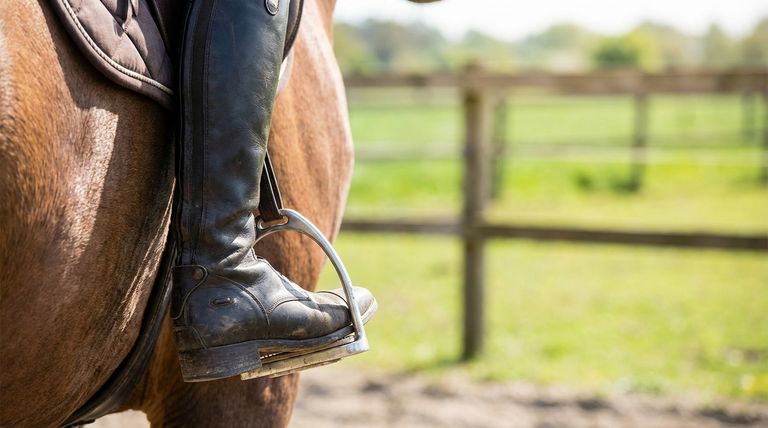
The most distinct feature of a riding boot is the heel, which ideally measures between 1.5 to 2 inches.
This heel acts as a physical "brake" against the stirrup iron. If your foot slides forward, the heel catches on the metal, preventing entrapment.
Why Sole Texture Matters
Unlike hiking boots or sneakers, which feature heavy treads for traction, riding boots have relatively smooth or lightly textured soles.
This design allows you to slide your foot out of the stirrup instantly in an emergency. A heavy tread could catch on the stirrup tread, locking your foot in place during a fall.
Structural Protection
Boots are built to withstand the rigors of the environment, including mud, rain, and cold temperatures.
They also provide a hardened layer of protection for your toes and feet against the weight of the horse should you be stepped on while on the ground.
Enhancing Control and Performance
Improved Contact
Tall boots or paddock boots paired with half-chaps provide a consistent surface of friction against the saddle.
This "close contact" stabilizes your lower leg, allowing for more precise cues to the horse.
Ankle Stability
Riding requires you to balance your weight in the stirrups while absorbing the horse's motion.
Riding boots offer structured ankle support, preventing fatigue and helping you maintain the correct heel-down position necessary for balance.
Selecting the Right Boot Type
Tall Boots: The Performance Standard
Tall boots extend up the calf, offering maximum protection and a sleek, professional appearance.
These are the standard for upper-level showing and are often a legal requirement for competitive events like dressage and show jumping due to their safety and aesthetic benefits.
Paddock Boots: The Versatile Option
Paddock boots are shorter, stopping just above the ankle.
They are generally less expensive and easier to fit than tall boots, making them ideal for children, beginners, or riders with wider calves.
Because they leave the calf exposed, they are often worn with "half chaps" to simulate the protection and grip of a tall boot during schooling.
Western Boots
Traditional cowboy boots feature a higher heel and a narrow or tapered toe.
This shape aids in quickly inserting the foot into the stirrup, while the high angled heel provides exceptional security against slipping.
Understanding the Trade-offs
The "Break-In" Period
High-quality tall boots, particularly those made of stiff leather for dressage, can be uncomfortable initially.
They require a break-in period to mold to your leg, during which movement may feel restricted compared to softer paddock boots.
Cost vs. Longevity
Tall boots represent a significant financial investment and are susceptible to wear and tear if used for barn chores.
Paddock boots are more cost-effective for daily labor, allowing you to preserve your expensive tall boots strictly for riding or competition.
Safety vs. Walking Comfort
The very features that make a boot safe for riding—a stiff sole and distinct heel—can make them less comfortable for walking long distances.
If your day involves more walking than riding, a "middle heel" height or a dedicated paddock boot offers better versatility than a rigid competition boot.
Making the Right Choice for Your Goal
When selecting footwear, you must balance your budget, your riding level, and your specific discipline.
- If your primary focus is Safety and Budget: Start with paddock boots, as they provide the essential heel structure for safety while being affordable and easy to break in.
- If your primary focus is Competition: Invest in well-fitted tall boots to meet legal show requirements and achieve the close contact necessary for precision riding.
- If your primary focus is Western Riding: Look for boots with a traditional narrow toe and a high angled heel to ensure smooth entry and exit from western stirrups.
The best boot is the one that secures your foot safely in the stirrup while allowing you to forget you are wearing it.
Summary Table:
| Feature | Why It Matters for Riding |
|---|---|
| Defined Heel (1.5-2") | Prevents the foot from slipping through the stirrup, a key safety mechanism to avoid being dragged. |
| Smooth Sole | Allows the foot to slide out of the stirrup easily in an emergency, unlike treaded soles that can catch. |
| Ankle Support | Provides stability, helps maintain balance, and reduces fatigue while absorbing the horse's motion. |
| Weather Protection | Shields feet from mud, rain, and cold, and offers protection if stepped on. |
Ready to experience the difference proper riding boots make?
As a large-scale manufacturer, 3515 produces a comprehensive range of equestrian footwear for distributors, brand owners, and bulk clients. Our production capabilities encompass all types of riding boots, from versatile paddock boots to high-performance tall boots, ensuring your customers get the safety, comfort, and durability they need.
Contact us today to discuss your requirements and discover how we can support your business with high-quality, reliable riding boots.
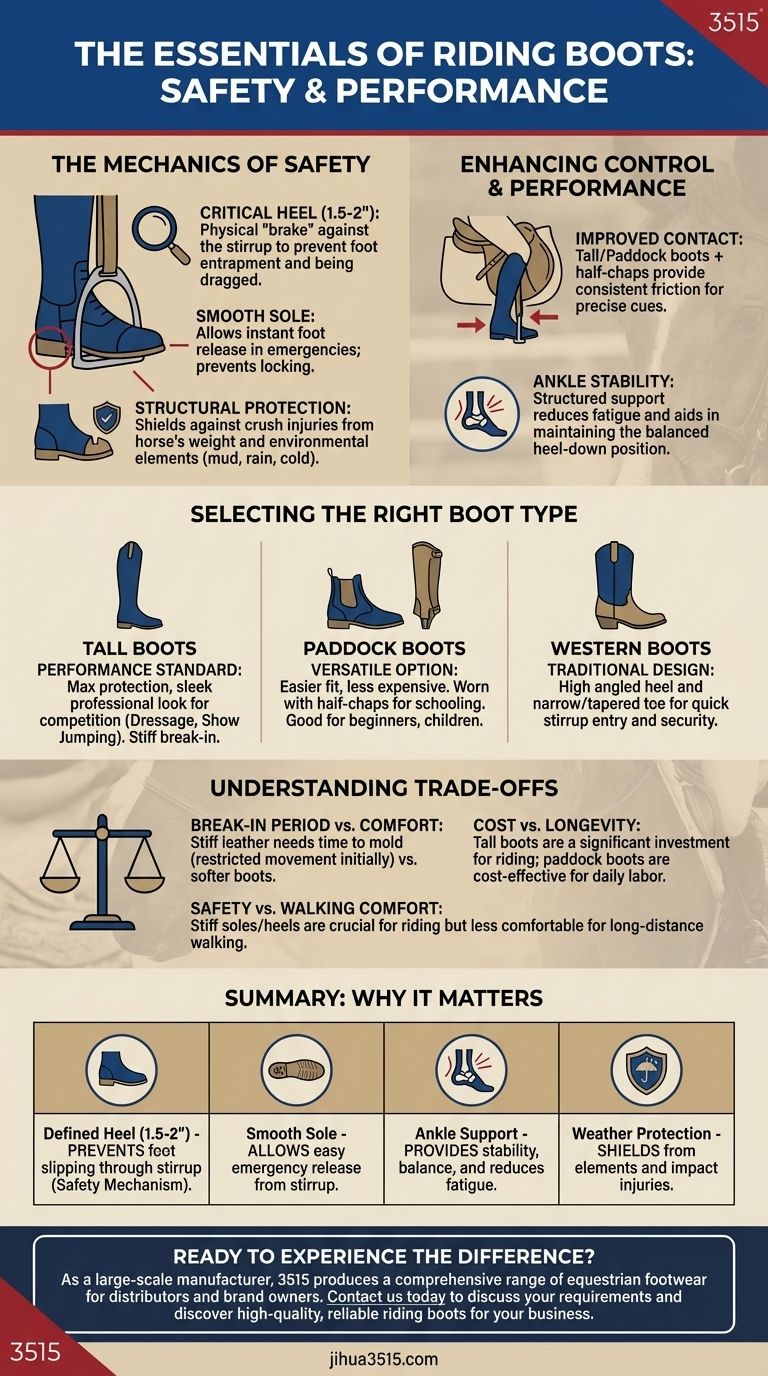
Visual Guide
Related Products
- Heavy-Duty Waterproof Nubuck Safety Boots Safety Shoes for Bulk Supply
- Premium Wholesale Tactical Style Safety Shoes Boots with Quick Lacing
- Wholesale High-Traction Camo Boots - Custom Manufacturer for Brands
- Durable Goodyear Welt Leather Work Boots for Wholesale & Private Label
- Wholesale Tactical Boots High-Traction & Reflective for Bulk & Brand Orders
People Also Ask
- What primary protective functions do professional safety boots provide in urban solid waste recovery and waste picking processes? Discover Dual-Layer Protection.
- How do safety boots reduce cutting hazards? Essential Protection for Your Workforce
- Which organizations develop safety standards for work boots? Ensure Compliance & Worker Safety
- What are the common types of safety boots and their primary uses? A Guide to Industrial Footwear
- Why is ankle and arch support important in safety footwear? Prevent Injury & Fatigue



















