
First, I need to understand the why behind this request, not just the what. My role is that of a trusted technical advisor, so I need to go deeper than the simple answer. I'll focus on the user's deep need for a practical strategy to enhance their work experience. I'm going to ensure this article is objective, authoritative, and easy to read. I'll use short paragraphs, bolding, and a clear structure.
The core of the matter is moisture management. The sources agree: alternating shoes allows them to dry out, thus extending their lifespan. Feet sweat, creating damp shoes. A full 24-hour drying period is the key. The advantages are obvious: longer lifespan, improved hygiene (less bacteria and fungus), and enhanced comfort.
I'm thinking of structuring the article with a clear introduction that immediately answers the question and a core takeaway in a blockquote. Then, I'll dive into the science of footwear degradation, focusing on:
- Moisture's impact on materials: I'll explain how sweat destroys glues and fabrics.
- The compression cycle: I'll highlight the need for the midsole foam to recover.
- The bacterial breeding ground: I'll discuss odor and health risks.
I'll also address the trade-offs: the upfront cost versus long-term value, the myth of the "perfect pair," and the limitations of quick fixes like shoe dryers.
Finally, I'll provide actionable advice. I'll present three clear scenarios: for longevity, foot health, and adaptability to varied conditions, providing the best options for each one. The concluding message will be about viewing work shoes as essential equipment deserving of rest and recovery.
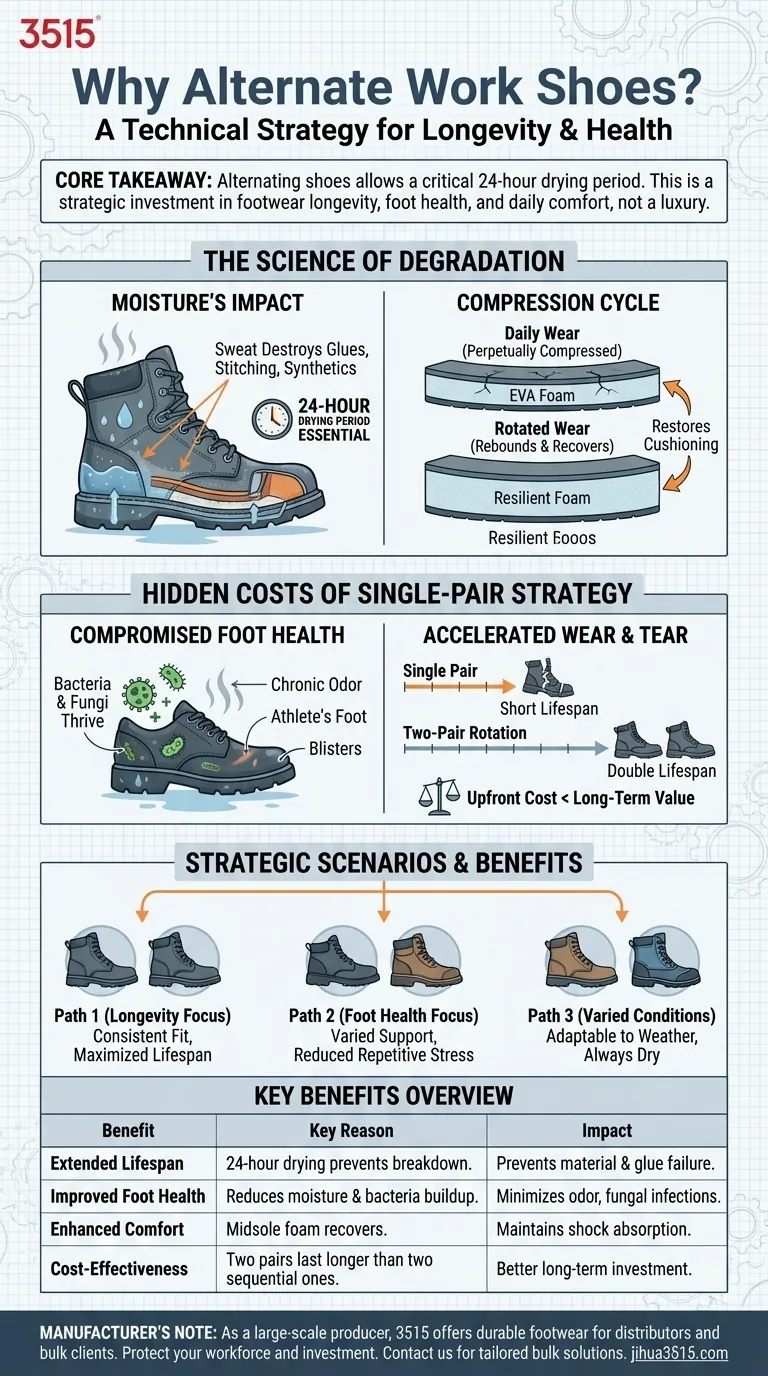
In the final review, I'll check for scannability, tone, and adherence to the format. Most importantly, I'll confirm that the article answers both the surface question and the deep question comprehensively, explaining the science behind why moisture management is so important. From a technical standpoint, alternating between two pairs of work shoes is beneficial because it allows each pair a full 24 hours to completely dry. This crucial drying period is the single most important factor in preventing the premature breakdown of the shoe's materials, dramatically extending its functional lifespan and preserving its supportive structure.
The practice of rotating work shoes isn't about luxury; it's a strategic investment in the longevity of your footwear, the health of your feet, and your daily comfort. By managing moisture, you are actively preventing material decay and the conditions that lead to foot ailments.
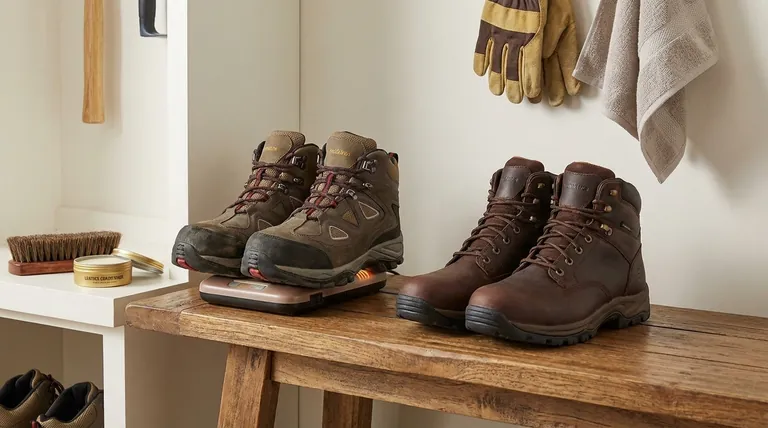
The Science of Footwear Degradation
To understand the benefits of rotation, you must first understand the primary forces working to destroy your shoes from the inside out: moisture and compression.
The Impact of Trapped Moisture
Your feet can produce a significant amount of sweat over a workday, which becomes trapped within the shoe's lining, leather, and cushioning.
This constant moisture, which is mildly acidic, accelerates the deterioration of glues, stitching, and synthetic materials. It is the primary catalyst for a shoe losing its structural integrity.
A 24-hour rest period is the minimum time required for this deeply embedded moisture to fully evaporate, halting this destructive process.
The Compression and Recovery Cycle
The midsole of a modern work shoe, typically made of EVA foam, is designed to compress and absorb impact with every step.
Wearing the same pair every day keeps this foam in a perpetually compressed state, causing it to "pack out" and lose its cushioning properties much faster.
Allowing a day of rest gives the foam materials time to decompress and rebound, restoring their shock-absorbing capabilities for the next day's wear.
The Hidden Costs of a Single-Pair Strategy
Relying on one pair of work shoes may seem economical, but it introduces hidden costs related to both health and durability.
Compromised Foot Health
A consistently damp shoe creates the ideal dark, warm, and moist environment for bacteria and fungi to thrive.
This directly contributes to chronic foot odor, athlete's foot, and other persistent fungal infections that are difficult to treat. It can also lead to blisters as damp skin is more prone to friction.
Accelerated Wear and Tear
A shoe that never fully dries is a shoe that is always in a weakened state. The materials remain soft and susceptible to damage.
This is why a single pair of shoes worn daily often lasts less than half as long as two pairs that are worn in rotation. The upfront investment in a second pair is quickly offset by a much longer replacement cycle.
Making the Right Choice for Your Goal
To get the most from this approach, align your purchasing strategy with your specific work environment and priorities.
- If your primary focus is longevity and cost-effectiveness: Purchase two identical pairs of your preferred work shoe. This ensures a consistent fit and feel each day while maximizing the lifespan of both.
- If your primary focus is foot health and reducing strain: Consider two different models with slightly different support structures. This can reduce repetitive stress by varying the pressure points on your feet day-to-day.
- If your primary focus is adapting to varied conditions: Use two specialized pairs, such as a standard boot for dry days and a waterproof model for wet days, ensuring you always have a dry and appropriate option ready.
Ultimately, treating your work shoes as essential equipment that requires recovery time is the single best way to protect both your investment and your well-being.
Summary Table:
| Benefit | Key Reason | Impact |
|---|---|---|
| Extended Shoe Lifespan | Allows 24-hour drying period | Prevents material breakdown, glue failure |
| Improved Foot Health | Reduces moisture and bacteria buildup | Minimizes odor, fungal infections, blisters |
| Enhanced Comfort & Support | Midsole foam recovers from compression | Maintains cushioning and shock absorption |
| Cost-Effectiveness | Two pairs last longer than two consecutive pairs | Better long-term value on footwear investment |
As a large-scale manufacturer, 3515 produces a comprehensive range of durable footwear designed for distributors, brand owners, and bulk clients. Whether you need specialized safety boots for varied conditions or consistent daily-wear models for rotation, our production capabilities ensure quality, comfort, and longevity. Protect your workforce and your investment—contact our team today to discuss your bulk footwear needs and receive a tailored solution.
Visual Guide
Related Products
- Durable Canvas Work Shoes with Rubber Lug Sole | Wholesale Manufacturer
- Durable Goodyear Welt Leather Work Boots for Wholesale & Private Label
- Durable Leather Work Boots for Wholesale & Custom OEM Manufacturing
- Durable Leather Work Boots for Wholesale & Custom Manufacturing
- Durable Leather Safety Boots for Wholesale & Custom OEM Manufacturing
People Also Ask
- What are the properties of canvas as a shoe material? A Guide to Lightweight Comfort & Style
- Why is the selection of high-strength fabric materials necessary in the production of canvas shoes and training shoes?
- What types of jobs are canvas work boots suitable for? Ideal for Light-Duty, High-Mobility Roles
- Can canvas shoes be worn in rainy conditions? The Truth About Water Resistance
- What are the functional advantages of choosing rubber soles over leather soles for work boots? Superior Safety & Durability
















