
Investing in the right outdoor footwear is about far more than simple comfort. It is a foundational decision that directly impacts your safety, endurance, and overall enjoyment of any adventure. The correct shoes or boots act as a critical interface between you and the terrain, protecting you from injury and enabling you to perform your best in unpredictable environments.
Your footwear is not just an accessory; it is a piece of essential safety equipment. The core challenge is not simply finding a "good" boot, but matching the specific features of the footwear to the precise demands of your intended activity and environment.
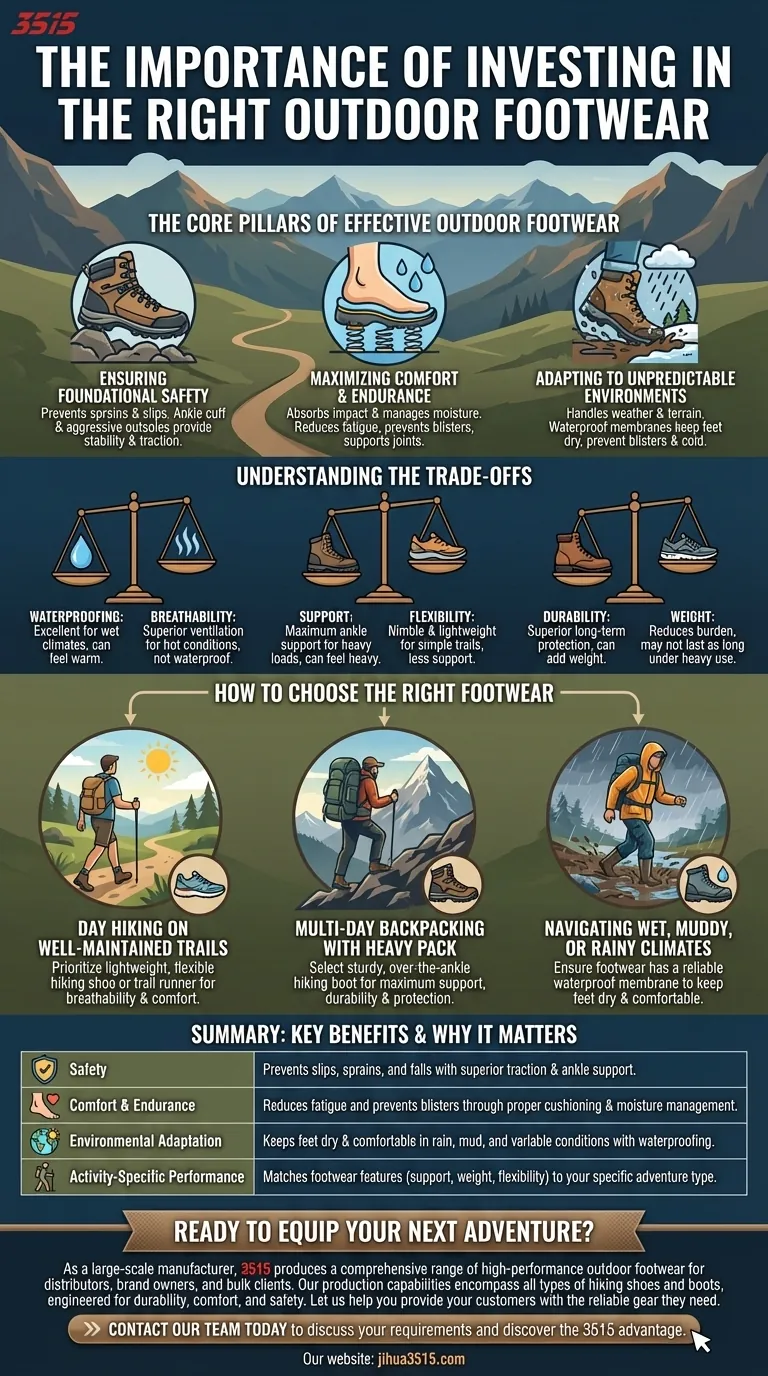
The Core Pillars of Effective Outdoor Footwear
Understanding why specific features matter is the first step toward making a wise investment. The benefits go far beyond keeping your feet dry; they form a system that supports your entire body.
Ensuring Foundational Safety
Proper outdoor footwear is your first line of defense against injury. A twisted ankle or a slip on an unstable surface can instantly end a trip.
Sturdy construction, particularly with a supportive ankle cuff, helps prevent sprains and strains, especially when carrying a pack. Aggressive outsoles with deep lugs provide reliable traction on loose dirt, wet rock, and mud, minimizing the risk of falls.
Maximizing Comfort and Endurance
Discomfort is a primary reason adventures are cut short. The right footwear is engineered to manage the stresses of walking for hours on uneven ground.
A proper fit combined with effective cushioning absorbs impact, reducing fatigue in your feet, knees, and back. Furthermore, materials that manage moisture prevent the buildup of sweat and friction, which are the primary causes of painful and debilitating blisters.
Adapting to Unpredictable Environments
Weather and trail conditions are rarely static. Footwear must be able to handle a range of scenarios to keep you safe and comfortable.
Waterproof membranes are critical for keeping feet dry from rain, puddles, or stream crossings. Dry feet are not only more comfortable but are also essential for preventing blisters and maintaining warmth in cold conditions.
Understanding the Trade-offs
No single shoe is perfect for every situation. Choosing the right footwear always involves balancing competing characteristics.
Waterproofing vs. Breathability
Highly waterproof boots are excellent for wet climates but can feel warm and trap sweat in hot, dry conditions. Inversely, highly breathable, non-waterproof shoes offer superior ventilation but will leave your feet soaked in a downpour.
Support vs. Flexibility
Rigid, high-cut boots offer maximum ankle support, which is ideal for carrying heavy loads over rough terrain. However, this same rigidity can feel heavy and restrictive on simple, well-maintained trails where a more flexible and lightweight shoe would feel more nimble.
Durability vs. Weight
Heavier boots, often made of leather, typically offer superior durability and protection but can contribute to fatigue over long distances. Modern lightweight synthetic shoes reduce this burden but may not last as long under heavy use.
How to Choose the Right Footwear for Your Adventure
Your choice should be dictated entirely by your intended use case. Be honest about the type of activity you will be doing most often.
- If your primary focus is day hiking on well-maintained trails: Prioritize a lightweight and flexible hiking shoe or trail runner that emphasizes breathability and comfort.
- If your primary focus is multi-day backpacking with a heavy pack: Select a sturdy, over-the-ankle hiking boot that provides maximum support, durability, and protection.
- If your primary focus is navigating wet, muddy, or consistently rainy climates: Ensure your footwear has a reliable waterproof membrane to keep your feet dry and comfortable.
Ultimately, the right footwear becomes an invisible tool, allowing you to focus entirely on the adventure, not on your feet.
Summary Table:
| Key Benefit | Why It Matters |
|---|---|
| Safety | Prevents slips, sprains, and falls with superior traction and ankle support. |
| Comfort & Endurance | Reduces fatigue and prevents blisters through proper cushioning and moisture management. |
| Environmental Adaptation | Keeps feet dry and comfortable in rain, mud, and variable conditions with waterproofing. |
| Activity-Specific Performance | Matches footwear features (support, weight, flexibility) to your specific adventure type. |
Ready to equip your next adventure with the perfect footwear?
As a large-scale manufacturer, 3515 produces a comprehensive range of high-performance outdoor footwear for distributors, brand owners, and bulk clients. Our production capabilities encompass all types of hiking shoes and boots, engineered for durability, comfort, and safety.
Let us help you provide your customers with the reliable gear they need. Contact our team today to discuss your requirements and discover the 3515 advantage.
Visual Guide
Related Products
- Durable Rubber Sole Outdoor Shoes Wholesale & Custom Manufacturing
- Wholesale Durable Camouflage Canvas Shoes with High-Traction Cleated Rubber Sole
- Wholesale Waterproof Tactical Boots Custom Suede & High-Traction Soles
- Premium Suede Sport Safety Shoes for Wholesale & Bulk Orders
- Lightweight Breathable Sneakers with Wet-Traction Grip for Wholesale & Private Label
People Also Ask
- What is the function of the sole in outdoor shoes? Find the Perfect Grip and Support
- What role do outdoor shoes and sneakers play in navigating external terrains? Engineered Stability for Every Surface
- How is AI utilized in the design of outdoor and safety footwear? Harnessing Big Data for Market-Driven Shoe Innovation
- Why is durability important when selecting outdoor shoes? A Guide to Safety & Long-Term Value
- What are the key components of outdoor shoes that affect comfort and sturdiness? A Guide to Durable, High-Performance Footwear



















