
Beyond just keeping your feet dry, the grip and traction of a woman's welly are the most critical features for safety and stability. In environments where wellies are necessary—wet grass, slick mud, or uneven trails—a proper sole prevents slips and falls, providing the secure footing needed to move with confidence.
The fundamental difference between a reliable, all-weather boot and a simple fashion accessory lies in its sole. Without adequate grip and traction, a welly fails its primary safety function, turning from protective gear into a potential hazard.
The Physics of a Secure Footing
Understanding why traction matters requires looking at the forces at play with every step you take on an unstable surface. The design of the sole directly dictates how well the boot can manage these forces.
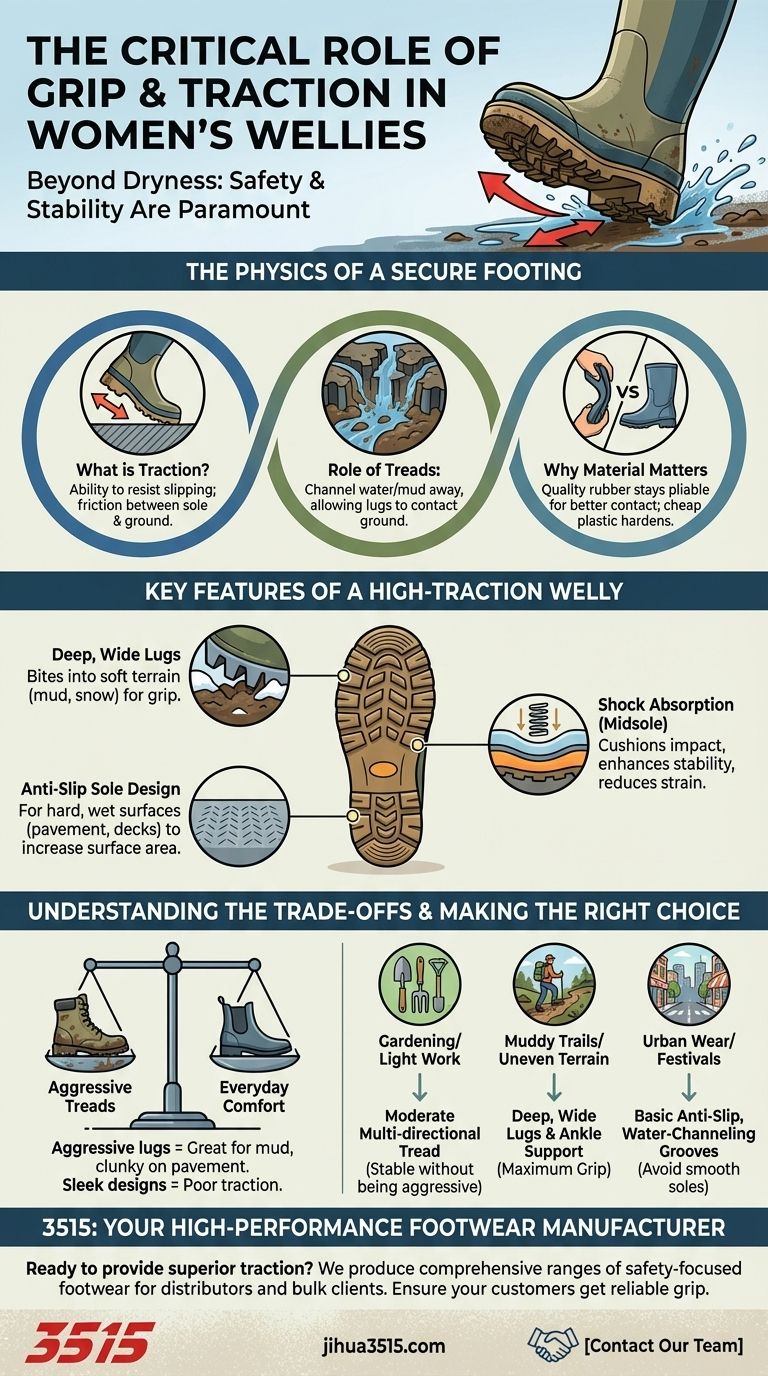
What is Traction?
Traction is the boot's ability to resist slipping on a surface. It's the friction created between the sole and the ground.
A sole with good traction maintains its hold, whether you're pushing off to walk forward or planting your foot to stop.
The Role of Tread Patterns
The deep grooves, or treads, on a welly sole act like the treads on a car tire. Their primary job is to channel water, mud, and debris away from the bottom of your foot.
This clearing action ensures the solid parts of the sole, known as lugs, can make direct contact with the ground, maximizing grip.
Why Material Matters
The material of the sole is just as important as its design. Softer, durable rubber compounds provide superior grip compared to hard, inflexible plastics.
Good quality rubber remains pliable even in cold weather, allowing it to conform to the ground for better contact and traction.
Key Features of a High-Traction Welly
When you're evaluating a pair of wellies, the sole tells you the story of its intended purpose. Look for specific design elements that signal a focus on safety and performance.
Deep, Wide Lugs
Lugs are the "teeth" of the outsole that bite into soft terrain like mud, loose dirt, or snow. The deeper and more widely spaced they are, the better they perform in challenging conditions.
Anti-Slip Sole Design
For harder surfaces like wet pavement, boat decks, or slick workshop floors, a different design is needed. Look for soles with fine, wavy cuts or complex patterns that increase the surface area and grip on flat, wet ground.
Shock Absorption
A midsole that absorbs impact does more than just provide comfort. It helps you maintain balance and stability on rocky or uneven terrain, reducing the strain on your feet and joints and preventing missteps.
Understanding the Trade-offs
The perfect welly for a muddy field is not necessarily the perfect welly for a rainy day in the city. Choosing the right boot means understanding its design compromises.
Aggressive Treads vs. Everyday Comfort
A boot with extremely deep, aggressive lugs is ideal for heavy mud but can feel clunky and uncomfortable on hard, flat surfaces like pavement. These designs also tend to track more dirt and mud indoors.
Style vs. Substance
Many fashion-focused wellies prioritize a sleek profile over functional safety. These often feature smooth, flat, or minimally textured soles that offer very poor traction in genuinely slippery conditions.
Durability and Performance
Lower-cost wellies may use cheaper materials that harden and crack over time. This not only leads to leaks but also causes a significant loss of flexibility in the sole, drastically reducing its grip.
Making the Right Choice for Your Goal
To select the best wellies, match the features of the sole directly to your most common activities.
- If your primary focus is gardening or light yard work: A boot with a moderate, multi-directional tread pattern will provide stability without being overly aggressive.
- If your primary focus is walking on muddy trails or uneven terrain: Prioritize wellies with deep, widely-spaced lugs and good ankle support for maximum grip and safety.
- If your primary focus is casual urban wear or festivals: A basic anti-slip sole with good water-channeling grooves is sufficient, but always avoid completely flat, smooth soles.
Choosing the right sole transforms your wellies from simple waterproof boots into a reliable tool for confident movement in any weather.
Summary Table:
| Feature | Why It Matters | Key Benefit |
|---|---|---|
| Tread Patterns | Channels water/mud away | Maximizes ground contact for grip |
| Sole Material | Quality rubber stays pliable | Provides superior grip in all conditions |
| Deep Lugs | Bites into soft terrain | Prevents slips in mud and snow |
| Shock Absorption | Cushions impact on uneven ground | Enhances stability and comfort |
Ready to find wellies with superior grip and traction?
As a large-scale manufacturer, 3515 produces a comprehensive range of high-performance footwear for distributors, brand owners, and bulk clients. Our production capabilities encompass all types of safety-focused shoes and boots, ensuring your customers get the reliable traction they need.
Contact our team today to discuss your requirements and discover how we can provide durable, safe, and high-traction wellies for your market.
Visual Guide
Related Products
- Wholesale Classic Leather Lace-Up Ankle Boots for Brand Manufacturing
- Wholesale Women's Leather Derby Shoes Custom Factory Production
- Durable Waterproof Rain Boots | Custom Manufacturer for Wholesale & Brands
- Wholesale Durable Leather Work Boots | 8-Inch Goodyear Welt Manufacturer
People Also Ask
- How are oils used to waterproof leather boots? A Guide to Deep Conditioning & Protection
- Why is regular maintenance necessary for the performance of leather boots? Boost Durability & Brand Reputation
- Why might it be beneficial to pre-heat the boots before applying wax? Achieve Deeper, Longer-Lasting Protection
- How can leather boots maintain their water resistance? A Guide to Lasting Protection
- What is the biggest enemy of leather boots? Protect Your Investment from Water Damage



