In short, equestrian footwear is critical because it is a primary piece of safety equipment. Beyond that, the right boots enhance a rider's functionality and effectiveness by providing stability and enabling clear communication with the horse. They are far more than a stylistic choice; they are an essential tool for any rider.
The core purpose of a riding boot is not fashion, but physics. Every design feature—from the distinct heel to the smooth sole—is engineered to prevent life-threatening accidents and allow for the precise leg control required to guide a thousand-pound animal.
The Non-Negotiable Foundation: Rider Safety
Before considering any other factor, a riding boot's most important job is to protect you. This is achieved through a few very specific design elements that differ significantly from everyday footwear.
The Critical Role of the Heel
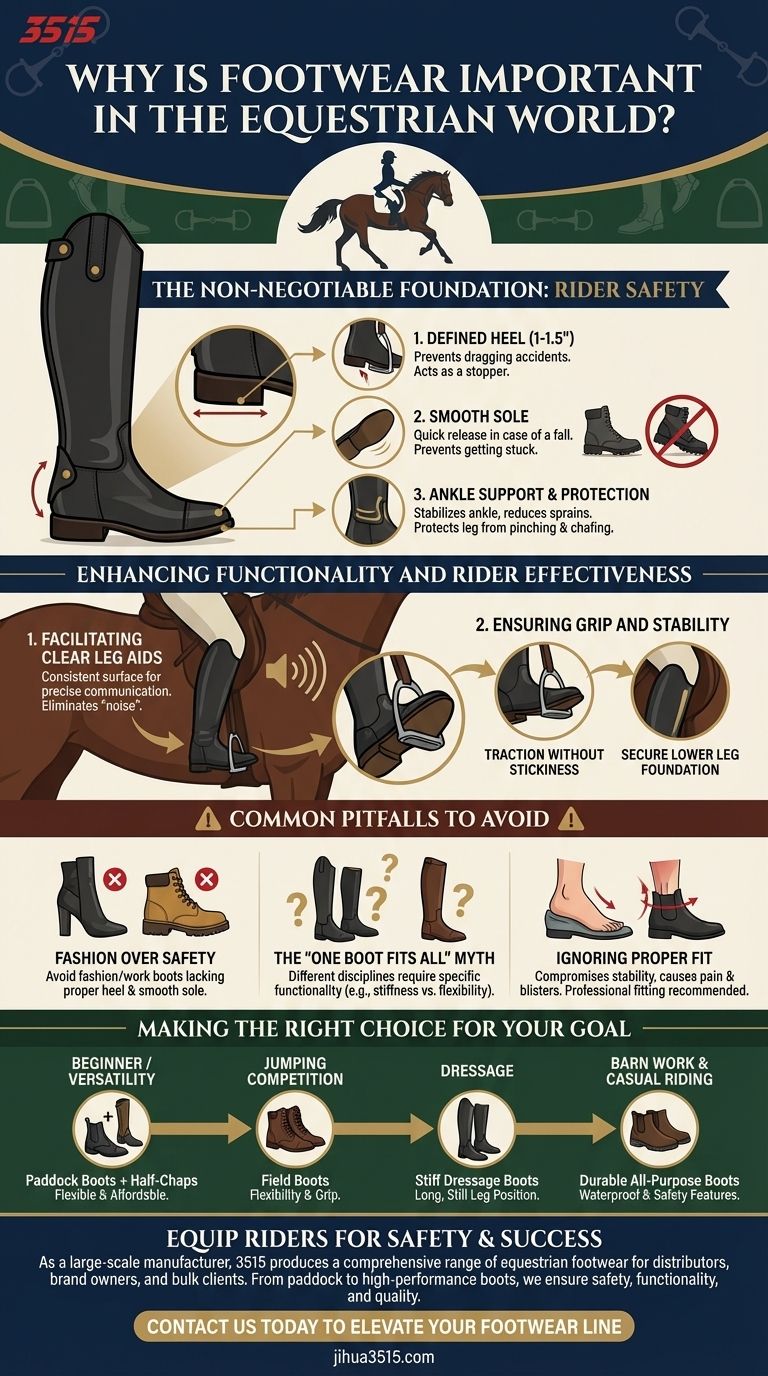
The most important safety feature of any riding boot is a defined heel, typically between 1 and 1.5 inches high.
This heel acts as a stopper, preventing the rider's foot from sliding all the way through the stirrup iron. This single feature helps prevent the most dangerous type of fall, where a rider is dragged because their foot is caught.
The Purpose of a Smooth Sole
Riding boots have a smooth or lightly textured sole for a critical reason: quick release.
If you do fall, you need your foot to slide out of the stirrup easily. Boots with deep treads or heavy lugs, like hiking or work boots, can get stuck, creating an extremely hazardous situation.
Ankle Support and Protection
The structure of a riding boot is designed to stabilize the ankle joint, reducing the risk of sprains.
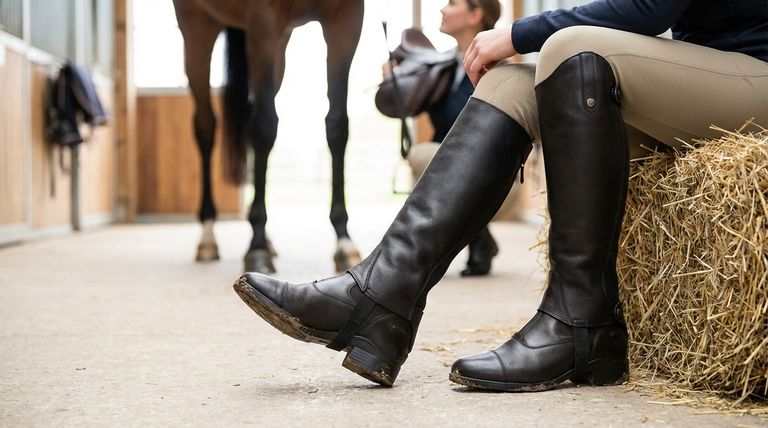
Furthermore, the sturdy leather of the shaft protects the rider's leg from getting pinched by the stirrup leathers or chafed by the saddle, which is both painful and distracting.
Enhancing Functionality and Rider Effectiveness
Once safety is addressed, proper footwear directly impacts your ability to ride well. A boot is a tool for communication.
Facilitating Clear Leg Aids
A key way riders communicate with a horse is through subtle pressure from their lower leg.
The relatively firm and tall shaft of a riding boot creates a smooth, consistent surface. This allows your leg cues to be transmitted clearly and precisely to the horse's side, eliminating the "noise" that a soft or wrinkled boot would create.
Ensuring Grip and Stability
Proper boots provide the right amount of grip in the right places.
The sole material is designed to offer traction on the stirrup pad without being sticky, while the inner calf of the boot helps secure the rider's leg against the saddle. This combination creates a stable and secure lower leg, which is the foundation of a balanced seat.
Common Pitfalls to Avoid
Choosing the wrong footwear is one of the most common mistakes new riders make, often because they underestimate its importance.
Prioritizing Fashion Over Safety
Never choose a boot simply for its looks. Fashion boots, rain boots, or chunky work boots that lack a proper heel and have a deep-tread sole are dangerously unsuitable for riding.
The "One Boot Fits All" Myth
Different riding disciplines require different types of functionality. A very stiff dressage boot is excellent for subtle cues but restricts the ankle flexion needed for a show jumping position. A softer field boot used for jumping might not offer the rigidity a dressage rider prefers.
Ignoring Proper Fit
A boot that is too loose will cause your foot to slide around, compromising stability and creating blisters. A boot that is too tight can cut off circulation and cause significant pain, distracting you from your horse. Professional fitting is always recommended.
Making the Right Choice for Your Goal
Your choice of footwear should align directly with your primary activities.
- If your primary focus is safety and versatility (beginner): Choose a quality pair of paddock boots (ankle-height) paired with half-chaps for a flexible and affordable setup.
- If your primary focus is competitive showing in jumping disciplines: Invest in a well-fitted pair of field boots, which have laces at the ankle for flexibility.
- If your primary focus is dressage: Select a formal dressage boot, which is much stiffer to encourage a long, still leg position.
- If your primary focus is barn work with some casual riding: Look for durable, waterproof all-purpose or yard boots that still feature a safety heel and appropriate sole.
Investing in the right equestrian footwear is a direct investment in your safety, effectiveness, and confidence as a rider.
Summary Table:
| Feature | Purpose | Benefit |
|---|---|---|
| Defined Heel (1-1.5") | Prevents foot from sliding through stirrup | Avoids dangerous dragging accidents |
| Smooth Sole | Allows for quick release from stirrup | Enhances safety in case of a fall |
| Sturdy Ankle Support | Stabilizes ankle and protects leg | Reduces injury risk and prevents chafing |
| Firm, Tall Shaft | Creates a consistent surface for leg aids | Enables precise communication with the horse |
Ready to equip riders with the right tools for safety and success?
As a large-scale manufacturer, 3515 produces a comprehensive range of equestrian footwear for distributors, brand owners, and bulk clients. Our production capabilities encompass all types of riding boots—from durable paddock boots to high-performance field and dressage boots—ensuring your customers get the perfect blend of safety, functionality, and quality.
Contact us today to discuss your manufacturing needs and elevate your footwear line.
Visual Guide
Related Products
- Custom Breathable Perforated Leather Derby Shoes for Wholesale & Brands
- Wholesale Women's Leather Derby Shoes Custom Factory Production
- Wholesale Modern Perforated Leather Derby Shoes with Chunky Sole for Custom Branding
- Wholesale Breathable Perforated Leather Derby Shoes with Modern Comfort Sole
- Wholesale Leather Derby Shoes Manufacturer | Customizable Business & Dress Footwear
People Also Ask
- How do Derby shoes fit into business casual attire? Master the Perfect Balance of Professional Style
- What is the main difference between Derby Shoes and Oxford Shoes? It's All in the Lacing.
- What are the features and appropriate occasions for wearing derby shoes? A Guide to Versatile Style
- What historical figure is associated with the Derby shoe? The Earl of Derby's Comfort Revolution
- Why are Derby shoes considered a valuable investment for business attire? The Ultimate Guide to Versatile Professional Footwear