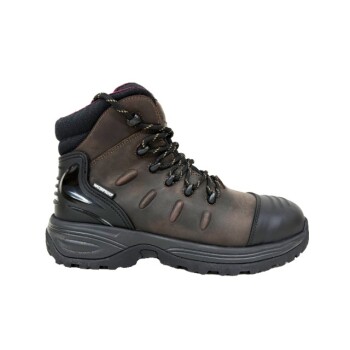
Fluid-resistant safety footwear is a critical line of defense for technicians handling contaminated medical instruments. It is strictly necessary to protect the feet and lower limbs from inevitable splashes of contaminated body fluids, aerosols, and harsh chemical disinfectants that occur during manual cleaning.
Manual cleaning inherently involves liquids and spray, making exposure risks unavoidable. Fluid-resistant footwear establishes a secure defensive barrier, ensuring biological safety in environments where liquid spraying or spilling is a constant reality.
The Hazards of Manual Cleaning
Exposure to Biological Contaminants
Technicians performing manual cleaning face direct risks from organic matter. Contaminated body fluids are frequently present on instruments.
During the cleaning process, water and fluids can easily splash or spill. Without proper protection, these biohazards can come into direct contact with the skin.
The Risk of Aerosols
The danger is not limited to heavy spills or standing water. The cleaning process often generates aerosols—fine mists of fluid that settle on lower surfaces.
Standard footwear cannot adequately block these microscopic particles. Fluid-resistant materials are required to prevent these aerosols from penetrating to the skin.
Chemical Disinfectant Safety
Biological matter is not the only threat; the cleaning agents themselves are hazardous. Chemical disinfectants used in processing are often potent and corrosive.
Spills of these chemicals can cause burns or reactions if they soak through standard shoe materials. Fluid-resistant footwear ensures these chemicals are repelled rather than absorbed.
The Function of Protective Footwear
Establishing a Defensive Barrier
The primary role of this footwear is to create a secure defensive barrier. It physically separates the technician from the hazardous environment.
This barrier is essential for maintaining biological safety. It ensures that the process of making instruments safe does not compromise the safety of the worker.
Protecting the 'Splash Zone'
Effective protection extends beyond just the feet. The primary reference notes the importance of protecting the lower limbs as well.
During manual cleaning and preliminary processing, liquids often splash downwards. Comprehensive footwear addresses this specific vulnerability in the technician's workspace.
Common Pitfalls in Protection
Overlooking Preliminary Phases
A common mistake is assuming protective gear is only for the "main" cleaning stage. Risks exist during preliminary processing as well.
Fluid-resistant footwear must be worn during all steps where liquids are handled. Skipping this protection during initial sorting or rinsing leaves the technician vulnerable.
Underestimating 'Minor' Splashes
Technicians may believe that careful handling negates the need for fluid resistance. However, accidental spraying or spilling is likely regardless of skill level.
Relying on technique rather than a physical barrier is a safety failure. The footwear provides insurance against the unpredictable nature of fluid dynamics.
Ensuring Safety in Your Workflow
To maximize protection and compliance, evaluate your current safety protocols against the specific risks of your decontamination area.
- If your primary focus is Biological Safety: Ensure footwear is rated to block both heavy fluid splashes and fine aerosols to prevent infection risks.
- If your primary focus is Chemical Safety: Verify that the fluid-resistant material is compatible with the specific disinfectants used in your manual cleaning process.
Proper protective footwear is not just an accessory; it is the foundation of a safe decontamination process.
Summary Table:
| Hazard Category | Risk Source | Protective Requirement |
|---|---|---|
| Biological Contaminants | Body fluids, organic matter | Impermeable fluid barrier |
| Aerosols | Fine mists from cleaning | Micro-particle resistance |
| Chemical Exposure | Corrosive disinfectants | Chemical-resistant materials |
| Physical Splashes | Downward spills/sprays | Lower limb & foot coverage |
Secure Your Team's Safety with Industry-Leading Footwear
As a large-scale manufacturer serving distributors and brand owners, 3515 offers comprehensive production capabilities for all footwear types, anchored by our flagship Safety Shoes series. We understand that for medical technicians and industrial workers, fluid-resistant protection is a non-negotiable safety standard. Our extensive portfolio covers work and tactical boots, outdoor shoes, training shoes, and sneakers, as well as Dress & Formal shoes to meet your diverse bulk requirements.
Partner with us to provide your customers with the high-performance defensive barriers they need. Contact us today to discuss your bulk manufacturing needs and explore our customizable footwear solutions.
References
- Pattikan Damrongkhunawut, Withaya Chanchai. Effectiveness of Personal Protective Equipment in Preventing Coronavirus Infection and Emerging Infectious Diseases among Central Service Technicians in Thailand. DOI: 10.29011/2688-9501.101394
This article is also based on technical information from 3515 Knowledge Base .
Related Products
- Premium Flame-Retardant Waterproof Safety Boots and Shoes
- Heavy-Duty Waterproof Nubuck Safety Boots Safety Shoes for Bulk Supply
- Premium Wholesale Waterproof Safety Boots High Performance Protection for Industrial Markets
- Puncture-Resistant Velcro Safety Boots for Wholesale & Custom Manufacturing
- High Performance Fire-Retardant Waterproof Safety Boots
People Also Ask
- Why are waterproof safety boots recommended for certain work environments? Essential Protection for Wet & Hazardous Jobs
- What materials are commonly used in waterproof boots? The Complete Guide to Durable, Breathable Protection
- How does boot construction affect waterproofing? The Science Behind Truly Dry Feet
- What should you look for to ensure boots are fully waterproof? The Essential 2-Part System
- What is the advantage of one-piece construction in waterproof boots? Unbeatable Seamless Protection