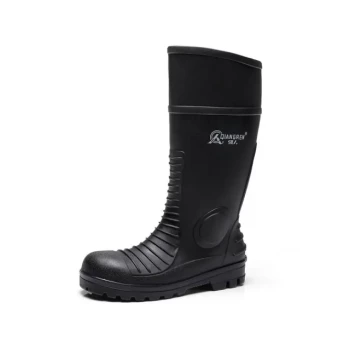
Dynamic balance testing is essential because it quantifies a tactical athlete's ability to maintain stability despite the mechanical restrictions imposed by heavy, rigid footwear. By measuring how an athlete stabilizes on one leg while reaching in various directions, these tests identify functional asymmetries that lead to falls and lower limb injuries on complex terrain.
Core Takeaway While tactical boots provide necessary external protection, their weight and rigidity can mask underlying joint instability. Dynamic balance testing isolates the athlete's physiological stability to predict fall risks that gear alone cannot prevent.
The Mechanics of Stability Assessment
Evaluating Single-Leg Control
Dynamic balance testing specifically measures the ability to maintain stability while standing on one leg and reaching. This isolates the lower limb joints, forcing them to stabilize the body without bilateral support.
Identifying Functional Asymmetries
The primary goal is to uncover differences in performance between the left and right sides. Identifying these functional asymmetries is critical, as imbalances are a leading indicator of injury risk in high-demand scenarios.
Predicting Fall Risks
By simulating instability in a controlled environment, these tests predict how an athlete will perform in the field. This is vital for personnel operating on uneven ground where a loss of balance can compromise the mission.
The Interaction Between Footwear and Terrain
The Challenge of Rigid Gear
Tactical boots are designed with fiberglass or steel shanks and high ankle shafts. While these features prevent ankle rolling, the added weight and rigidity change how the foot interacts with the ground.
Compensation on Complex Terrain
Boots provide traction through slip-resistant rubber soles, but they cannot actively balance the body. If the athlete lacks intrinsic lower limb stability, the boot's features are insufficient to prevent falls on unstable surfaces.
Assessing Joint Integrity
Heavy boots can fatigue the lower limbs faster than standard footwear. Testing ensures the joints have the endurance and strength required to maintain stability even when weighed down by protective equipment.
Understanding the Trade-offs
External Support vs. Internal Stability
There is a critical distinction between the support a boot provides and the stability of the athlete. A rigid boot offers structural support, but it can create a false sense of security by masking weak ankles or knees.
The Risk of Reliance
Over-reliance on the boot's ankle support without verifying dynamic balance can be dangerous. If the athlete cannot stabilize themselves without the boot, they are at a significantly higher risk of injury when the terrain exceeds the boot's mechanical limits.
Making the Right Choice for Your Goal
Dynamic balance data should be used to dictate training interventions and equipment readiness.
- If your primary focus is injury prevention: Prioritize correcting left-right asymmetries discovered during testing before deploying into rough terrain.
- If your primary focus is equipment selection: Ensure the boot's rigidity level matches the athlete's current stability metrics; stiffer boots may require higher baseline strength.
True tactical readiness requires that the athlete's internal balance creates a solid foundation that their equipment simply enhances.
Summary Table:
| Key Assessment Factor | Benefit for Tactical Athletes | Impact on Equipment Choice |
|---|---|---|
| Single-Leg Control | Isolates joint stability without bilateral support | Determines necessary ankle shaft rigidity |
| Functional Asymmetry | Identifies left-right imbalances to prevent injury | Informs custom orthotic or boot adjustments |
| Fall Risk Prediction | Simulates performance on complex, uneven terrain | Validates sole traction and shank requirements |
| Joint Integrity | Measures endurance under heavy gear loads | Matches boot weight to athlete strength levels |
Elevate Your Tactical Readiness with 3515
As a premier large-scale manufacturer serving global distributors and brand owners, 3515 delivers the high-performance footwear your personnel need to stay stable and protected. Our comprehensive production capabilities cover all footwear types—from our flagship Safety Shoes and Tactical Boots to training sneakers and formal dress shoes.
We understand that internal stability and external gear must work in harmony. Partner with us to provide your customers with boots engineered for durability and balanced performance. Contact us today to discuss your bulk requirements and custom production needs.
References
- Paul Sharp, Hugh H.K. Fullagar. A pragmatic strength and conditioning intervention for firefighters: Feasibility of the Tactical Athlete Resilience Program (TARP). DOI: 10.1002/hpja.656
This article is also based on technical information from 3515 Knowledge Base .
Related Products
- High-Traction Suede Tactical Boots Wholesale & Custom Manufacturing
- Durable Leather High-Ankle Tactical Boots for Wholesale & Custom Manufacturing
- Durable High-Ankle Tactical Boots Wholesale Manufacturer for Custom & Bulk Orders
- Wholesale Tactical Boots High-Traction & Reflective for Bulk & Brand Orders
- Durable High-Ankle Tactical Boots for Wholesale & Custom Manufacturing
People Also Ask
- Why is sequential analysis utilized to evaluate tactical boots? Master Dynamic Boot Development and Ergonomic Performance
- How does the material of tactical boots affect their performance? Choose the Right Material for Your Mission
- How do tactical boots differ from regular boots? Performance, Durability & Design Explained
- How do military uniforms and tactical boots impact the prediction of thermal risk? Essential Safety Insights
- What are the benefits of integrating FES and sEMG into tactical boots? Safety, Reliability & Field-Ready Performance