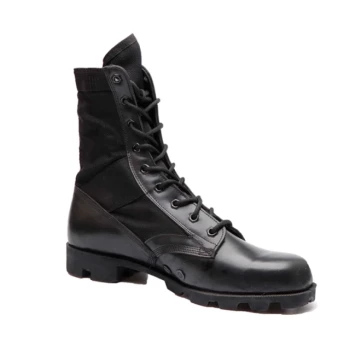
In tactical footwear, breathability is non-negotiable. It is the critical feature that allows sweat vapor to escape, preventing the internal moisture buildup that leads to blisters, discomfort, and reduced operational effectiveness. This ventilation keeps your feet drier, healthier, and more comfortable across a wide range of temperatures and conditions.
The core function of breathability isn't just about comfort—it's about performance. By managing the climate inside the boot, it directly prevents the skin breakdown and friction blisters that can compromise your mobility and mission readiness.
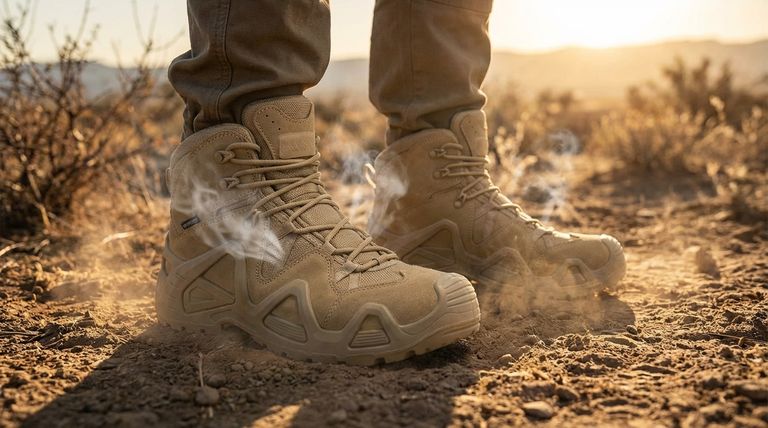
The Core Problem: Managing Internal Moisture
Your effectiveness in the field depends on the health of your feet. The primary threat to foot health often comes not from the outside environment, but from the moisture generated inside your own boots.
Your Feet Are Built to Sweat
Under physical exertion, the average person's feet can produce a significant amount of sweat. This is your body's natural cooling mechanism.
The Dangers of Trapped Moisture
When this sweat has nowhere to go, it saturates your socks and skin. This trapped moisture creates a cascade of problems, including friction blisters, fungal infections, and unpleasant odors.
From Discomfort to Mission Failure
Wet feet are not just uncomfortable; they are a liability. The softened skin is far more susceptible to damage, and the constant discomfort becomes a major distraction that can impair focus and endurance during long movements.
How Breathability Works
Breathability is the engineered solution to the problem of internal moisture. It relies on specific materials and scientific principles to vent the sweat your feet produce.
The Science of Vapor Transfer
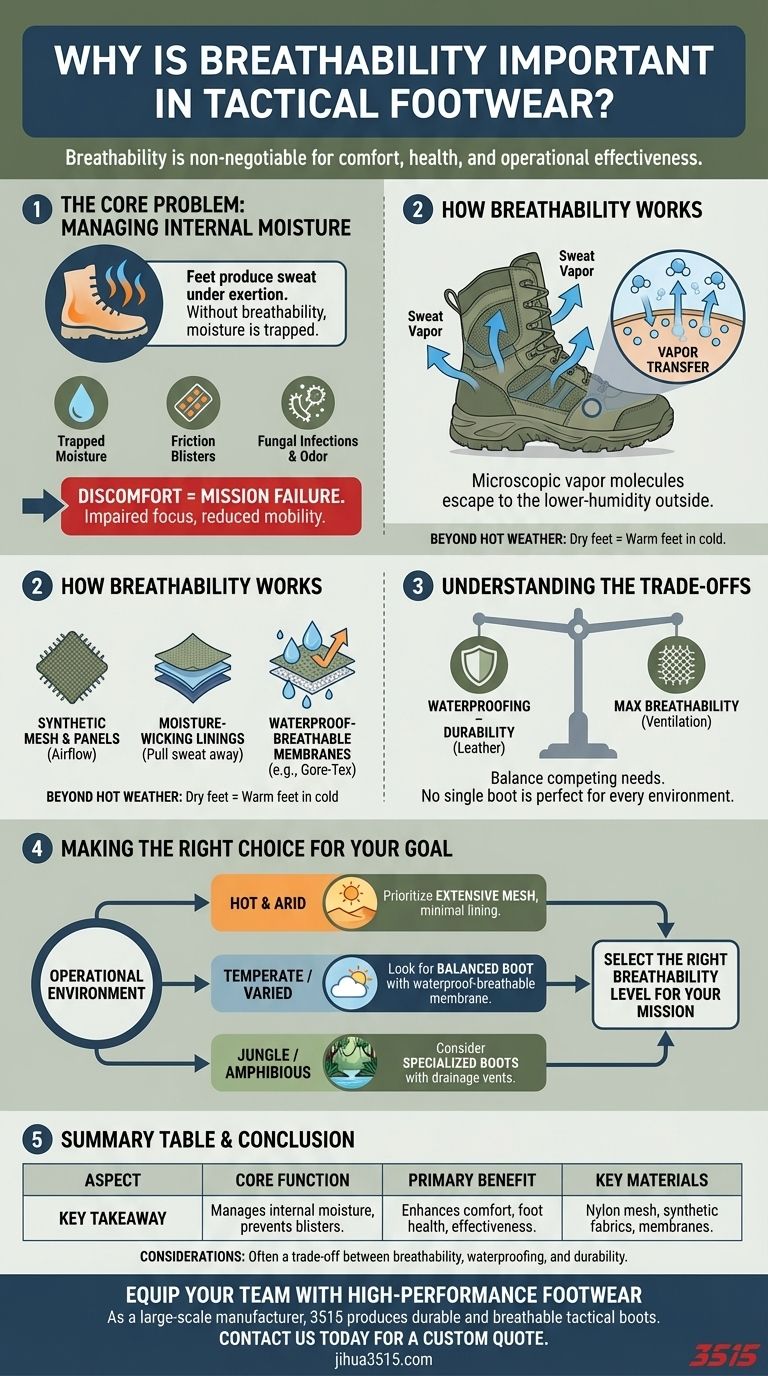
Breathability functions by allowing microscopic water vapor molecules (sweat) to pass from the high-humidity environment inside the boot to the lower-humidity environment outside. This process is driven by both a moisture and temperature gradient, actively pulling dampness away from your skin.
Materials That Make It Possible
This is achieved through advanced materials. Synthetic fabrics and nylon mesh panels are incorporated into boot uppers to create perforations for airflow. Specialized moisture-wicking linings pull sweat away from the skin, while waterproof-breathable membranes like Gore-Tex use microscopic pores large enough for vapor to escape but too small for liquid water to enter.
Beyond Hot Weather
While essential for keeping feet cool in hot weather, breathability is also key for temperature regulation in the cold. A dry foot is a warm foot. By keeping your socks from becoming saturated with sweat, breathable boots help your insulation work effectively, preventing heat loss.
Understanding the Trade-offs
Choosing tactical footwear involves balancing competing needs. No single boot is perfect for every environment, and breathability often comes with trade-offs.
Breathability vs. Waterproofing
The most common trade-off is with waterproofing. A fully waterproof boot with a membrane is inherently less breathable than a non-waterproof boot with mesh panels designed for maximum airflow. You must decide whether it's more important to keep external water out or to let internal sweat escape.
Durability Considerations
Materials that offer the highest levels of breathability, such as lightweight nylon and open-weave mesh, may offer less abrasion resistance than traditional full-grain leather. Your expected operational environment should guide your choice between maximum ventilation and maximum durability.
Making the Right Choice for Your Goal
Selecting the correct footwear requires a clear understanding of your most likely operational conditions. Use breathability as a key factor in your decision.
- If your primary focus is hot and arid environments: Prioritize boots with extensive mesh panels and minimal lining for maximum ventilation.
- If your primary focus is temperate or varied climates: Look for a balanced boot featuring a quality waterproof-breathable membrane that offers protection from rain without trapping excessive sweat.
- If your primary focus is jungle or amphibious operations: Consider specialized boots with drainage vents, which are designed to expel water quickly rather than trying to keep it out entirely.
Ultimately, selecting footwear with the right level of breathability is a critical decision that protects your most important asset in the field.
Summary Table:
| Aspect | Key Takeaway |
|---|---|
| Core Function | Manages internal moisture to prevent blisters and skin breakdown. |
| Primary Benefit | Enhances comfort, foot health, and operational effectiveness. |
| Key Materials | Nylon mesh, synthetic fabrics, and waterproof-breathable membranes (e.g., Gore-Tex). |
| Considerations | Often involves a trade-off between breathability, waterproofing, and durability. |
Ready to equip your team with high-performance tactical footwear?
As a large-scale manufacturer, 3515 produces a comprehensive range of durable and breathable tactical boots for distributors, brand owners, and bulk clients. Our expertise ensures your footwear meets the demands of any environment, keeping your team comfortable and mission-ready.
Contact us today to discuss your specific needs and receive a custom quote.
Visual Guide
Related Products
- Durable Leather High-Ankle Tactical Boots for Wholesale & Custom Manufacturing
- Durable Leather Tactical Boots Wholesale & Custom Manufacturing for Brands
- Durable High-Ankle Tactical Boots Wholesale Manufacturer for Custom & Bulk Orders
- Durable Mid-Cut Tactical Boots for Wholesale & Private Label
- Wholesale Waterproof Tactical Boots Custom Suede & High-Traction Soles
People Also Ask
- How do military uniforms and tactical boots impact the prediction of thermal risk? Essential Safety Insights
- How does the material of tactical boots affect their performance? Choose the Right Material for Your Mission
- Why is sequential analysis utilized to evaluate tactical boots? Master Dynamic Boot Development and Ergonomic Performance
- How do tactical boots differ from regular boots? Performance, Durability & Design Explained
- What are the primary differences between tactical boots and combat boots? Choose the Right Boot for Your Mission