
At its core, breathability in hiking footwear is about moisture management. Its primary job is to allow the water vapor produced by your sweat to escape, keeping your feet dry. This single function is crucial for preventing discomfort, regulating temperature, and avoiding serious skin problems on the trail.
Breathability is not a luxury feature; it's a technical system essential for foot health and hiking performance. By managing moisture, it directly mitigates the two factors that most often ruin a hike: blisters and temperature-related discomfort.
The Core Function: Managing Your Foot's Microclimate
Your feet can produce a surprising amount of sweat, especially during strenuous activity. How your footwear handles that moisture dictates your level of comfort and safety.
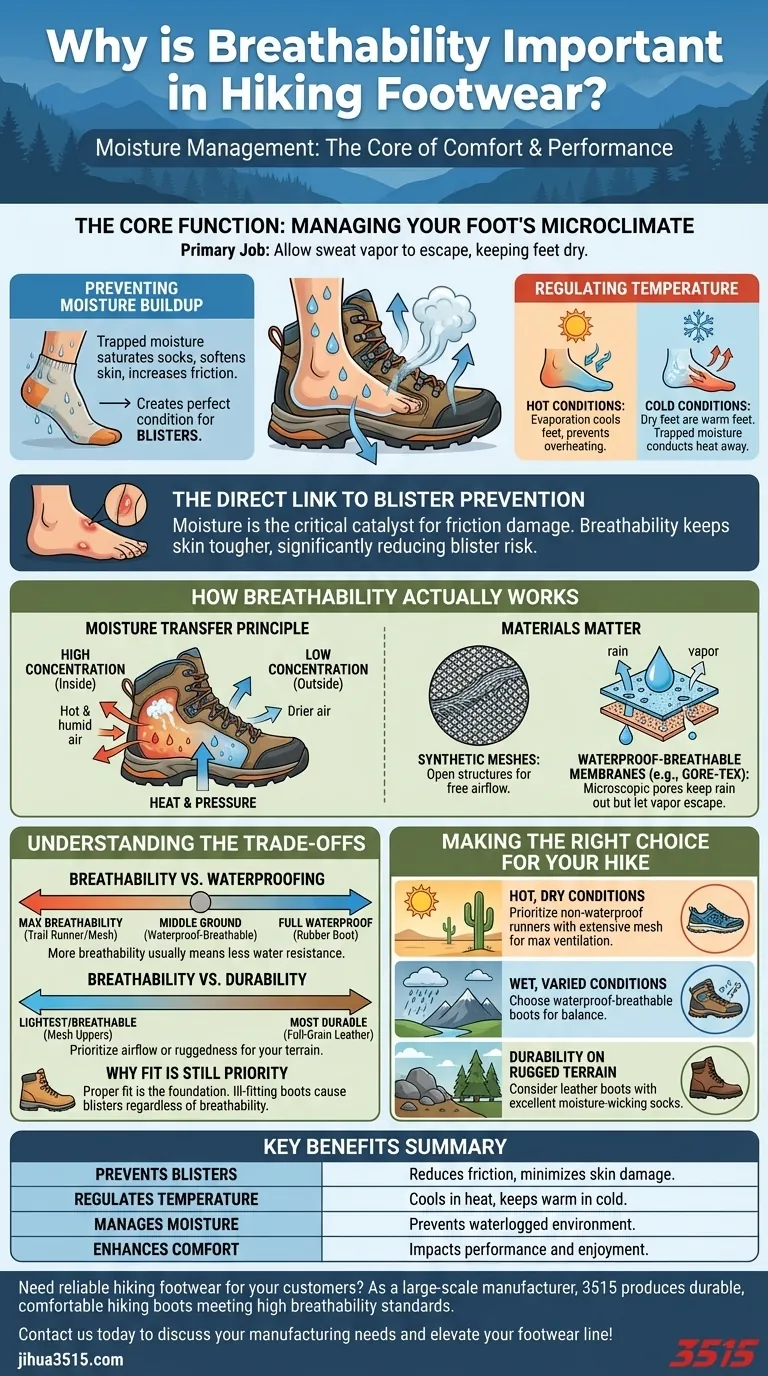
Preventing Moisture Buildup
Your feet are one of the sweatiest parts of your body. When that moisture gets trapped inside your boot, it saturates your socks and softens the skin on your feet.
This waterlogged environment dramatically increases friction between your foot, sock, and boot, creating the perfect conditions for painful blisters to form.
Regulating Temperature
Breathability plays a vital role in keeping your feet comfortable in both hot and cold conditions.
In warm weather, the evaporation of sweat is your body's natural air conditioning system. Breathable materials allow this process to happen, helping to cool your feet and prevent overheating.
In cold weather, dry feet are warm feet. Trapped moisture conducts heat away from your body far more effectively than air. A breathable boot that keeps your socks dry ensures your insulation works as intended, preventing your feet from getting cold.
The Direct Link to Blister Prevention
Blisters are caused by friction, but moisture is the critical catalyst. Skin that is damp and soft is far more susceptible to damage from rubbing and pressure points.
By actively moving moisture away from your skin, breathable footwear helps keep your skin tougher and more resilient, significantly reducing the likelihood of developing blisters.
How Breathability Actually Works
Breathability isn't magic; it's a function of material science designed to move water vapor.
The Principle of Moisture Transfer
The process works by moving water vapor from an area of high concentration (inside your warm, humid sock) to an area of low concentration (the drier air outside your boot).
This natural process is driven by the heat and pressure generated by your foot, which actively pushes the water vapor out through the footwear's materials.
The Role of Materials
The most breathable footwear often uses synthetic materials like nylon meshes and other engineered fabrics. These materials have an open structure or perforations that allow air and water vapor to pass through freely.
Waterproof-Breathable Membranes
Technologies like GORE-TEX represent a sophisticated compromise. These membranes are engineered with billions of microscopic pores per square inch.
Each pore is thousands of times smaller than a liquid water droplet, preventing rain and puddles from getting in. However, the pores are large enough for an individual water vapor molecule to escape, allowing sweat to be wicked away.
Understanding the Trade-offs
Breathability is just one of several critical footwear characteristics. Optimizing for it often means compromising on another feature.
Breathability vs. Waterproofing
This is the most common trade-off. A fully waterproof boot, like a rubber boot, offers zero breathability. A non-waterproof trail runner with mesh panels offers maximum breathability but no water protection.
Waterproof-breathable membranes are the middle ground, offering good water resistance while still allowing some moisture to escape, though never as much as a non-waterproof shoe.
Breathability vs. Durability
The lightest, most breathable mesh uppers are often less resistant to abrasion and tearing than heavier materials like full-grain leather. Your choice depends on whether you prioritize airflow or ruggedness for the terrain you'll be tackling.
Why Fit Is Still the Priority
Even the most breathable boot in the world will fail you if it doesn't fit properly. An ill-fitting boot creates pressure points and friction that will cause blisters, regardless of how well it manages moisture. Proper fit is the non-negotiable foundation of good hiking footwear.
Making the Right Choice for Your Hike
Select your footwear by matching its level of breathability to your most common hiking environment.
- If your primary focus is hot, dry conditions: Prioritize non-waterproof trail runners with extensive mesh panels for maximum ventilation.
- If your primary focus is wet, varied conditions: Choose a boot with a waterproof-breathable membrane to balance moisture protection and breathability.
- If your primary focus is durability on rugged terrain: Consider leather boots, but pair them with excellent moisture-wicking socks and understand they will be warmer.
Ultimately, understanding breathability allows you to select footwear that works with your body to ensure comfort and safety on any trail.
Summary Table:
| Key Benefit | Why It Matters |
|---|---|
| Prevents Blisters | Reduces friction by keeping feet dry, minimizing skin damage. |
| Regulates Temperature | Cools feet in heat, keeps them warm in cold by managing moisture. |
| Manages Moisture | Allows sweat vapor to escape, preventing a waterlogged environment. |
| Enhances Comfort | Directly impacts performance and enjoyment by reducing discomfort. |
Need reliable hiking footwear for your customers?
As a large-scale manufacturer, 3515 produces a comprehensive range of durable and comfortable hiking boots and shoes for distributors, brand owners, and bulk clients. Our expertise ensures your products meet the highest standards of breathability and performance.
Contact us today to discuss your manufacturing needs and elevate your footwear line!
Visual Guide
Related Products
- Durable Rubber Sole Outdoor Shoes Wholesale & Custom Manufacturing
- Wholesale High-Traction Camo Boots - Custom Manufacturer for Brands
- Wholesale Durable Camouflage Canvas Shoes with High-Traction Cleated Rubber Sole
- Wholesale Lightweight Tactical Boots Custom Manufacturer for Desert & Combat Use
- Wholesale Waterproof Tactical Boots Custom Suede & High-Traction Soles
People Also Ask
- What is the function of the sole in outdoor shoes? Find the Perfect Grip and Support
- What role do outdoor shoes and sneakers play in navigating external terrains? Engineered Stability for Every Surface
- How is AI utilized in the design of outdoor and safety footwear? Harnessing Big Data for Market-Driven Shoe Innovation
- Why is durability important when selecting outdoor shoes? A Guide to Safety & Long-Term Value
- What are the key components of outdoor shoes that affect comfort and sturdiness? A Guide to Durable, High-Performance Footwear



















