In short, breathability is critical in fire boots because it directly impacts safety and performance by managing sweat. During intense exertion, the foot produces a significant amount of moisture. If this sweat vapor cannot escape, it saturates the sock and skin, dramatically increasing the risk of debilitating blisters, hot spots, and long-term foot health issues that can compromise a firefighter in a critical moment.
The core function of breathability in a fire boot is not about feeling a cool breeze, but about actively managing the internal climate. It's an engineered system that allows perspiration to escape, keeping the foot drier, more comfortable, and fundamentally more resilient during grueling operations.
The Critical Role of Moisture Management
A firefighter's boot is a sealed system designed for maximum protection against external hazards like heat, water, and chemicals. However, this creates an intense internal environment.
The Foot as a Heat Engine
During strenuous activity, the human body generates immense heat, and the feet are a primary area for sweating. Trapped inside a heavy, insulated boot, this moisture has nowhere to go without a breathable membrane.
How Trapped Moisture Compromises You
When sweat accumulates, it saturates your socks and skin. This leads to two immediate problems: increased friction and reduced thermal insulation. This combination is the perfect recipe for painful foot injuries.
The Mechanism of Modern Breathability
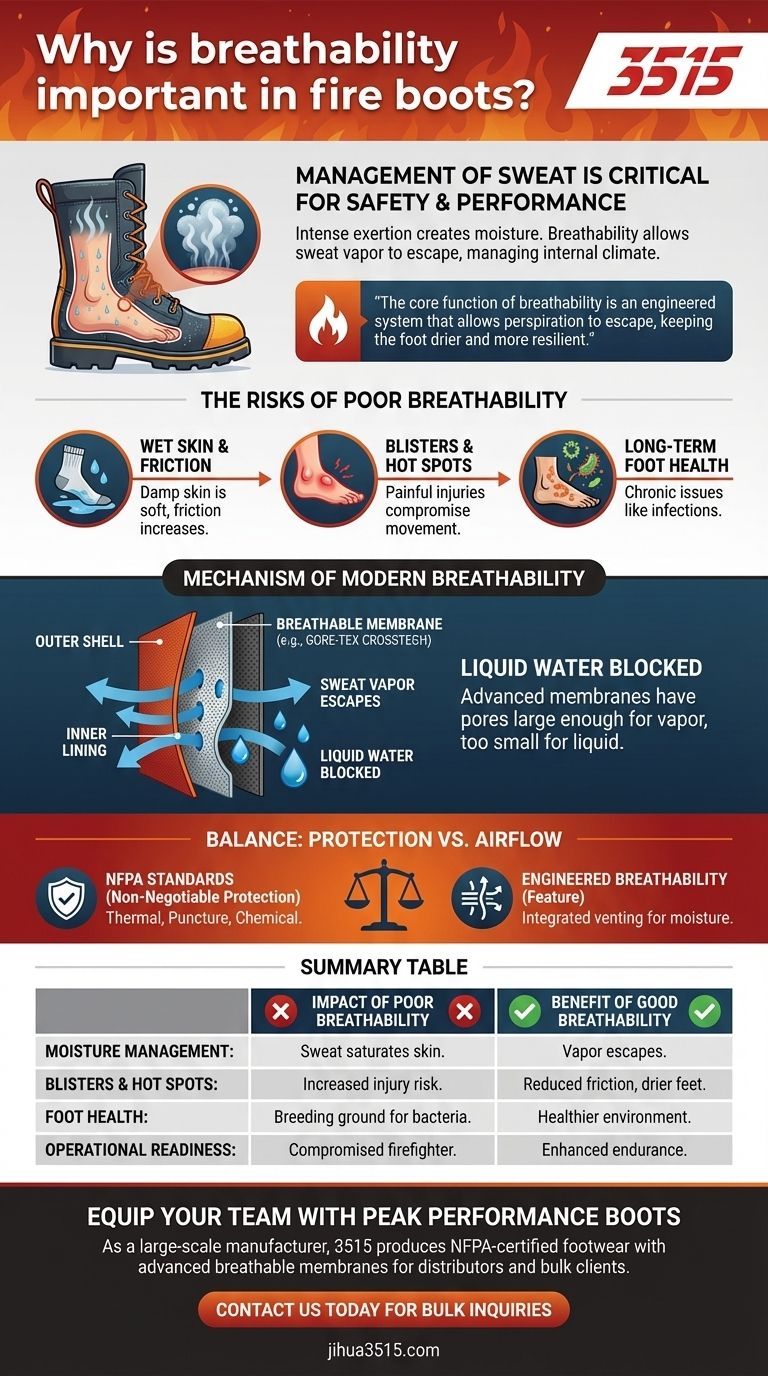
Breathability in a fire boot is achieved through advanced material science. It typically involves a waterproof, breathable membrane (like GORE-TEX CROSSTECH) laminated between the boot's outer leather and inner lining. This membrane has pores that are large enough for water vapor (sweat) to escape but too small for liquid water molecules to penetrate from the outside.
The Tangible Risks of Poor Breathability
Ignoring breathability isn't a matter of comfort; it's a matter of operational readiness. A compromised foot can lead to a compromised firefighter.
The Formation of Blisters
Wet skin is softer and more susceptible to damage from friction. As the damp sock rubs against the foot inside the boot, it quickly shears the layers of skin, forming painful blisters that can make walking, climbing, or even standing an agonizing task.
The Danger of Hot Spots
Before a blister forms, a "hot spot" develops. This is a localized area of intense friction and heat. It serves as a critical warning sign that a boot's fit or moisture management system is failing, and it can be a significant distraction during an incident.
Long-Term Foot Health
Consistently trapping feet in a warm, moist environment creates an ideal breeding ground for fungus and bacteria. This can lead to chronic issues like athlete's foot or other infections that impact a firefighter's health both on and off duty.
Understanding the Trade-offs: Protection vs. Airflow
It is essential to understand that breathability in fire boots cannot come at the expense of safety. The design is a carefully engineered balance.
Protection is Non-Negotiable
A fire boot's primary duty is to meet or exceed NFPA standards for thermal protection, puncture resistance, and penetration by hazardous liquids. This protective envelope is absolute and cannot be compromised.
Breathability is an Engineered Feature
Unlike a hiking boot that might use mesh panels for airflow, a fire boot integrates breathability into its multi-layer protective system. The technology allows the boot to remain a sealed fortress against external threats while actively venting internal moisture vapor.
Not All Boots Are Created Equal
The quality and effectiveness of the breathable membrane are paramount. Lower-quality systems may not be as effective at venting moisture or may break down over time, highlighting the importance of investing in certified, high-performance footwear.
Making the Right Choice for Your Role
Selecting the right boot requires matching its features to your primary operational demands.
- If your primary focus is structural firefighting: Prioritize boots with a certified, multi-function membrane that offers superior breathability alongside protection from water, chemicals, and bloodborne pathogens.
- If your primary focus is wildland or technical rescue: Look for lighter-weight boots that still meet NFPA standards but are optimized for breathability and flexibility over long periods of walking and climbing.
- If you consistently struggle with sweaty feet: Ensure you are pairing a highly breathable boot with high-performance, moisture-wicking socks made from wool or synthetics, never cotton.
Ultimately, managing your feet is a crucial component of managing your own safety and endurance on the fireground.
Summary Table:
| Aspect | Impact of Poor Breathability | Benefit of Good Breathability |
|---|---|---|
| Moisture Management | Sweat saturates socks and skin | Advanced membranes allow sweat vapor to escape |
| Blisters & Hot Spots | Increased friction leads to painful injuries | Keeps feet drier, reducing friction and injury risk |
| Foot Health | Creates a breeding ground for fungus and bacteria | Promotes a healthier foot environment on and off duty |
| Operational Readiness | Compromised foot can lead to a compromised firefighter | Enhances comfort, endurance, and focus during critical operations |
Equip Your Team with Boots Engineered for Peak Performance
As a large-scale manufacturer, 3515 produces a comprehensive range of NFPA-certified footwear for distributors, brand owners, and bulk clients. Our production capabilities encompass all types of fire boots, integrating advanced breathable membranes for superior moisture management without compromising safety.
Contact us today to discuss how our durable, breathable fire boots can enhance the safety and endurance of the firefighters you supply.
Visual Guide
Related Products
- High Performance Fire-Retardant Waterproof Safety Boots
- Premium Flame-Retardant Waterproof Safety Boots and Shoes
- Wholesale Lightweight Tactical Boots Custom Manufacturer for Desert & Combat Use
- High-Traction Suede Tactical Boots Wholesale & Custom Manufacturing
- Wholesale Waterproof Tactical Boots Custom Suede & High-Traction Soles
People Also Ask
- Why are waterproof safety boots recommended for certain work environments? Essential Protection for Wet & Hazardous Jobs
- What roles do 3D vision systems and industrial robots play in the manufacturing of fire safety boots? Smart Automation
- How can you ensure your feet stay dry during winter walks? A Two-Part Defense System for Total Comfort
- What is the difference between waterproof, water-resistant, and water-repellent boots? Choose the Right Protection for Your Feet
- What are the drawbacks of waterproof boots? The Breathability vs. Protection Trade-Off