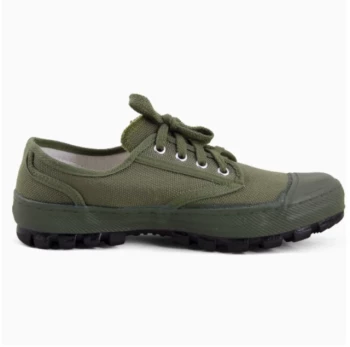
Assessing lower limb strength via an industrial Leg Press Machine is critical because it scientifically validates the physical capacity required to operate effectively in professional Safety Shoes. While these shoes offer structural stability, they cannot compensate for muscular weakness during high-intensity rescue tasks like ladder climbing or victim extraction. The test ensures the operator's biological strength matches the mechanical advantages of their gear.
Core Takeaway Rescue operations demand extreme force generation that safety equipment alone cannot provide. Leg press testing quantifies the user's "Repetition Maximum" (RM), ensuring they possess the foundational leg power necessary to maintain balance and execute maneuvers safely while wearing heavy protective footwear.
Quantifying Support Capacity
The Science of Repetition Maximum (RM)
The industrial Leg Press Machine serves as a diagnostic tool rather than simple exercise equipment. It is utilized to perform Repetition Maximum (RM) tests.
This protocol provides a scientific, quantifiable metric of a rescue worker's lower limb support capacity. It moves assessment away from subjective observation to hard data regarding force production.
Establishing a Baseline for Safety
Rescue personnel must meet specific strength thresholds to ensure safety. The data derived from the Leg Press Machine establishes a baseline of physical competency.
Without this quantitative data, there is no way to guarantee a rescuer can physically handle the loads required in the field.
The Physical Demands of Rescue
Vertical Mobility Under Load
Rescue environments frequently require climbing ladders while carrying heavy equipment. This action demands explosive concentric strength from the legs.
The Leg Press simulates the pushing force required to elevate both the rescuer's body weight and their gear against gravity.
Victim Extraction
Dragging or carrying victims requires sustained, high-intensity muscular endurance. This task places extreme stress on the lower body.
If the legs fail during extraction, the safety of both the rescuer and the victim is compromised. The RM test ensures the rescuer has the foundational strength to endure this specific stressor.
The Synergy of Strength and Equipment
Stability Requires Power
High-performance Safety Shoes are engineered to provide a rigid, stable platform for the wearer. However, mechanical stability is ineffective without biological power.
The Leg Press test verifies that the wearer possesses the muscular strength to control the stability provided by the shoe.
Preventing Equipment-Induced Fatigue
Heavy-duty footwear adds weight to the extremities. A wearer with insufficient leg strength will fatigue rapidly just by moving in the gear.
Testing ensures the rescuer is strong enough to execute high-intensity maneuvers without being hindered by the weight or rigidity of the safety shoes.
Understanding the Trade-offs
Isolation vs. Integration
The Leg Press isolates leg strength in a fixed plane of motion. While excellent for measuring raw power, it does not perfectly replicate real-world balance.
A rescuer might have a high RM score but still struggle with the coordination required on uneven terrain found in disaster zones.
The Risk of False Confidence
Reliance on machine metrics alone can create a false sense of security. High strength data does not guarantee skill.
Possessing the strength to drag a victim is a prerequisite, but it does not replace the technical training required to perform the maneuver without injury.
Optimizing Rescue Readiness
Before deploying personnel into high-risk environments, use the data to make informed decisions about their readiness.
- If your primary focus is Personnel Safety: Use RM data to set strict "Go/No-Go" strength standards, ensuring no team member is deployed without the physical capacity to support themselves.
- If your primary focus is Equipment Efficacy: Ensure that investments in high-performance Safety Shoes are matched by physical training programs that build the leg strength required to utilize them.
Ultimately, the safety shoe protects the foot, but the leg press validates the force required to move it.
Summary Table:
| Factor | Role in Rescue Operations | Strength Requirement |
|---|---|---|
| RM Testing | Quantifies raw force production capacity | High baseline required |
| Vertical Mobility | Climbing ladders with heavy gear/load | Explosive concentric power |
| Victim Extraction | Sustained dragging and carrying tasks | High muscular endurance |
| Gear Synergy | Controlling the stability of rigid footwear | Foundational motor control |
| Fatigue Prevention | Compensating for heavy-duty shoe weight | High power-to-weight ratio |
Elevate Your Operational Safety with 3515 Footwear
As a large-scale manufacturer serving distributors and brand owners, 3515 offers comprehensive production capabilities for all footwear types, anchored by our flagship Safety Shoes series. Our footwear is engineered to provide the structural stability required for the most demanding rescue and industrial environments.
We understand that high-performance gear requires high-performance users. Partner with us to supply your teams with professional-grade safety shoes, tactical boots, and training footwear designed to withstand the rigors of force-intensive operations.
Ready to equip your personnel with the best?
Contact Us Today to Discuss Bulk Orders & Custom Solutions
References
- Robert G. Lockie, Tomas J. Ruvalcaba. Body Composition and Fitness Characteristics of Firefighters Participating in a Health and Wellness Program: Relationships and Descriptive Data. DOI: 10.3390/ijerph192315758
This article is also based on technical information from 3515 Knowledge Base .
Related Products
- Lightweight Breathable Sneakers with Wet-Traction Grip for Wholesale & Private Label
- Lightweight Breathable Training Shoes for Wholesale & Custom OEM Manufacturing
- Wholesale Durable & Breathable Training Shoes for Custom Brands
- Wholesale Lightweight Cushioned Athletic Sneakers for Custom Bulk Production
- Wholesale Breathable & Cushioned Training Shoes Custom Factory Production
People Also Ask
- Why are breathable sneakers necessary for tropical commuting? Stay Cool and Dry in High Humidity
- What role do lightweight training shoes play in urban traffic? Boost Agility and Reaction for Safer City Navigation
- How do lightweight shoes provide support? The Science of Efficient Cushioning & Stability
- What are the style advantages of lightweight shoes? Sleek, Versatile & Modern Comfort
- How do lightweight shoes improve breathability? Discover the Science of Cool, Dry Feet