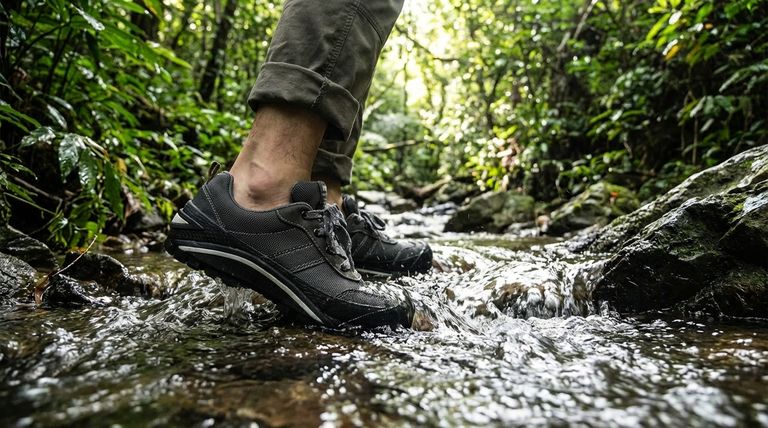
Counterintuitively, the best way to keep your feet comfortable is sometimes to let them get wet. Some hunters prefer non-waterproof, fast-drying boots because they manage the total moisture load far more effectively than boots that only block external water. This system prioritizes extreme breathability, allowing sweat to escape and environmental water to drain and evaporate quickly, preventing the internal "swamp foot" that often plagues waterproof designs.
The core choice in high-exertion footwear is not between "dry" and "wet," but between two different moisture management systems. A waterproof boot acts as a barrier to external water, while a fast-drying boot acts as a high-flow channel to expel all moisture, whether from sweat or a stream.
The Two Sources of Wet Feet
To understand the logic, you must first acknowledge that moisture comes from two distinct sources, and traditional boots are only designed to handle one of them.
External Water
This is the obvious culprit: rain, dew-soaked grass, and creek crossings. Waterproof membranes are specifically designed to create a barrier against this type of moisture intrusion.
Internal Moisture
The average foot can produce over a cup of sweat per day during heavy exertion. This water vapor must escape, or it will condense inside your boot, soaking your socks from the inside out.
Why "Waterproof" Boots Often Fail
A waterproof/breathable boot seems like the perfect solution, but its effectiveness is limited by physics, creating significant failure points during active hunts.
The Breathability Bottleneck
Waterproof/breathable membranes have a physical limit on how much water vapor they can transport. During intense activity, your feet often produce sweat faster than the membrane can vent it.
The "Swamp Foot" Effect
Once sweat production outpaces breathability, moisture becomes trapped. This leads to clammy, cold feet and skin maceration (the soft, white, wrinkled skin you see after a long bath), which is a primary cause of blisters.
A Catastrophic Breach
If water overtops your waterproof boot or the membrane is compromised, the boot effectively becomes a bucket. The same membrane that keeps water out now keeps it in, and the boot can take days to dry.
The Logic of the Fast-Drying System
The non-waterproof approach accepts the inevitability of moisture and is engineered for rapid recovery rather than absolute prevention.
Embracing Rapid Evacuation
This system is built on the premise that in many conditions, your feet will eventually get wet from either sweat or the environment. The primary goal is to return to a comfortable, functional state as quickly as possible.
Engineered for Airflow and Drainage
Fast-drying boots are constructed from lightweight, non-absorbent synthetic materials and mesh. They are designed for maximum airflow and often include drainage ports to instantly shed water after a submersion.
The Trail Runner Analogy
This concept has been proven for years in activities like trail running and canyoneering. Athletes in these fields know their feet will be soaked, so they choose footwear that dries out as they continue to move.
Understanding the Trade-offs
This system is a specialized tool, not a universal solution. Its advantages come with clear limitations that are critical to understand.
Not for Cold, Stationary Conditions
The high breathability and evaporative cooling that make these boots excellent for active hunts become a significant liability in cold weather. For low-activity, cold-weather hunting (like in a treestand), insulated waterproof boots are essential for preventing dangerous heat loss and frostbite.
The Sock System is Everything
This approach is entirely dependent on a high-performance sock system. You must use socks made from materials that do not absorb water, such as merino wool or synthetics. A cotton sock will act like a sponge, hold water against your skin, and completely defeat the system.
The Initial Discomfort
There is no denying the initial shock and discomfort of stepping into a cold stream. This system requires a mental adjustment to accept temporary wetness in exchange for superior long-term comfort and foot health.
Making the Right Choice for Your Hunt
Your decision should be based on your specific environment, activity level, and temperature.
- If your primary focus is active, early-season hunts in warm or temperate climates with potential water crossings: A non-waterproof, fast-drying system will likely provide superior comfort and blister prevention over a multi-day trip.
- If your primary focus is late-season hunts in cold, snowy, or freezing conditions with low activity: A traditional waterproof and insulated boot is non-negotiable for warmth and safety.
- If your primary focus is day hunts in mixed, cool conditions with moderate activity: A high-quality waterproof/breathable boot can be a versatile choice, but you must be diligent about managing sweat with the right socks.
Choosing the right footwear begins with understanding that your feet's greatest enemy is often the moisture you produce yourself.
Summary Table:
| Feature | Non-Waterproof, Fast-Drying Boots | Traditional Waterproof Boots |
|---|---|---|
| Primary Goal | Rapid moisture evacuation & drying | Block external water intrusion |
| Best For | High-activity, warm/temperate hunts | Cold, low-activity, or snowy conditions |
| Moisture Management | Manages both sweat and environmental water | Primarily blocks external water only |
| Key Advantage | Prevents internal 'swamp foot' and blisters | Provides warmth and dry barrier when stationary |
| Main Limitation | Not suitable for cold, stationary hunting | Can trap sweat, leading to moisture buildup |
Ready to equip your next hunt with the right footwear?
As a large-scale manufacturer, 3515 produces a comprehensive range of hunting boots for distributors, brand owners, and bulk clients. Whether you need specialized non-waterproof, fast-drying boots for high-exertion scenarios or traditional waterproof models for cold-weather stands, our production capabilities cover all types of hunting footwear to meet your specific market demands.
Contact us today to discuss your bulk footwear needs and let us help you provide the perfect gear for every hunting condition. Get in touch via our contact form to explore our full catalog and manufacturing solutions.
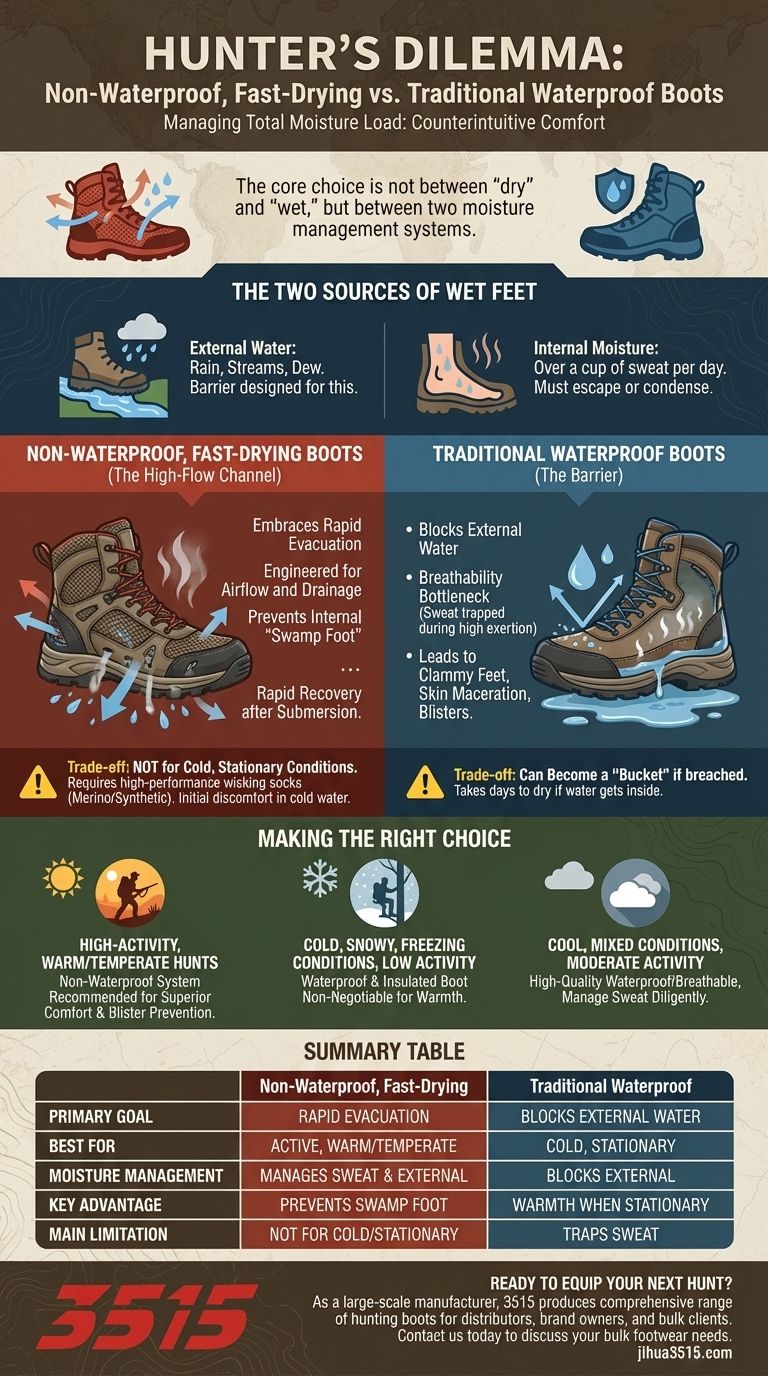
Visual Guide
Related Products
- Durable Spiked Camouflage Boots Wholesale & Factory Production
- Wholesale Waterproof Tactical Boots Custom Suede & High-Traction Soles
- High Performance Fire-Retardant Waterproof Safety Boots
- Premium Flame-Retardant Waterproof Safety Boots and Shoes
- Durable Waterproof Rain Boots | Custom Manufacturer for Wholesale & Brands
People Also Ask
- How does boot height affect waterproofing? Choose the Right Height for Ultimate Protection
- What are the best types of shoes for different gardening conditions? Find Your Perfect Match.
- What role does camouflage play in hunting boots? It's More Than Just a Pattern
- What should you look for to ensure boots are fully waterproof? The Essential 2-Part System
- How does boot construction affect waterproofing? The Science Behind Truly Dry Feet