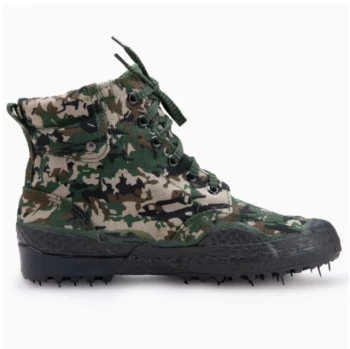
Beyond basic footwear, hunting boots are a critical piece of equipment that directly determines the safety, duration, and ultimate success of your trip. They provide essential protection from the elements and terrain, preventing trip-ending issues like severe discomfort, wet feet, or debilitating ankle injuries that would otherwise send you home early.
The right hunting boots are not just about comfort; they are a risk management tool. They mitigate the environmental and physical hazards unique to hunting, allowing you to focus on the pursuit itself rather than on pain or potential injury.
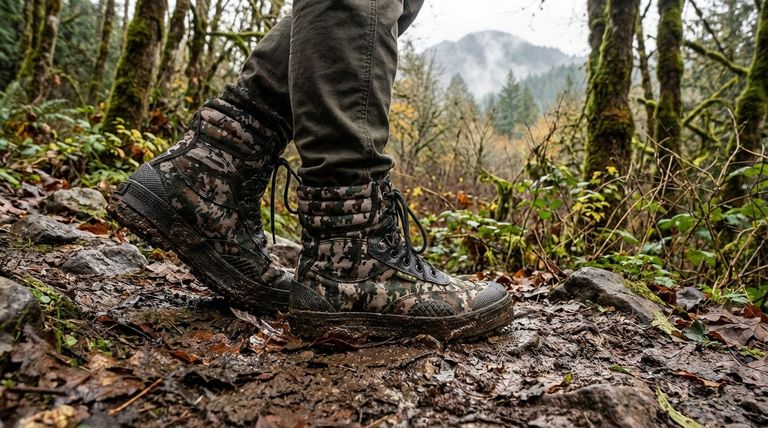
The Core Functions of a Hunting Boot
A successful hunt often depends on your ability to remain in the field, focused and capable. Specialized boots are engineered to make that possible.
Environmental Protection
Your feet are your primary point of contact with the environment. Keeping them dry is paramount.
Waterproof membranes and materials prevent moisture from rain, snow, or creek crossings from soaking your feet, which is a primary cause of blisters, heat loss, and trip-ending discomfort.
Structural Support and Injury Prevention
Hunting rarely happens on paved trails. You will encounter steep inclines, loose rock, and uneven ground.
Hunting boots provide critical ankle support to prevent twists and sprains. Their rigid construction offers a stable platform that reduces foot fatigue over long distances on challenging terrain.
All-Day Comfort and Endurance
Discomfort is a distraction that can compromise your focus and patience.
Proper hunting boots are designed with supportive footbeds and cushioning that match your foot shape. This allows you to cover more ground and stay out longer without being sidelined by pain.
Common Pitfalls to Avoid
Owning the right boots is only half the battle. Two common oversights can completely negate their benefits and compromise your hunt.
The Critical Break-In Period
Never wear a new pair of stiff boots on a hunt for the first time. This is a recipe for extreme discomfort.
Leather and mountaineering-style boots require a break-in period to mold to your feet. This can mean walking dozens of miles, first in casual settings and then with the weight of your hunting pack, to ensure they are comfortable and field-ready.
The Cost of Neglecting Maintenance
Your boots are a safety system, and that system requires care to function correctly.
Neglecting to clean and treat your boots will degrade their materials, compromise their waterproofing, and shorten their lifespan. Proper care ensures they remain protective and saves you money on frequent replacements.
How to Apply This to Your Project
Your choice of boot should be dictated entirely by the environment and conditions you expect to face.
Assess Your Primary Terrain
The ground you cover determines the sole and support you need.
Mountainous terrain demands stiff, rigid boots for support, while hunting in flat wetlands calls for flexible, waterproof boots.
Match Insulation to Your Climate
Temperature dictates your need for insulation.
Hunting in cold, late-season weather requires insulated boots to prevent frostbite and maintain comfort. Early-season or warm-weather hunts demand breathable, uninsulated boots to manage sweat and prevent overheating.
Prioritize Material and Durability
The boot's material impacts its break-in time, weight, and long-term durability.
Full-grain leather offers maximum durability but requires a significant break-in period. Synthetic materials are often lighter and require less break-in but may offer less long-term resilience.
Making the Right Choice for Your Goal
Select your footwear based on the most demanding aspect of your planned hunt.
- If your primary focus is long-distance mountain hunting: Prioritize rigid ankle support and a stiff sole, and dedicate dozens of miles to breaking them in properly with a weighted pack.
- If your primary focus is wetland or swamp hunting: Your non-negotiable feature is guaranteed waterproofing and a taller boot height to keep you dry when traversing water.
- If your primary focus is early-season or warm-weather hunting: Select a lightweight, breathable, uninsulated boot to manage heat and prevent blisters caused by sweat.
Investing in the correct, well-maintained hunting boots is an investment in your safety, endurance, and overall effectiveness in the field.
Summary Table:
| Function | Key Benefit |
|---|---|
| Environmental Protection | Keeps feet dry with waterproof materials to prevent blisters and heat loss. |
| Structural Support | Provides ankle support and stability on uneven terrain to prevent injuries. |
| All-Day Comfort | Offers cushioning and support to reduce fatigue, allowing for longer hunts. |
| Terrain-Specific Design | Stiff soles for mountains; flexible, waterproof boots for wetlands. |
| Climate Adaptation | Insulated for cold weather; breathable for warm seasons to manage temperature. |
Ready to equip your customers with the right hunting boots for any adventure?
As a large-scale manufacturer, 3515 produces a comprehensive range of durable and high-performance hunting footwear for distributors, brand owners, and bulk clients. Our production capabilities encompass all types of boots, from rigid mountain designs to flexible waterproof models, ensuring you get the perfect product for your market.
Contact us today to discuss your specific needs and discover how we can support your business with reliable, high-quality footwear.
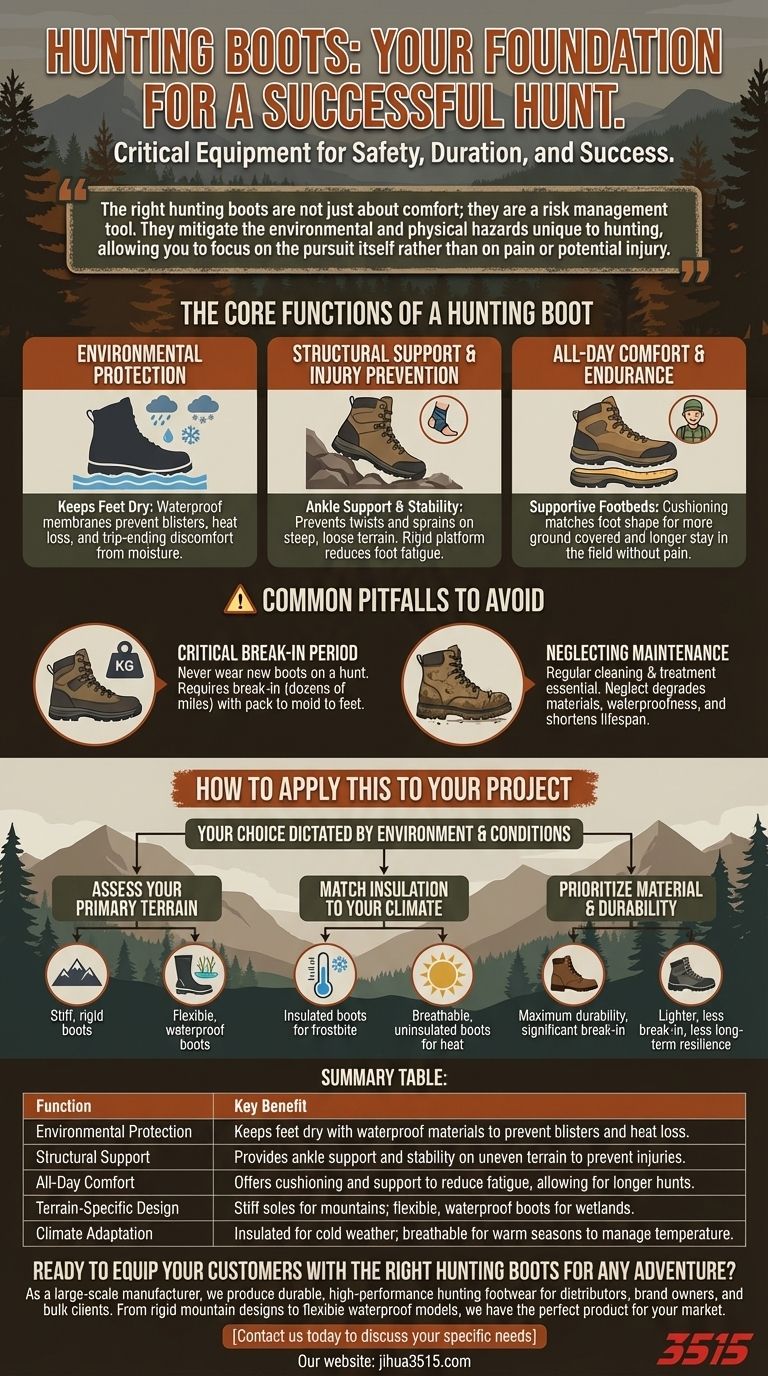
Visual Guide
Related Products
- Wholesale Lightweight Tactical Boots Custom Manufacturer for Desert & Combat Use
- High-Traction Suede Tactical Boots Wholesale & Custom Manufacturing
- Durable Leather Tactical Boots Wholesale & Custom Manufacturing for Brands
- Durable Military Combat Boots with Water Drainage for Wholesale & OEM
- Wholesale Waterproof Tactical Boots Custom Suede & High-Traction Soles
People Also Ask
- What are the common types of combat boots? Find the Right Boot for Your Mission
- What specialized protections do tactical boots offer? Maximize Endurance with High-Performance Footwear
- How is the compatibility of polymer materials demonstrated in smart footwear? Enhancing Tactical & Training Performance
- What are the main construction similarities between tactical boots and tactical sneakers? Built for Performance & Durability
- How does additive manufacturing equipment reduce environmental risks? Sustainable Tactics for Modern Footwear Production