
In short, water absorption and drainage tests are critical because they quantify a shoe's ability to manage moisture. These tests directly measure how a shoe will perform in common wet conditions, such as walking through puddles or getting caught in the rain. The results are crucial indicators of the footwear's impact on your comfort, health, and even your physical performance.
The core issue is that a waterlogged shoe is not just uncomfortable—it's a liability. It becomes heavier, increases the risk of blisters and fungal infections, and compromises the shoe's structural integrity. These tests provide the objective data needed to prevent these problems.
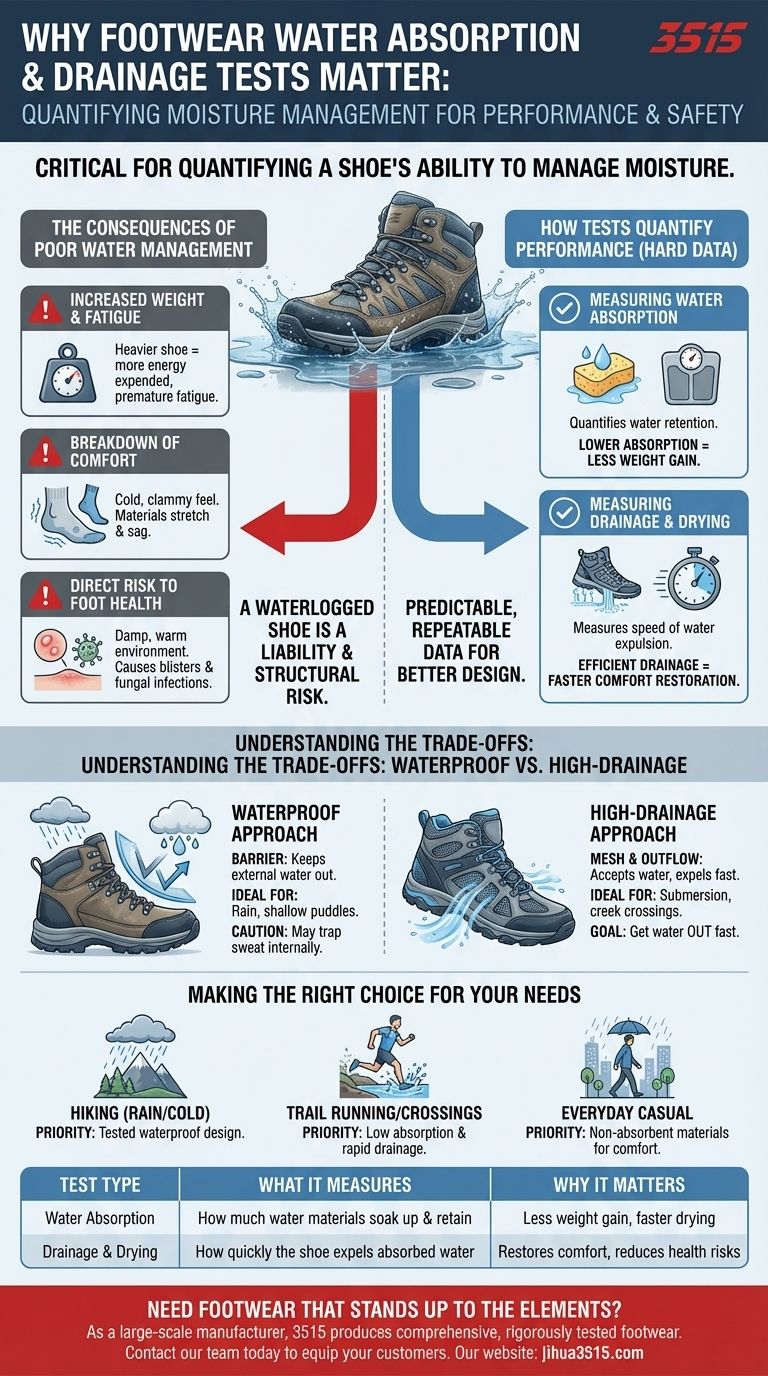
The Core Problem: The Consequences of Poor Water Management
A shoe that absorbs and retains water creates a cascade of negative effects that go far beyond simple discomfort. Understanding these consequences reveals the true importance of proper testing.
Increased Weight and Fatigue
A dry shoe is a light shoe. When materials become saturated, the shoe's weight can increase significantly. This added weight forces your body to expend more energy with every step, leading to premature fatigue.
The Breakdown of Comfort
Prolonged moisture against the skin is inherently uncomfortable. It can lead to a cold, clammy feeling and completely change the fit and feel of the footwear as materials stretch and sag.
The Direct Risk to Foot Health
This is the most critical consequence. A damp, warm environment inside a shoe is the ideal breeding ground for bacteria and fungi. More immediately, moisture softens the skin and increases friction, which is a primary cause of painful blisters.
How the Tests Quantify Performance
Water absorption and drainage tests remove subjectivity and replace it with hard data. They simulate a predictable, repeatable wet event to see exactly how a shoe responds.
Measuring Water Absorption
This test quantifies how much water the shoe’s materials soak up and retain. A lower absorption rate means the shoe will gain less weight when wet and will have less water to shed later.
Measuring Drainage and Drying
This test measures how quickly the shoe can expel the water it has taken on. Efficient drainage is key to restoring comfort and returning the shoe to its original, lightweight state as quickly as possible.
Understanding the Trade-offs: Waterproof vs. High-Drainage
Not all footwear manages water the same way. The test data helps you understand which design philosophy is best suited for a given activity.
The Waterproof Approach
Waterproof footwear uses a membrane to create a barrier, preventing water from getting in. This is ideal for keeping feet dry from external sources like rain or shallow puddles. However, these designs can sometimes trap sweat, creating moisture from the inside.
The High-Drainage Approach
Footwear designed for high drainage, like many trail running or water shoes, accepts that water will get in. Its primary goal is to get that water out as fast as possible through mesh panels and non-absorbent materials. This is often superior for full submersion events like creek crossings.
Making the Right Choice for Your Needs
By understanding what water management tests reveal, you can select footwear that is purpose-built for your intended environment.
- If your primary focus is hiking in consistently rainy or cold conditions: Prioritize a tested waterproof design to prevent external moisture from ever reaching your foot.
- If your primary focus is trail running or activities with water crossings: Prioritize footwear with documented low water absorption and rapid drainage to manage inevitable submersion effectively.
- If your primary focus is everyday casual wear: Look for materials that do not readily absorb water to ensure comfort and prevent damage from unexpected puddles or downpours.
Ultimately, choosing footwear based on its tested ability to manage water ensures you are equipped for both comfort and safety in any condition.
Summary Table:
| Test Type | What It Measures | Why It Matters |
|---|---|---|
| Water Absorption | How much water shoe materials soak up and retain. | Less weight gain and faster drying when wet. |
| Drainage & Drying | How quickly the shoe expels absorbed water. | Restores comfort and reduces blister/fungal risks. |
Need footwear that stands up to the elements? As a large-scale manufacturer, 3515 produces a comprehensive range of footwear for distributors, brand owners, and bulk clients. Our production capabilities encompass all types of shoes and boots, rigorously tested for optimal water management to ensure comfort, durability, and performance. Let us help you equip your customers with the right footwear for any condition. Contact our team today to discuss your needs!
Visual Guide
Related Products
- Wholesale Durable Camouflage Canvas Shoes with High-Traction Cleated Rubber Sole
- Lightweight Breathable Training Shoes for Wholesale & Custom OEM Manufacturing
- Wholesale Breathable Training Shoes Custom Athletic Footwear Manufacturer
- Durable Leather High-Ankle Tactical Boots for Wholesale & Custom Manufacturing
- Durable Waterproof Rain Boots | Custom Manufacturer for Wholesale & Brands
People Also Ask
- Why is the selection of high-strength fabric materials necessary in the production of canvas shoes and training shoes?
- What are the properties of canvas as a shoe material? A Guide to Lightweight Comfort & Style
- Can canvas shoes be worn in rainy conditions? The Truth About Water Resistance
- What are some examples of vulcanized shoes? Discover the Flexibility and Board Feel of Classic Sneakers
- What are the characteristics of canvas as a shoe material? A Guide to Lightweight, Breathable Footwear


















