
Far from a simple accessory, socks are a critical technical component of your footwear system. Their primary purpose is to manage the interface between your foot and your shoe by controlling friction, wicking away moisture, and providing targeted padding, which is essential for preventing blisters and ensuring comfort.
The single most important function of a walking sock is to manage moisture and friction. Choosing the right material and fit is more critical for preventing blisters and maintaining foot health than almost any feature of the shoe itself.
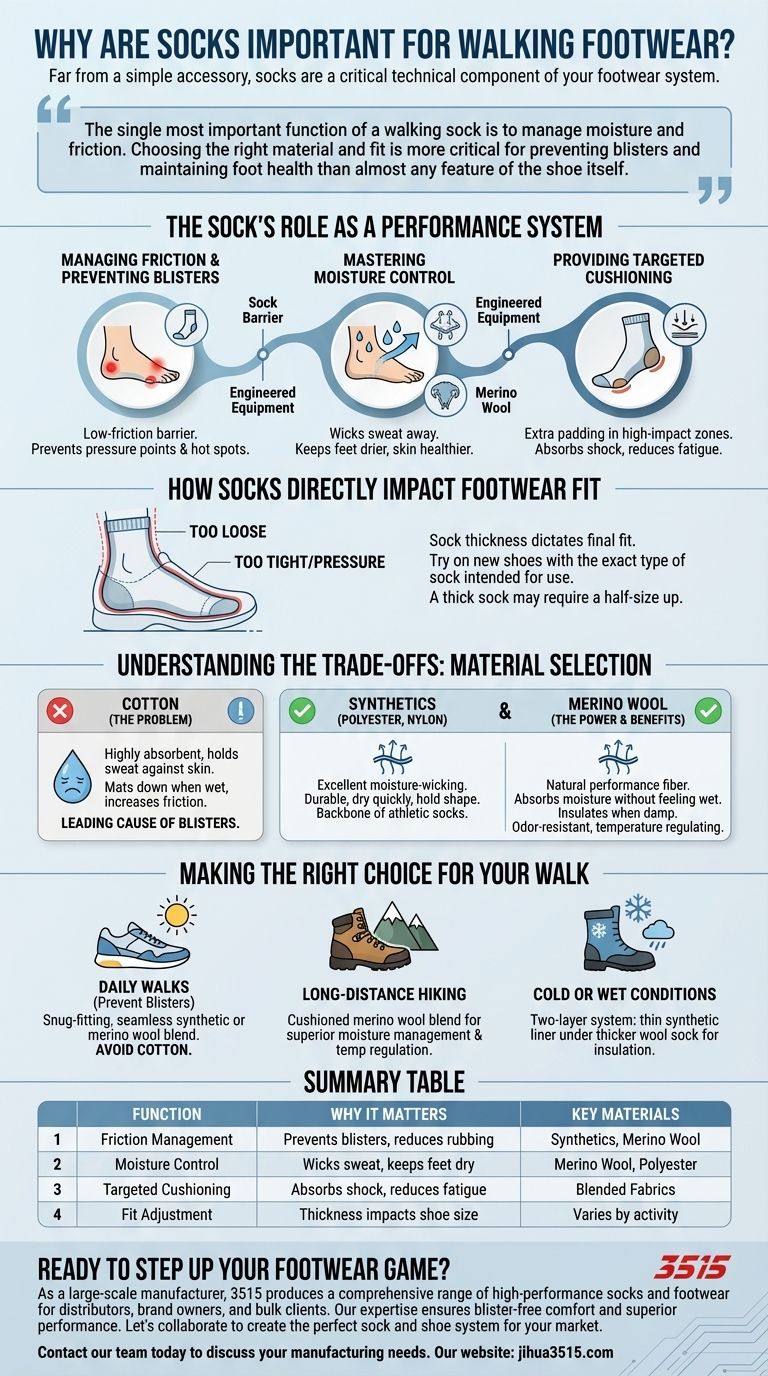
The Sock's Role as a Performance System
A high-performance sock is not just a covering for your foot; it's a piece of engineered equipment. It actively works to create a stable and healthy environment inside your shoe.
Managing Friction and Preventing Blisters
Blisters are the direct result of friction, heat, and moisture. A properly designed sock serves as a protective, low-friction barrier between your skin and the shoe.
A poor sock will bunch or wrinkle inside the shoe, creating pressure points and hot spots that quickly develop into painful blisters.
Mastering Moisture Control
Your feet can produce a significant amount of sweat, especially during a walk. A sock's ability to manage this moisture is its most vital function.
Materials like synthetics and merino wool are moisture-wicking, meaning they pull sweat away from your skin to the outer surface of the sock where it can evaporate. This keeps your feet drier and your skin healthier.
Providing Targeted Cushioning
Walking socks are often designed with extra padding in high-impact zones, such as the heel and the ball of the foot. This cushioning helps absorb shock and reduces fatigue over longer distances.
How Socks Directly Impact Footwear Fit
The fit of your footwear is not determined by the shoe alone. The volume your sock occupies inside the shoe can dramatically alter how it feels and performs.
The Critical Role of Sock Thickness
The thickness of your sock dictates the final fit. Trying on new shoes with a thin dress sock when you plan to wear a thick hiking sock will lead to a shoe that is too tight, causing pressure and restricting circulation.
Always try on new footwear with the exact type of sock you intend to wear for its primary activity. A thick sock may require you to go up half a size in your shoe.
Understanding the Trade-offs: Material Selection
The material of your sock is the most important factor in its performance. This is where the biggest mistakes are commonly made.
The Problem with Cotton
Cotton is the worst possible material for an active sock. It is highly absorbent, meaning it soaks up sweat and holds it directly against your skin.
Wet cotton loses its insulating properties, mats down, and dramatically increases friction, making it the leading cause of blisters.
The Power of Synthetics (Polyester, Nylon)
Synthetic fibers like polyester and nylon are excellent at wicking moisture. They are durable, dry quickly, and maintain their shape well. They form the backbone of most modern athletic and walking socks.
The Benefits of Merino Wool
Merino wool is a natural performance fiber. It can absorb a high amount of moisture before feeling wet, and critically, it continues to insulate even when damp. It is also naturally odor-resistant and excellent at regulating temperature in both hot and cold conditions.
Making the Right Choice for Your Walk
Your sock choice should adapt to your specific activity and environment.
- If your primary focus is preventing blisters on daily walks: Choose a snug-fitting, seamless synthetic or merino wool blend sock and avoid cotton entirely.
- If your primary focus is long-distance hiking: Opt for a cushioned merino wool blend that offers superior moisture management and temperature regulation over many hours.
- If your primary focus is walking in cold or wet conditions: Use a two-layer system with a thin synthetic liner sock under a thicker wool sock to maximize insulation and moisture wicking.
Investing in the right socks is the single most effective step you can take to guarantee comfort and performance in any footwear.
Summary Table:
| Function | Why It Matters | Key Materials |
|---|---|---|
| Friction Management | Prevents blisters by reducing skin-to-shoe rubbing. | Synthetics, Merino Wool |
| Moisture Control | Wicks sweat away to keep feet dry and healthy. | Merino Wool, Polyester |
| Targeted Cushioning | Absorbs shock in high-impact areas to reduce fatigue. | Blended Fabrics |
| Fit Adjustment | Sock thickness directly impacts shoe size and comfort. | Varies by activity |
Ready to step up your footwear game?
As a large-scale manufacturer, 3515 produces a comprehensive range of high-performance socks and footwear for distributors, brand owners, and bulk clients. Our expertise in material science and design ensures your customers experience blister-free comfort and superior performance.
Let's collaborate to create the perfect sock and shoe system for your market.
Contact our team today to discuss your manufacturing needs.
Visual Guide
Related Products
- Customizable Slip-On Safety Shoes Direct from the Factory for Wholesale
- Lightweight Breathable Training Shoes for Wholesale & Custom OEM Manufacturing
- Premium Wholesale Tactical Style Safety Shoes Boots with Quick Lacing
- Durable Waterproof Rain Boots | Custom Manufacturer for Wholesale & Brands
- Premium KPU Athletic Safety Shoes for Wholesale
People Also Ask
- What are Slip-Ons best used for? The Ultimate Guide to Effortless Casual Footwear
- What makes the Tecovas The Monterrey a good slip-on option? Unmatched Comfort & Style
- What features make slip-on shoes practical for retail workers or flight attendants? Unlock All-Day Comfort & Convenience
- What are the features of slip-on work shoes? Prioritize Convenience & Safety for Your Team
- What makes a safety shoe a safety shoe? Essential Protection for Hazardous Work



















