The application of distinct geometric shapes—typically circles and squares—to footwear serves as a visual coding system to differentiate the left foot from the right foot during tracking. This distinction is critical for automated image processing, allowing pattern recognition algorithms to identify each limb independently rather than confusing them as identical moving objects.
Core Takeaway In complex motion capture scenarios, visual ambiguity leads to data errors. Using unique geometric shapes for each foot enables algorithms to assign specific spatial coordinates to the correct limb, ensuring the precise calculation of step width and movement trajectory.
The Mechanics of Identification
Solving the "Crossover" Problem
When tracking gait, both feet move in similar patterns and often cross paths within the camera's view. Without a unique visual identifier, optical systems struggle to distinguish one foot from the other.
Algorithmic Pattern Recognition
By assigning a square to one foot and a circle to the other, engineers provide the tracking software with a clear logical rule. The software scans not just for a reflective point, but for a specific geometry to verify which limb is currently being observed.
Automation of Data Processing
This visual distinction eliminates the need for manual sorting of data points. The system automatically assigns the correct data stream to the "left" or "right" channel based on the shape detected.
Transforming Visuals into Metrics
Reconstructing Spatial Coordinates
Once the software identifies the specific shape, it locks onto the marker point. It then reconstructs the 3D spatial coordinates of that marker at the precise moment of foot strike.
Calculating Step Parameters
The ultimate goal of this differentiation is to measure specific gait mechanics, such as step width. Accurate step width calculations are impossible if the system cannot 100% guarantee which foot struck the ground at a given coordinate.
Enhancing Signal Reliability
To ensure the camera sees these shapes clearly, the patches utilize high-reflectivity coatings compatible with infrared cameras. This allows the optical system to simplify the complex motion of a shoe into a bright, distinct, calculable point.
Understanding Operational Limitations
The Risk of Physical Obstruction
Even with distinct shapes, the data is only as good as the line of sight. If clothing (like trousers) or the opposing limb obscures the geometric marker during dynamic movement, the algorithm loses the track.
Placement Precision
The markers must be placed on specific anatomical landmarks or muscle centers to yield useful data. If a marker is placed incorrectly, the system may track the motion perfectly, but the resulting digitized model will not accurately represent the center-of-gravity displacement or joint mechanics.
Ensuring Data Integrity in Tracking
If your primary focus is Algorithm Efficiency:
- Implement high-contrast geometric distinctness (e.g., Circle vs. Square) to reduce processing load and eliminate identification errors.
If your primary focus is Biomechanical Accuracy:
- Ensure markers are placed on rigid anatomical landmarks and use high-reflectivity materials to prevent "ghosting" or signal loss during rapid movement.
Successful trajectory tracking relies not just on capturing motion, but on uniquely coding that motion to build a reliable digital model.
Summary Table:
| Feature | Geometric Shape Coding | No Shape Coding |
|---|---|---|
| Identification Method | Distinct shapes (Circle vs. Square) | Identical reflective markers |
| Tracking Accuracy | High; distinguishes left from right | Low; frequent limb crossover errors |
| Data Processing | Automated sorting by algorithm | High manual data correction needed |
| Key Outcome | Reliable step width & trajectory | Potential data 'ghosting' or loss |
| Primary Use Case | Biomechanical research & athletics | Basic motion sensing |
Precision Manufacturing for Global Brands & Distributors
As a large-scale manufacturer serving distributors and brand owners, 3515 offers comprehensive production capabilities for all footwear types, anchored by our flagship Safety Shoes series.
Our extensive portfolio—covering work and tactical boots, outdoor shoes, training shoes, and sneakers—is engineered to meet the highest technical standards. Whether you require advanced gait-tracking compatibility or rugged durability for extreme environments, we provide the scale and expertise to meet your bulk requirements.
Enhance your product line with our industry-leading footwear solutions.
Contact Us Today to Discuss Your Bulk Requirements
References
- Flavia Marrone, Marco Tarabini. Alterations in Step Width and Reaction Times in Walking Subjects Exposed to Mediolateral Foot-Transmitted Vibration. DOI: 10.3390/vibration7020019
This article is also based on technical information from 3515 Knowledge Base .
Related Products
- Wholesale Tactical Boots High-Traction & Reflective for Bulk & Brand Orders
- Wholesale Durable Camouflage Canvas Shoes with High-Traction Cleated Rubber Sole
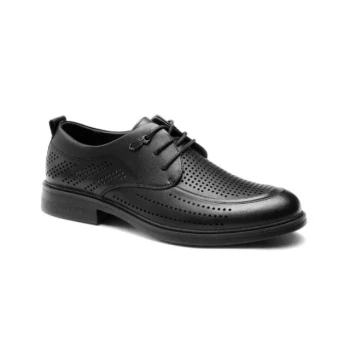
- Wholesale Perforated Comfort Dress Shoes | Custom Derby Shoe Manufacturer
- Custom Breathable Perforated Leather Derby Shoes for Wholesale & Brands
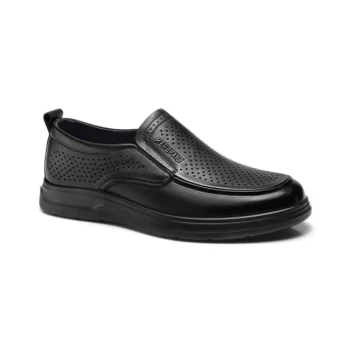
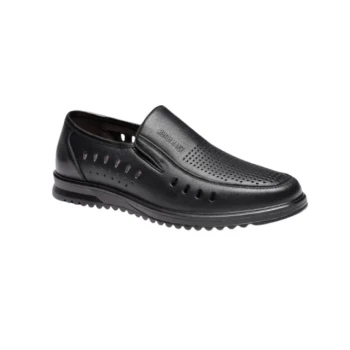
- Men's Breathable Perforated Loafers Wholesale & OEM Manufacturing
People Also Ask
- How do tactical boots protect against injuries? Discover the Integrated Safety System
- What factors should be considered when choosing between tactical boots and sneakers for daily activities? Find Your Perfect Fit
- How does the comparative gait analysis between grass and asphalt guide safety shoe R&D? Optimize Tactical Performance
- How do high-performance tactical boots and training shoes support performance? Enhance Safety & Energy for Professionals
- What materials are used in tactical boot uppers? A Guide to Durability & Performance