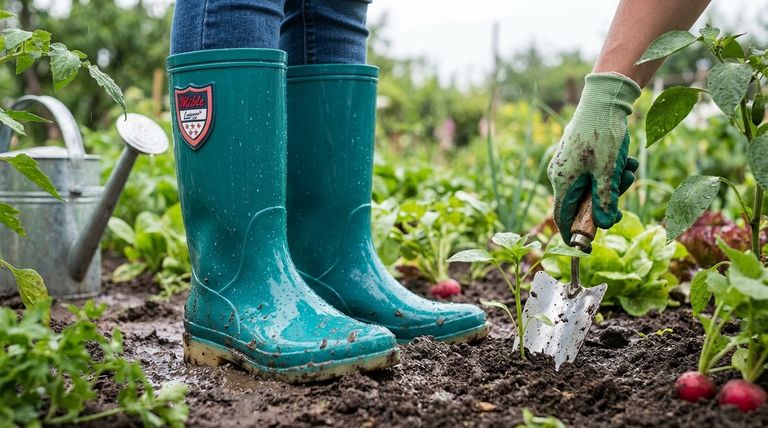
To put it simply, rain boots are an excellent option for gardening because their waterproof material and high shaft provide superior protection. This design keeps your feet completely dry from water and mud while preventing soil, mulch, and other debris from getting inside your boots.
While rain boots offer essential protection against mud and moisture, the truly ideal gardening footwear is a choice that balances this protection against your specific climate, comfort needs, and the type of work you do.
The Core Advantages of Rain Boots in the Garden
Rain boots, often made from rubber or PVC, bring several key benefits to common gardening tasks. Their fundamental design is built around keeping external elements out.
Superior Protection from Moisture
The primary function of a rain boot is to be waterproof. This is invaluable in the garden, where you frequently encounter wet soil, puddles, and mud.
Materials like natural rubber and PVC ensure your feet remain dry, which is critical for both comfort and foot health during long sessions.
A Barrier Against Dirt and Debris
The high shaft of a traditional rain boot is a significant advantage for messy jobs. It acts as a shield, preventing dirt, water, and stray plant matter from splashing into the boot.
This makes them perfectly suited for deep weeding, tilling wet soil, or any "less-than-tidy" gardening task.
Durability and Easy Maintenance
Gardening footwear takes a beating. High-quality rubber boots are known for their durability and flexibility, providing good support on varied terrains like soft soil or gravel.
Furthermore, both rubber and PVC boots are exceptionally easy to clean. A simple rinse with a hose is usually all that's needed to have them ready for your next session.
Key Factors Beyond the Basics
While rain boots are a great starting point, understanding the nuances of materials, height, and climate-specific features will help you find the perfect fit for your needs.
Material Matters: Rubber vs. PVC
The material of your boot directly impacts its performance and longevity.
Natural rubber offers excellent waterproofing, flexibility, and comfort, making it ideal for those who spend long hours in the garden. It provides better support and durability.
PVC is also fully waterproof and is typically a more affordable option. While less flexible than rubber, PVC boots are lightweight and perfectly suitable for occasional gardeners or those on a budget.
The Question of Boot Height
The height of your boot affects both protection and comfort.
Tall boots, like classic rain boots, offer maximum coverage, protecting your shins from scratches and splashes.
Short boots provide solid protection for your feet while allowing your legs to breathe. They strike a great balance for moderate conditions and can feel less restrictive, especially in warmer weather.
Adapting to Your Climate
Your local weather plays a huge role in footwear comfort.
For cold climates, look for insulated boots, which often use materials like Thinsulate to keep your feet warm during cooler seasons.
For hot climates, breathability is key. Boots with moisture-wicking linings help manage sweat, keeping your feet cooler and drier on warm days.
Understanding the Trade-offs
No single boot is perfect for every situation. It's important to recognize the potential downsides of using a standard rain boot for gardening.
Comfort and Long-Term Support
While protective, some basic rain boots may lack the specialized cushioning and arch support found in dedicated garden boots or work boots. If you plan on being on your feet for many hours, ensure the boot fits well and consider adding an insole for extra comfort.
The Breathability Challenge
The same waterproof quality that keeps water out also traps heat and moisture (sweat) in. On hot, sunny days, tall rain boots can become uncomfortably warm. In this scenario, a shorter boot or one with a breathable lining is a far better choice.
Making the Right Choice for Your Goal
Selecting the right boot comes down to prioritizing what matters most for your specific gardening routine.
- If your primary focus is heavy-duty work in wet, muddy conditions: A tall, durable rubber rain boot offers the best possible protection.
- If your primary focus is light gardening in moderate or warm weather: A shorter boot provides a better balance of protection, comfort, and breathability.
- If your primary focus is budget or occasional yard work: A standard PVC boot delivers the essential waterproofing you need at an accessible price point.
Ultimately, choosing the right footwear protects your feet and makes your time in the garden more comfortable and productive.
Summary Table:
| Feature | Benefit for Gardening |
|---|---|
| Waterproof Material | Keeps feet dry from mud and water |
| High Shaft Design | Prevents dirt and debris from entering |
| Durable Rubber/PVC | Withstands tough conditions and easy to clean |
| Material Options | Rubber for comfort, PVC for budget |
| Climate Adaptability | Insulated for cold, breathable for heat |
Ready to find the perfect gardening boot for your needs? As a large-scale manufacturer, 3515 produces a comprehensive range of durable, waterproof footwear for distributors, brand owners, and bulk clients. Whether you need tall rubber boots for maximum protection or shorter styles for breathability, our production capabilities cover all types of gardening footwear. Contact us today to discuss your specific requirements and benefit from our expertise in protective footwear manufacturing!
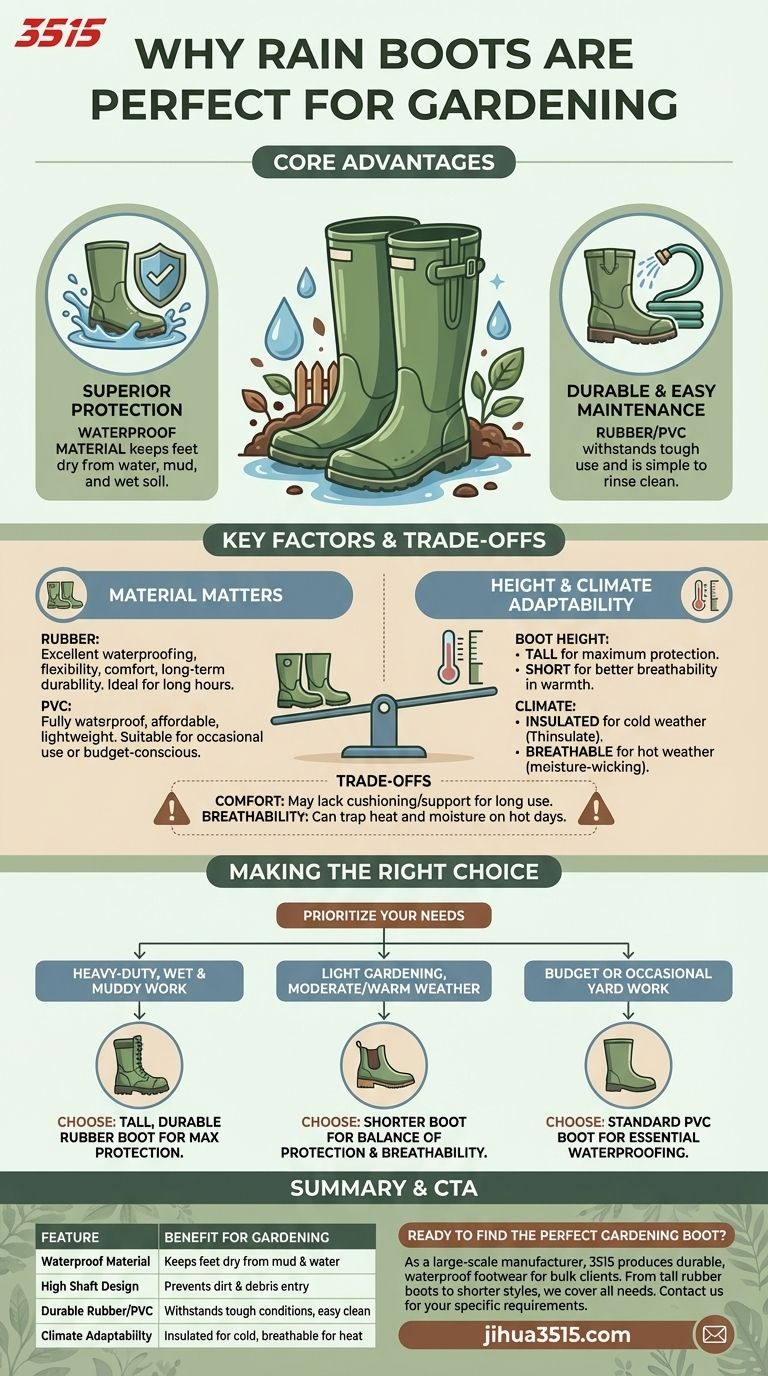
Visual Guide
Related Products
- Factory Direct Wholesale Rain Boots Durable Waterproof & Fully Customizable
- Durable Waterproof Rain Boots | Custom Manufacturer for Wholesale & Brands
- Durable Military Combat Boots with Water Drainage for Wholesale & OEM
- Premium Wholesale Waterproof Safety Boots High Performance Protection for Industrial Markets
- High Performance Fire-Retardant Waterproof Safety Boots
People Also Ask
- What are the characteristics of rain boots? A Guide to Waterproof Footwear for Every Need
- What factors should be considered when choosing rain boots? Find the Perfect Boot for Your Needs
- What are the main differences between rain boots and snow boots? Choose the Right Boot for Your Climate
- How should one decide between PVC and rubber for rain boots? A Guide to Choosing the Right Material
- Why are rain boots more flexible and comfortable than snow boots? The Key Differences Explained