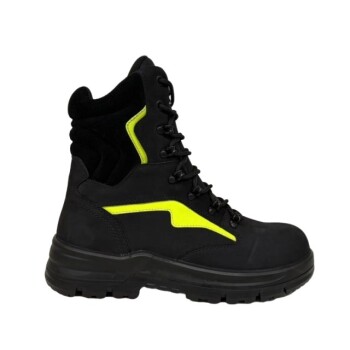
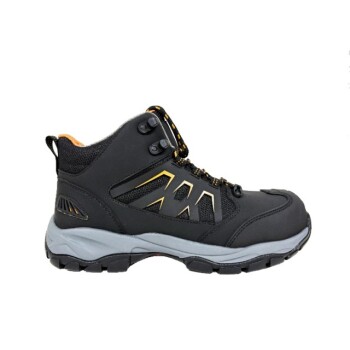
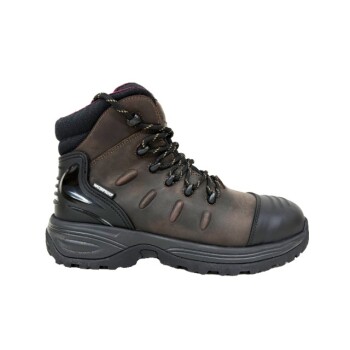
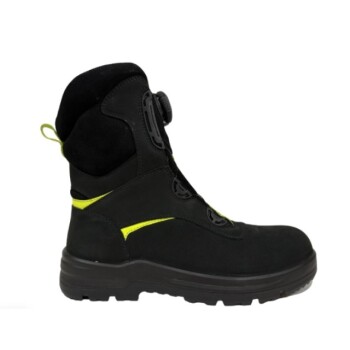
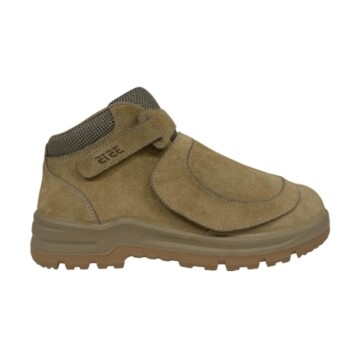
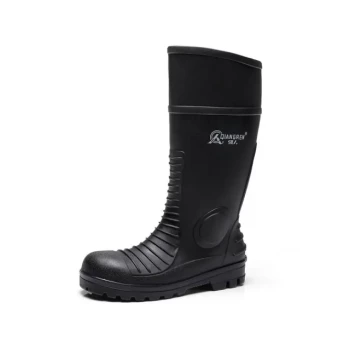
Professional protective boots are the non-negotiable foundation for technical personnel conducting construction site investigations. They are considered essential because they combine superior grip and ankle support to ensure stability on uneven terrain, while simultaneously shielding feet from physical hazards like sharp debris. Furthermore, wearing this specific footwear is a prerequisite for meeting the strict mandatory safety access standards required to legally and safely enter the site.
While often associated strictly with impact protection, the primary role of these boots during technical investigations is ensuring stability. They transform a hazardous, unpredictable worksite into a navigable environment, allowing architects and consultants to focus on their assessment rather than their footing.
Ensuring Stability on Uneven Ground
Navigating Complex Terrains
Site investigations require personnel to assess difficult environments, such as raw soil conditions and crane lifting radiuses.
These areas are rarely flat or paved. Technical personnel must often traverse shifting ground that standard footwear cannot handle.
Preventing Slips and Falls
Professional boots are engineered with specialized outsoles that offer superior grip performance.
This traction is vital for walking steadily on slippery or loose surfaces, significantly reducing the risk of dangerous falls.
Critical Ankle Support
The uneven nature of construction sites poses a constant risk of twisting an ankle.
Protective boots provide high-structure ankle support. This rigidity stabilizes the joint, preventing sprains when stepping on debris or irregular soil.
Defense Against Physical Hazards
Puncture Resistance
Active construction sites are frequently littered with sharp hazards, such as nails and steel scraps.
To counter this, professional boots are equipped with puncture-resistant midsoles. These act as a shield, preventing sharp objects from piercing the sole and injuring the foot.
Impact Protection
The risk of heavy falling objects is omnipresent in construction zones.
Protective toe caps are a standard feature designed to absorb impact. They ensure that accidental drops or collisions with heavy machinery do not result in crushing injuries.
Compliance and Access
Mandatory Safety Standards
Safety on a construction site is regulated by strict protocols.
Adhering to these mandatory safety access standards is not optional. Without approved protective boots, technical personnel are typically denied entry to the site entirely.
Professional Liability
For architects and consultants, wearing proper gear is also a matter of professional responsibility.
It demonstrates a commitment to safety culture and ensures that the investigation can proceed without being halted due to safety violations.
Common Trade-offs to Consider
Weight vs. Agility
The materials required for puncture resistance and toe protection add significant weight to the boot.
This can lead to increased leg fatigue during long inspections, potentially slowing down the wearer compared to lighter, non-protective footwear.
Sensitivity vs. Protection
The thick, rigid soles designed to stop nails reduce the wearer's "ground feel."
This lack of tactile feedback can sometimes make it harder to gauge the stability of a surface before fully committing your weight to it.
Making the Right Choice for Your Goal
- If your primary focus is terrain assessment: Prioritize boots with aggressive tread patterns and high ankle lacing to maximize stability on soil and uneven grades.
- If your primary focus is active construction zones: Ensure your selection features certified steel or composite toe caps and puncture-resistant plates to handle sharp debris and falling hazards.
By prioritizing the correct protective footwear, you ensure that the physical risks of the environment never compromise the quality or safety of your technical investigation.
Summary Table:
| Key Feature | Benefit for Technical Personnel | Importance Level |
|---|---|---|
| High-Traction Outsoles | Superior grip on loose soil and slippery uneven terrain | Critical |
| Ankle Support | Prevents sprains and stabilizes joints on irregular ground | High |
| Puncture Resistance | Protects against nails, steel scraps, and sharp debris | Essential |
| Reinforced Toe Caps | Guards against heavy falling objects and impact injuries | Essential |
| Standard Compliance | Meets mandatory safety protocols for legal site access | Mandatory |
Partner with 3515 for Professional-Grade Protection
As a large-scale manufacturer serving distributors and brand owners, 3515 offers comprehensive production capabilities for all footwear types, anchored by our flagship Safety Shoes series. We understand that for technical personnel, the right boot is more than gear—it is a tool for professional success.
Our extensive portfolio covers work and tactical boots, outdoor shoes, training shoes, and sneakers, as well as Dress & Formal shoes to meet your diverse bulk requirements. Whether you are looking to source high-stability investigation boots or heavy-duty construction footwear, we provide the scale and quality your brand deserves.
Contact us today to explore our wholesale and manufacturing solutions!
References
- Hosang Hyun, Jinsung Kim. Integrated Off-Site Construction Design Process including DfMA Considerations. DOI: 10.3390/su14074084
This article is also based on technical information from 3515 Knowledge Base .
Related Products
- Premium Wholesale Tactical Style Safety Shoes Boots with Quick Lacing
- Premium Grain Leather Safety Boots for Bulk Supply
- Wholesale Customizable Safety Boots Durable & Protective Footwear Manufacturing
- Premium Waterproof Nubuck Safety Boots for Wholesale
- Wholesale Safety Boots Manufacturer for Custom & Private Label Orders
People Also Ask
- How are gait analysis research findings applied to the functional design of safety shoes and tactical boots?
- How does anthropomorphic design influence material selection? Enhance Footwear Performance through Biological Alignment
- How can specialized footwear mitigate safety risks? High-Volume OEM/ODM Solutions since 1951
- Why is the synchronization of craftsmanship and UX development emphasized for bulk customization of safety shoes?
- How do quality certification standards for safety shoes reduce perceived risk? Buy Online with Technical Certainty