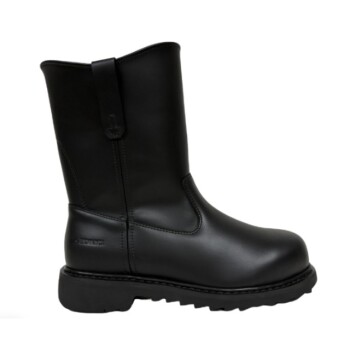
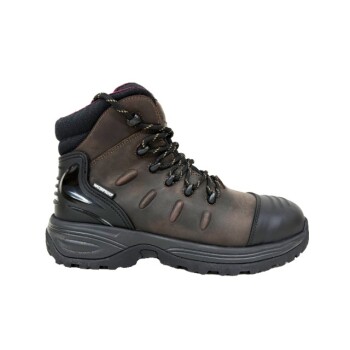
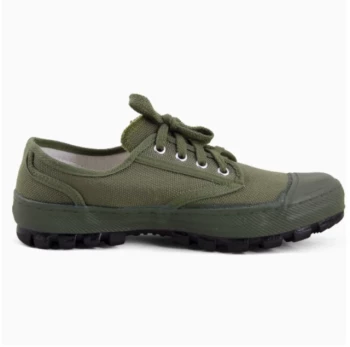
At its core, an oil-resistant sole is a non-negotiable safety feature for any serious motorcycle boot. Oil, fuel, and other common road chemicals act as solvents that can degrade standard sole materials, causing them to soften, crack, or lose their structure. This chemical breakdown permanently compromises the boot's grip and durability, creating a significant safety risk long after the initial exposure.
The danger isn't just slipping on a visible oil patch. The real threat is the gradual, often invisible, chemical decay of your boot's sole, which compromises its integrity and traction when you need it most.
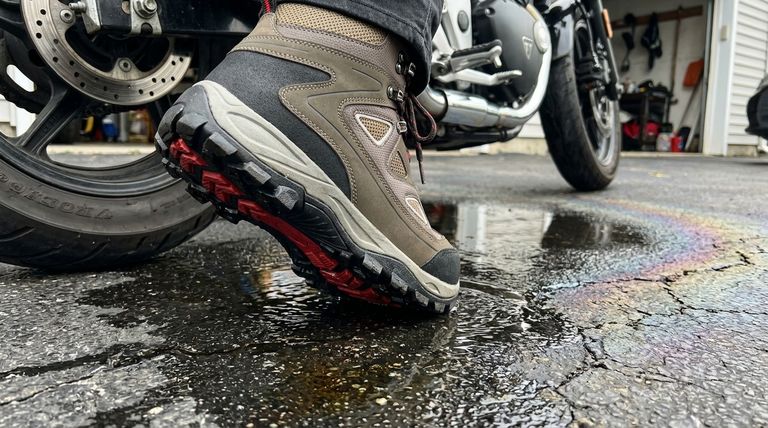
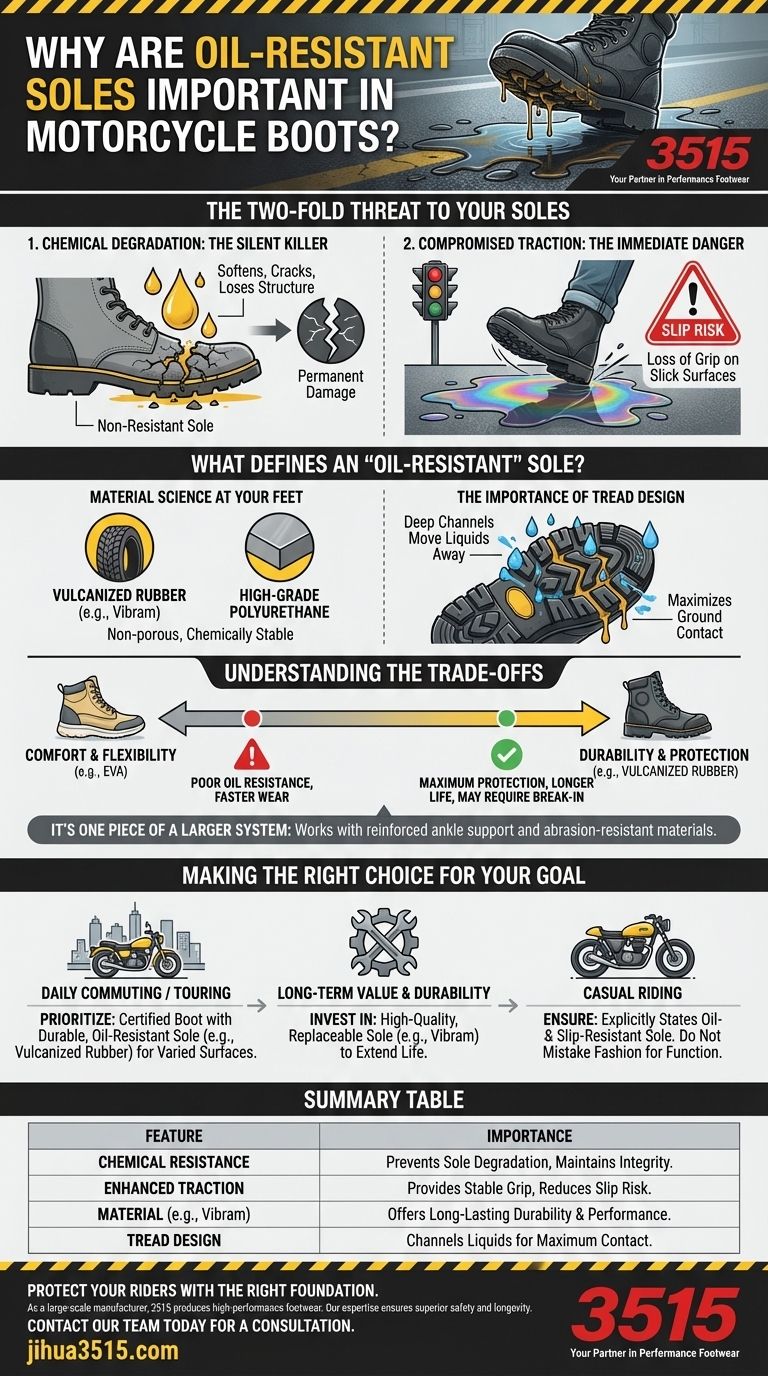
The Two-Fold Threat to Your Soles
When your boots encounter oil or fuel—an inevitability for any rider—they face two distinct problems: one that happens instantly and one that happens over time.
Chemical Degradation: The Silent Killer
Oils and petrochemicals are powerful solvents. When they soak into a sole made from non-resistant compounds, they begin to break down the material's chemical bonds.
This process can make the sole feel spongy, become brittle and crack, or even cause it to separate from the boot upper. This silent damage permanently reduces the sole's ability to protect you and support the weight of the motorcycle.
Compromised Traction: The Immediate Danger
The most obvious risk is loss of grip. Putting your foot down on an oily patch of asphalt at a stoplight or in a gas station can easily lead to a slip.
An oil-resistant sole is engineered with materials that have a high coefficient of friction even on slick surfaces, ensuring you maintain a stable footing. This is the same principle applied to high-performance safety boots in industrial settings like mining.
What Defines an "Oil-Resistant" Sole?
True oil resistance is a combination of advanced materials and intelligent design, working together to maintain grip and structural integrity.
Material Science at Your Feet
The choice of material is the foundation of oil resistance. Manufacturers use specific polymer blends designed to withstand chemical breakdown.
Vulcanized rubber, famously used in brands like Vibram, and high-grade polyurethane are the industry standards. These materials are non-porous and chemically stable, preventing oils from penetrating and degrading the sole.
The Importance of Tread Design
While material is key, the sole's pattern is also crucial. A well-designed tread features deep channels that work to move oil, water, and other liquids away from the contact patch.
This ensures that the maximum amount of sole material remains in direct contact with the ground, preserving traction even in messy conditions.
Understanding the Trade-offs
No single sole is perfect for every application. Boot manufacturers must balance competing priorities like durability, comfort, and cost.
The Comfort vs. Durability Spectrum
Materials like Ethylene-vinyl acetate (EVA) are known for being lightweight, flexible, and comfortable. However, they typically offer poor oil resistance and wear down much faster.
In contrast, a durable vulcanized rubber sole offers maximum protection and longevity but may feel stiffer and require a break-in period.
It's One Piece of a Larger System
An oil-resistant sole is a critical safety component, but it's not the only one. Features like reinforced ankle support, abrasion-resistant materials, and impact armor work together.
A great sole on a poorly constructed boot is a wasted investment. True safety comes from a design where every component works in unison to protect you.
Making the Right Choice for Your Goal
When selecting boots, consider how the sole's properties align with your specific type of riding.
- If your primary focus is daily commuting or touring: Prioritize a certified boot with a durable, oil-resistant sole like vulcanized rubber, as you will frequently encounter varied and unpredictable road surfaces.
- If your primary focus is long-term value and durability: Invest in a boot with a well-known, high-quality sole (like Vibram) that can also be replaced by a cobbler, extending the life of your purchase.
- If your primary focus is casual riding: Do not mistake fashion boots for riding boots. Even for short trips, ensure your boot explicitly states it has an oil- and slip-resistant sole to guard against common hazards.
Ultimately, choosing a boot with an oil-resistant sole is a direct investment in your safety and the longevity of your gear.
Summary Table:
| Feature | Importance for Motorcycle Boots |
|---|---|
| Chemical Resistance | Prevents sole degradation from oil/fuel, maintaining structural integrity. |
| Enhanced Traction | Provides a stable grip on slick surfaces, reducing slip risk. |
| Material (e.g., Vibram Rubber) | Offers long-lasting durability and performance. |
| Tread Design | Channels liquids away to maximize ground contact. |
Protect your riders with the right foundation. As a large-scale manufacturer, 3515 produces a comprehensive range of high-performance footwear for distributors, brand owners, and bulk clients. Our expertise in crafting boots with durable, oil-resistant soles ensures superior safety and longevity. Let's discuss how we can meet your specific needs. Contact our team today for a consultation.
Visual Guide
Related Products
- Heavy-Duty Goodyear Welted Pull-On Safety Rigger Boot
- Premium Oil Wax Leather Safety Boots for Bulk Purchase
- Durable Rubber Sole Outdoor Shoes Wholesale & Custom Manufacturing
- Wholesale Waterproof Tactical Boots Custom Suede & High-Traction Soles
- Durable Rubber-Soled Utility Shoes for Wholesale & Custom Brand Manufacturing
People Also Ask
- What are the key elements of quality boot construction? Ensure Longevity & Performance
- Are Goodyear welted boots worth it? The Ultimate Guide to Lifelong Footwear
- What is a Goodyear welt on a boot? The Secret to Durable, Repairable Footwear
- What makes Goodyear Welt boots suitable for harsh environments? Unmatched Durability & Repairability
- What additional high-quality materials are used in Goodyear Welt boots? A Guide to Advanced Components