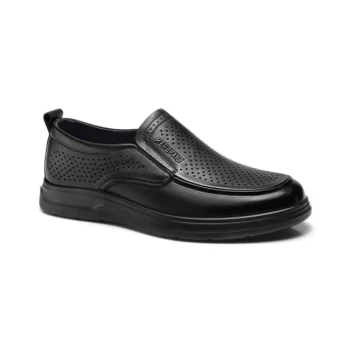
At their core, non-slip shoes are versatile because their fundamental design solves a universal problem: the risk of falling on unsafe surfaces. They provide essential stability and traction across a vast range of environments, from demanding professional workplaces like hospitals to casual daily activities, effectively eliminating the need for multiple pairs of specialized footwear.
The versatility of non-slip shoes is a direct result of their functional engineering. It's not just about where you can wear them, but about how their specific design features—like advanced tread patterns and high-traction materials—create a foundation of safety that is valuable in nearly any setting.
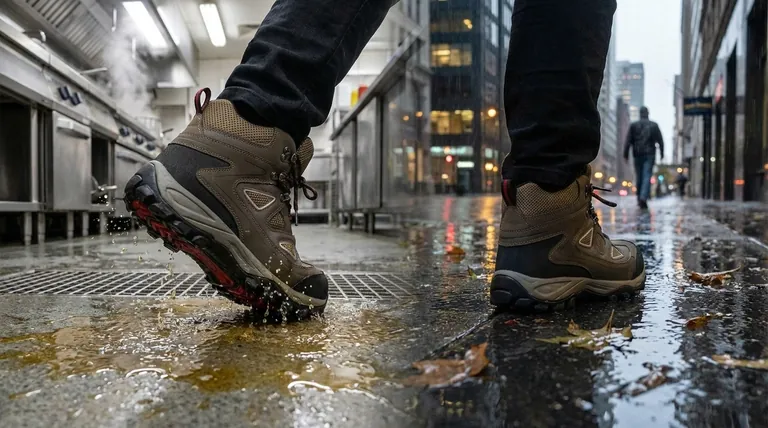
The Engineering Behind True Versatility
The adaptability of non-slip shoes isn't an accident; it's built into their core components. Each feature is designed to provide grip and stability, which are universally beneficial attributes.
High-Traction Outsole Materials
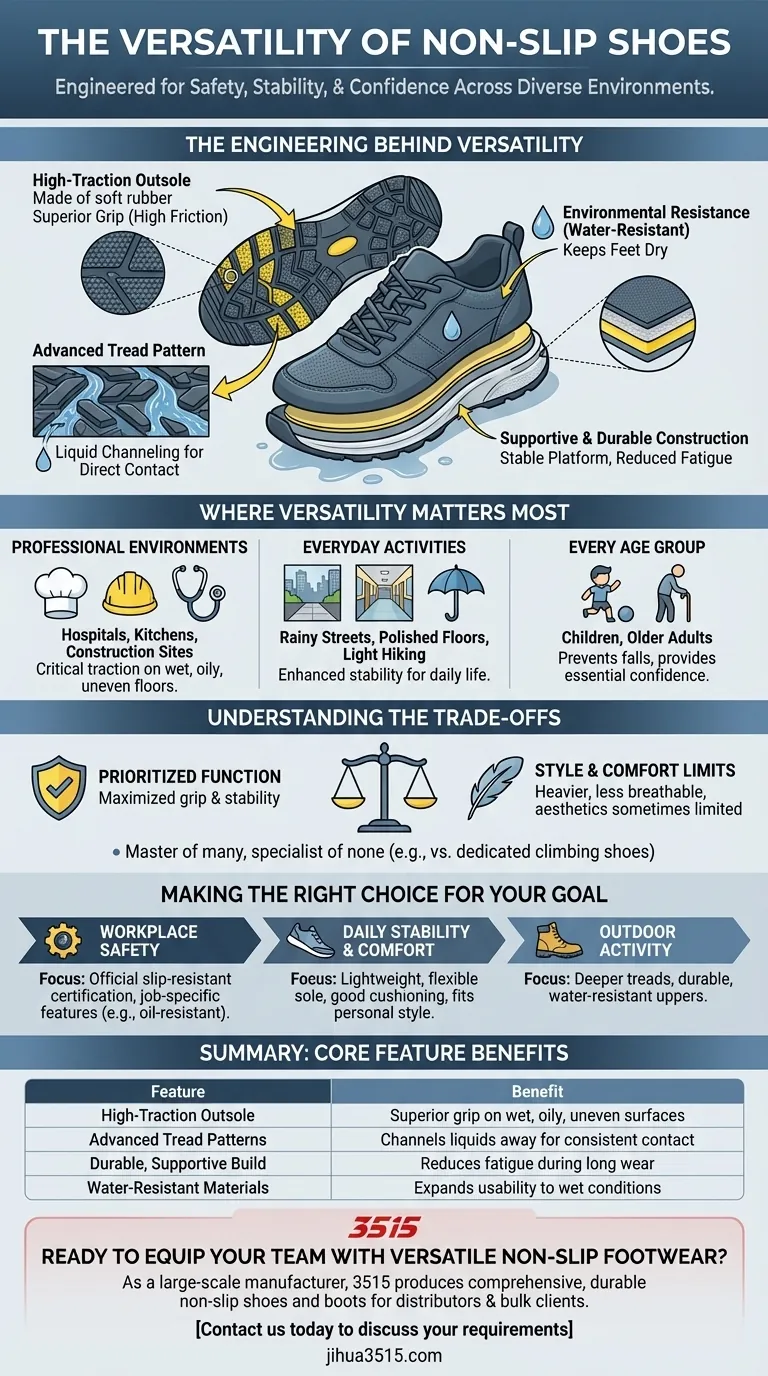
The foundation of any non-slip shoe is its outsole, which is typically made of soft rubber or a specialized synthetic rubber. These materials have a high coefficient of friction, allowing them to create a stronger grip on the ground compared to standard shoe materials.
Advanced Tread Patterns
The material alone isn't enough. The effectiveness of a non-slip shoe is magnified by its intricate tread pattern. These grooves and channels are engineered to siphon liquids like water and oil away from the sole's surface, ensuring the rubber maintains direct contact with the ground.
Supportive and Durable Construction
Many non-slip shoes feature thick, supportive midsoles and a durable build. This construction does more than just protect the foot; it provides a stable platform that reduces foot and back fatigue, making the shoes comfortable for long shifts or extended periods of wear.
Environmental Resistance
To maximize their utility, most non-slip footwear incorporates water-resistant materials. This feature keeps the wearer's feet dry and comfortable in wet conditions, expanding their use from indoor spills to outdoor rain and slush.
Where This Versatility Matters Most
The engineered safety features of non-slip shoes make them a practical choice for a wide spectrum of users and environments, seamlessly transitioning between different roles.
In Professional Environments
In workplaces like hospitals, restaurant kitchens, or construction sites, floors can be unpredictably wet, oily, or uneven. Non-slip shoes provide the critical traction needed to prevent slips and falls, which are a leading cause of workplace injuries.
For Everyday Activities
The same technology that protects a worker also provides confidence for daily life. Whether navigating polished school hallways, rainy city sidewalks, or even light hiking trails, non-slip shoes offer an enhanced sense of stability.
For Every Age Group
This versatility extends across demographics. They are just as useful for children on a wet playground as they are for older adults who require additional stability to prevent dangerous falls.
Understanding the Trade-offs
While highly versatile, it's important to recognize the design compromises inherent in prioritizing safety and function.
Style vs. Function
The most effective non-slip shoes are built for performance first. The need for a thick sole and specific tread patterns can sometimes limit their aesthetic appeal, though modern designs increasingly bridge this gap.
Breathability and Weight
The durable and often water-resistant materials used in non-slip shoes can make them heavier and less breathable than a standard athletic or casual shoe. This can be a factor during long wear periods in warm conditions.
Surface-Specific Performance
A general non-slip shoe is a master of many surfaces but a specialist of none. While excellent for general safety, it will not outperform a dedicated hiking boot on a treacherous mountain trail or a climbing shoe on a rock face. Their strength is reliability across a wide variety of common hazards.
Making the Right Choice for Your Goal
Select your footwear based on your most frequent or highest-risk environment.
- If your primary focus is workplace safety: Look for shoes with an official slip-resistant certification and features tailored to your job, like oil-resistant soles or reinforced toe caps.
- If your primary focus is daily stability and comfort: Prioritize a lightweight model with good cushioning and a flexible sole that fits your personal style.
- If your primary focus is outdoor activity: Select a pair with deeper, more aggressive treads and durable, water-resistant uppers for better performance on natural terrain.
Ultimately, the right non-slip shoe provides a foundation of confidence, letting you focus on the task at hand instead of the ground beneath your feet.
Summary Table:
| Feature | Benefit |
|---|---|
| High-Traction Outsole | Superior grip on wet, oily, and uneven surfaces |
| Advanced Tread Patterns | Channels liquids away for consistent ground contact |
| Durable, Supportive Build | Reduces fatigue during long shifts or daily wear |
| Water-Resistant Materials | Expands usability from indoor spills to outdoor rain |
Ready to equip your team or customers with versatile, high-quality non-slip footwear?
As a large-scale manufacturer, 3515 produces a comprehensive range of non-slip shoes and boots for distributors, brand owners, and bulk clients. Our production capabilities ensure durable, safe, and comfortable footwear tailored to your specific market needs.
Contact us today to discuss your requirements and discover how we can be your trusted manufacturing partner.
Visual Guide
Related Products
- Advanced KPU Athletic Safety Shoe with Steel Toe Cap Anti-Slip Rotary Lacing System
- Premium Suede Sport Safety Shoes for Wholesale & Bulk Orders
- Durable High-Traction Canvas Sneakers Wholesale & Custom Manufacturing
- Durable Goodyear Welt Leather Work Boots for Wholesale & Private Label
- Heavy-Duty Waterproof Nubuck Safety Boots Safety Shoes for Bulk Supply
People Also Ask
- What are the key differences between steel toe and composite toe caps? Choose the Right Safety for Your Job
- What impact do steel toe caps have on toe skin health? Prevent Friction and Pressure in Your Safety Shoes
- What are the primary protective functions of safety shoes with steel toes in the automotive repair industry?
- What type of safety shoe is recommended for workers exposed to heavy machinery? Steel Toe Boots for Ultimate Protection
- How does defining specific friction interface models in FEA assist in predicting safety shoe toe cap failure modes?