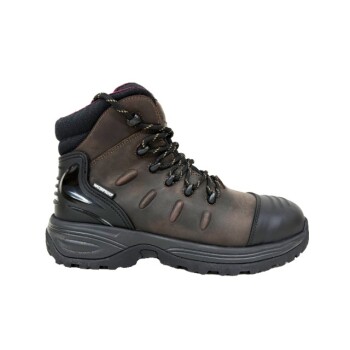
Industrial-grade safety shoes are the primary physical defense against traumatic foot injuries in the construction industry. They function as a specialized barrier that mitigates high-probability risks such as crushing from falling debris, punctures from sharp site waste, and falls on unstable surfaces. By integrating reinforced materials like steel toe caps and high-strength midsoles, these shoes convert a major physical vulnerability into a controlled operational risk.
Core Takeaway: Safety shoes are fundamental because they provide an immediate, engineered solution to physical hazards that cannot be fully eliminated through site design alone. They serve as the final, critical layer of protection that ensures worker health, regulatory compliance, and project continuity.
The Mechanics of Physical Risk Mitigation
Defending Against Crushing and Impact
Construction sites are dynamic environments where heavy materials are frequently moved overhead or stored vertically. Industrial-grade safety shoes utilize steel or composite toe caps to resist "anti-smashing" forces, preventing permanent disabilities caused by falling objects or structural collapses.
Neutralizing Puncture Hazards
The presence of discarded nails, glass, and sharp metal shards is a constant reality on active job sites. High-strength midsoles act as a puncture-resistant shield, ensuring that sharp objects cannot penetrate the sole and reach the worker's foot during movement.
Stabilizing Movement on Complex Terrain
Wet, oily, or uneven ground conditions pose a significant risk of slips and falls, which are leading causes of workplace accidents. These shoes feature high-traction, slip-resistant outsoles that provide the necessary grip to maintain stability during complex mechanical or structural operations.
Operational Impact and Risk Management
Ensuring Regulatory and OHS Compliance
Safety footwear is a non-negotiable component of Occupational Health and Safety (OHS) management systems. Implementing mandatory safety shoe policies allows project managers to meet legal safety standards and improve the overall "risk-controlled" status of the site.
Mitigating Legal and Financial Liabilities
Workplace injuries often lead to significant project delays, increased insurance premiums, and potential legal litigation. By reducing the frequency of industrial injuries, professional-grade safety shoes protect the organization from the indirect costs associated with accidents and lost labor hours.
Enhancing Workforce Productivity
Modern safety shoes often include ergonomic inner linings designed to alleviate fatigue during prolonged standing. By reducing physical strain and ensuring foot health, these shoes allow workers to maintain focus and efficiency throughout long shifts on high-rise or large-scale projects.
Understanding the Trade-offs and Limitations
Protection Level vs. Weight and Mobility
While steel-toed boots offer the highest level of impact resistance, they add significant weight, which can increase worker fatigue over time. Composite materials offer a lighter alternative but may have different profiles in terms of thickness and extreme temperature performance.
False Sense of Security
The use of safety shoes does not eliminate the need for rigorous site organization and hazard removal. Over-reliance on personal protective equipment (PPE) can sometimes lead to a "risk compensation" effect, where workers may take greater risks because they feel protected.
Maintenance and Degradation
The protective qualities of safety shoes are not permanent; soles wear down and protective caps can become compromised after a single significant impact. Regular inspections are required to ensure the equipment still meets the necessary safety ratings, as damaged shoes can offer a deceptive level of protection.
Selecting the Right Footwear for Your Risk Profile
To effectively manage risk, the choice of safety shoe must align with the specific hazards of the project environment and the needs of the workforce.
- If your primary focus is heavy structural work: Prioritize shoes with steel toe caps and maximum impact ratings to defend against falling heavy materials.
- If your primary focus is site-wide mobility and electrical safety: Select composite-toe shoes, which provide a lightweight, non-conductive alternative for workers who are constantly on the move.
- If your primary focus is renovation or demolition: Ensure shoes have the highest puncture-resistance rating (PR) for the midsole to protect against nails and sharp debris.
By viewing safety shoes not just as a uniform requirement but as a precision-engineered risk control tool, project managers can significantly stabilize the safety profile of any construction site.
Summary Table:
| Hazard Category | Protection Mechanism | Operational Benefit |
|---|---|---|
| Impact & Crushing | Steel/Composite Toe Caps | Prevents traumatic foot disabilities from falling debris. |
| Puncture Risks | High-strength Midsoles | Blocks nails and sharp metal shards from penetrating the sole. |
| Slips & Falls | High-traction Outsoles | Maintains stability on wet, oily, or uneven terrain. |
| Regulatory Risk | OHS Compliance | Ensures legal safety standards and reduces financial liability. |
| Worker Fatigue | Ergonomic Inner Linings | Enhances productivity and focus during long shifts. |
Partner with 3515 for Robust Industrial Safety Solutions
As a large-scale manufacturer serving distributors and brand owners globally, 3515 offers comprehensive production capabilities for all footwear types, anchored by our flagship Safety Shoes series. We understand that in construction risk management, your footwear is the final line of defense. Our extensive portfolio covers work and tactical boots, outdoor shoes, training shoes, and sneakers, as well as Dress & Formal shoes to meet your diverse bulk requirements.
Why choose 3515?
- Engineered Protection: Our safety shoes meet rigorous anti-smashing and puncture-resistant standards.
- Scalable Manufacturing: Reliable bulk supply for large-scale projects and distribution networks.
- Diverse Portfolio: From heavy-duty steel toes to lightweight composite alternatives.
Contact us today to secure high-performance safety footwear for your workforce!
References
- Desy Mei Dina, Aleksander Purba. Occupational Health and Safety Risk Analysis in Construction Projects: A Systematic Literature Review. DOI: 10.22441/ijiem.v3i1.13790
This article is also based on technical information from 3515 Knowledge Base .
Related Products
- Premium Wheat Nubuck Safety Shoes for Bulk Distribution
- Premium Wholesale Waterproof Safety Boots High Performance Protection for Industrial Markets
- Premium Waterproof High-Cut Industrial Safety Boots for Wholesale and Bulk Orders
- Premium KPU Athletic Safety Shoes for Wholesale
- Premium Wholesale Tactical Style Safety Shoes Boots with Quick Lacing
People Also Ask
- What are the primary protective functions of safety shoes with steel toes in the automotive repair industry?
- What type of safety shoe is recommended for workers exposed to heavy machinery? Steel Toe Boots for Ultimate Protection
- What are the main materials used in steel toe safety shoes? A Guide to Protective Footwear Construction
- Why is it mandatory to wear safety shoes with steel toe protection during metal loading? Prevent Crushing Injuries
- What role do steel-toe safety shoes play in high-rise construction? Essential PPE for Vertical Build Security