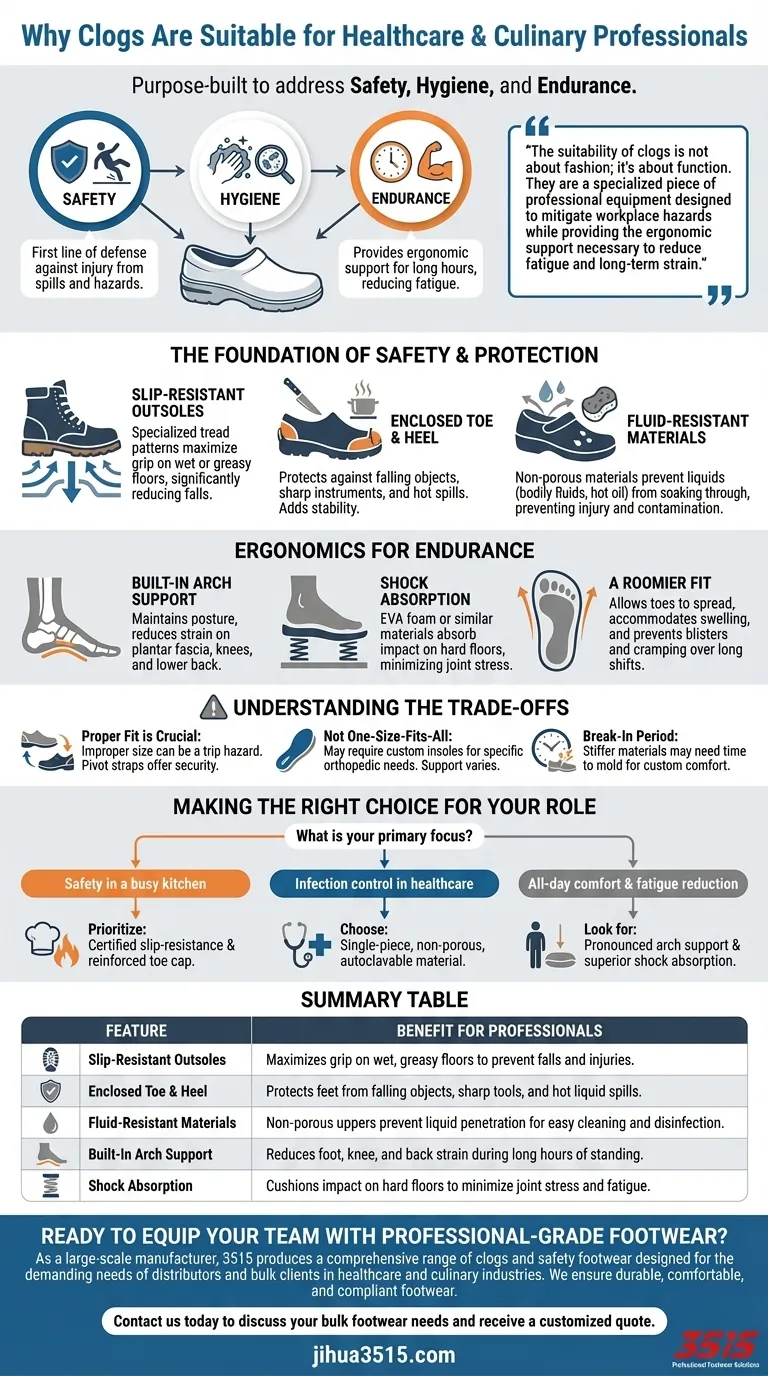
In short, clogs are uniquely suited for healthcare and culinary professionals because they are purpose-built to address the three core challenges of these environments: safety, hygiene, and endurance. Their design combines critical features like certified slip-resistant outsoles, robust arch support for long hours of standing, and durable, non-porous materials that are exceptionally easy to clean and disinfect.
The suitability of clogs is not about fashion; it's about function. They are a specialized piece of professional equipment designed to mitigate workplace hazards while providing the ergonomic support necessary to reduce fatigue and long-term strain.

The Foundation of Safety and Protection
In environments where spills are a constant risk, the right footwear is your first line of defense against injury. Clogs are engineered with safety as a primary concern.
Slip-Resistant Outsoles
This is the most critical safety feature. Professional-grade clogs have outsoles made from specialized rubber compounds with tread patterns designed to channel liquids away, maximizing grip on wet or greasy floors and significantly reducing the risk of falls.
Enclosed Toe and Heel
An enclosed design protects the foot from two common hazards: falling objects like sharp instruments or heavy pans, and hot liquid spills. The raised heel bumper also adds crucial protection and stability.
Fluid-Resistant Materials
The synthetic or rubber materials used in most professional clogs are non-porous. This means liquids, from bodily fluids in a hospital to hot oil in a kitchen, cannot soak through to the foot, preventing both injury and contamination.
Ergonomics for Endurance
Standing and walking for 8 to 12 hours places immense stress on the feet, legs, and back. Clogs are designed to distribute this stress and provide continuous support.
Built-In Arch Support
Proper arch support helps maintain correct posture and foot alignment. This reduces the strain on the plantar fascia, a common source of foot pain (plantar fasciitis), and helps prevent fatigue from radiating up into the knees and lower back.
Shock Absorption
The materials, often a type of EVA foam, are engineered to absorb the impact of each step on hard floors. This cushioning effect minimizes the cumulative stress on your joints throughout a long shift.
A Roomier Fit
Clogs traditionally feature a wider toe box. This allows the toes to spread naturally and accommodates the foot swelling that occurs over a long day, preventing blisters, cramping, and discomfort.
Understanding the Trade-offs
While highly effective, clogs are not a perfect solution for everyone. Understanding their limitations is key to using them safely.
The Importance of a Proper Fit
An improperly sized clog can be a liability. If it's too loose, your foot may slide, creating instability and a potential trip hazard. Many professionals opt for models with a pivoting heel strap for added security.
Not a One-Size-Fits-All Solution
While most professional clogs offer excellent support, individuals with specific orthopedic needs may require custom insoles. The level of arch support and cushioning can also vary significantly between brands.
The Break-In Period
Some clogs, particularly those made from stiffer materials or leather, may require a break-in period to mold to your foot. This is a temporary trade-off for long-term comfort and a custom-like fit.
Making the Right Choice for Your Role
Selecting the right clog depends on the specific demands of your job.
- If your primary focus is safety in a busy kitchen: Prioritize a clog with a certified, highly slip-resistant outsole and a reinforced toe cap for protection.
- If your primary focus is infection control in a healthcare setting: Choose a clog made from a single piece of non-porous, autoclavable material that can be easily and thoroughly sterilized.
- If your primary focus is all-day comfort and reducing fatigue: Look for models known for their pronounced arch support and superior shock-absorbing properties to minimize strain on your feet and back.
Ultimately, choosing the right footwear is a critical investment in your daily safety, comfort, and long-term health.
Summary Table:
| Feature | Benefit for Professionals |
|---|---|
| Slip-Resistant Outsoles | Maximizes grip on wet, greasy floors to prevent falls and injuries. |
| Enclosed Toe & Heel | Protects feet from falling objects, sharp tools, and hot liquid spills. |
| Fluid-Resistant Materials | Non-porous uppers prevent liquid penetration for easy cleaning and disinfection. |
| Built-In Arch Support | Reduces foot, knee, and back strain during long hours of standing. |
| Shock Absorption | Cushions impact on hard floors to minimize joint stress and fatigue. |
Ready to equip your team with professional-grade footwear?
As a large-scale manufacturer, 3515 produces a comprehensive range of clogs and safety footwear designed specifically for the demanding needs of distributors, brand owners, and bulk clients in the healthcare and culinary industries. Our production capabilities ensure durable, comfortable, and compliant footwear that protects your staff and enhances productivity.
Contact us today to discuss your bulk footwear needs and receive a customized quote.
Visual Guide
Related Products
- Wholesale Durable Camouflage Canvas Shoes with High-Traction Cleated Rubber Sole
- Durable Leather Moc Toe Work Boots for Wholesale & Custom Manufacturing
- Durable Leather Work Boots for Wholesale & Custom Manufacturing
- Dial Closure Leather Business Casual Shoes for Wholesale & Private Label
- Durable Leather High-Ankle Tactical Boots for Wholesale & Custom Manufacturing
People Also Ask
- Why is the selection of high-strength fabric materials necessary in the production of canvas shoes and training shoes?
- What are the properties of canvas as a shoe material? A Guide to Lightweight Comfort & Style
- Can canvas shoes be worn in rainy conditions? The Truth About Water Resistance
- What are some examples of vulcanized shoes? Discover the Flexibility and Board Feel of Classic Sneakers
- What are the characteristics of canvas as a shoe material? A Guide to Lightweight, Breathable Footwear