
For extended use, rubber boots are the superior choice. They offer significantly better comfort and flexibility than PVC boots. The natural elasticity of rubber allows the boot to move with your foot, reducing fatigue and friction over long periods of wear.
While rubber's inherent flexibility makes it the better material for all-day comfort, the single most critical factor for any boot intended for extended use is a perfect fit. An ill-fitting boot, regardless of material, will inevitably cause discomfort.
The Core Difference: Material and Movement
The choice between rubber and PVC for long-term wear comes down to a fundamental difference in how the materials behave under stress and over time. This directly impacts how your feet feel after hours of use.
Why Rubber Excels for Long Wear
Natural rubber is an elastic material. This means it flexes and contours to the natural movement of your foot with each step.
This flexibility is crucial for preventing the development of pressure points and blisters, which are common when a boot fights against your foot's motion.
The Limitation of PVC
PVC (Polyvinyl chloride) is a type of plastic that is inherently more rigid than rubber. This stiffness means the boot is less forgiving and does not adapt as well to your foot.
Over an extended period, this rigidity can lead to discomfort and a feeling of confinement, as the boot restricts the subtle but necessary movements within your foot.
Beyond Material: Why Fit is the Deciding Factor
Even the most flexible rubber boot will fail if it doesn't fit correctly. A proper fit is the foundation of comfort and is non-negotiable for any footwear you plan to wear for hours at a time.
Securing the Heel
Your heel should be snug and secure, with no excessive slipping or lifting as you walk. Heel slippage is a primary cause of painful blisters and instability.
Allowing for Toe Splay
You must have enough room in the toe box to wiggle your toes freely. Your foot naturally expands throughout the day, and a cramped toe box will cause significant pain and pressure.
Ensuring Proper Width and Arch
The boot must be wide enough for your foot without being loose. Crucially, it must also provide adequate arch support to prevent strain and foot fatigue over a long day.
Understanding the Trade-offs
Choosing a boot isn't just about a single factor. The very properties that make these materials different create a clear set of trade-offs you must consider for your specific needs.
The Stiffness of PVC
While PVC's stiffness is a disadvantage for comfort during extended use, it can provide a more rigid structure. This may be perceived as more protective in certain industrial or construction environments, but it comes at the direct expense of ergonomic comfort.
The Flexibility of Rubber
Rubber's flexibility is its greatest asset for comfort. It allows for a more natural gait and reduces overall fatigue. The trade-off is that it may feel less structured than a rigid PVC boot, which is a matter of personal preference and specific application.
Making the Right Choice for Your Goal
Your final decision should be guided by your primary objective.
- If your primary focus is all-day comfort and mobility: Choose a rubber boot for its superior flexibility, which will reduce fatigue and move with your foot.
- If your primary focus is preventing pain and injury: Prioritize finding a perfect fit above all else, ensuring your heel is locked, your toes can move, and your arch is supported.
Ultimately, the best boot for extended use is one that combines the forgiving nature of rubber with the non-negotiable support of a correct fit.
Summary Table:
| Feature | Rubber Boots | PVC Boots |
|---|---|---|
| Material Flexibility | High (Elastic, moves with the foot) | Low (Rigid, less forgiving) |
| All-Day Comfort | Superior (Reduces fatigue and pressure points) | Lower (Can cause discomfort over time) |
| Key to Comfort | Perfect Fit (Snug heel, roomy toe box, arch support) | Perfect Fit (Mitigates material stiffness) |
| Best For | Mobility, reducing fatigue, natural foot movement | Applications where rigid structure is prioritized over comfort |
Need Durable, Comfortable Boots for Your Team or Brand?
As a large-scale manufacturer, 3515 produces a comprehensive range of high-quality rubber and PVC footwear for distributors, brand owners, and bulk clients. We understand that comfort and durability are paramount for extended use. Our production capabilities encompass all types of safety and work boots, ensuring a perfect fit and superior performance for your customers.
Contact 3515 today to discuss your footwear needs and discover how we can enhance your product line with reliable, comfortable boots.
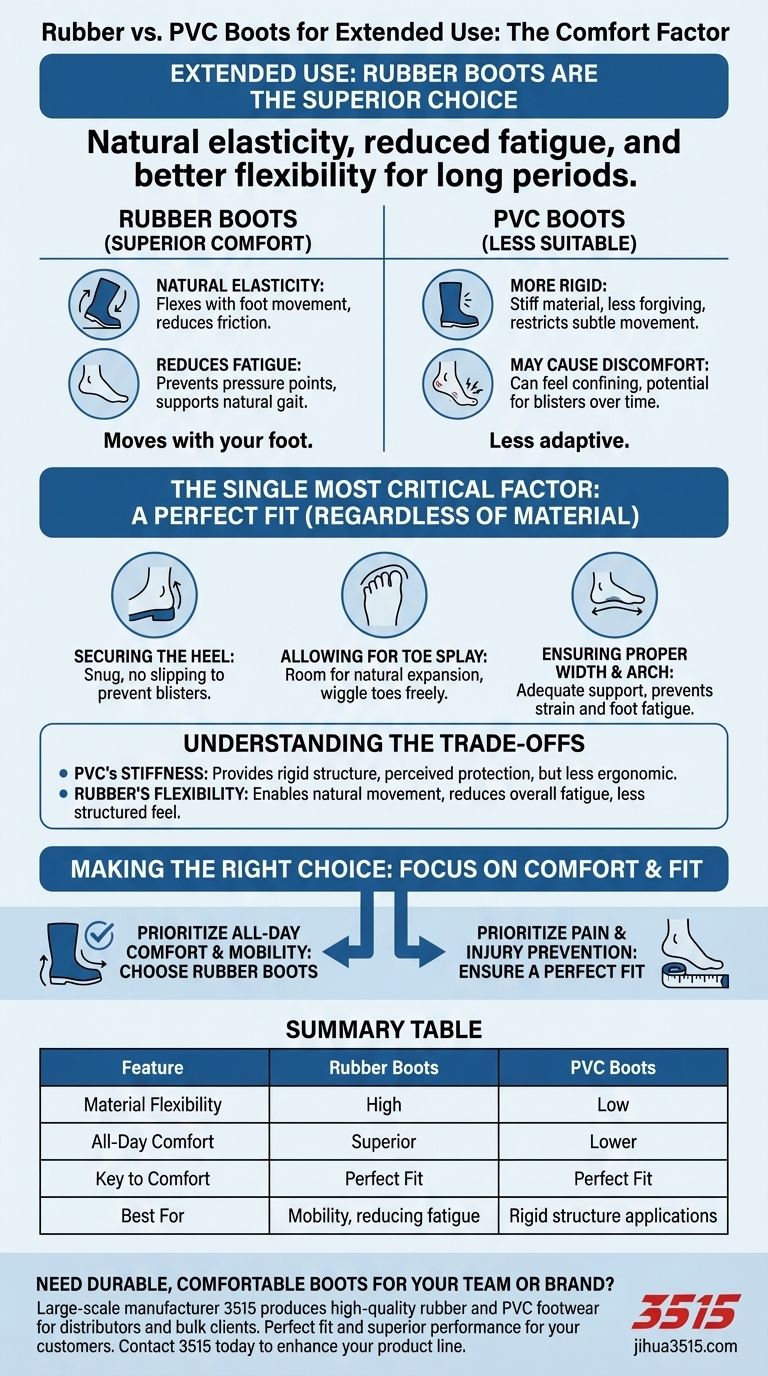
Visual Guide
Related Products
- Factory Direct Wholesale Rain Boots Durable Waterproof & Fully Customizable
- Durable Rubber Sole Outdoor Shoes Wholesale & Custom Manufacturing
- Wholesale Durable Camouflage Canvas Shoes with High-Traction Cleated Rubber Sole
- Durable Leather Work Boots for Wholesale & Custom Manufacturing
- Wholesale Durable Leather Work Boots | 8-Inch Goodyear Welt Manufacturer
People Also Ask
- What are the characteristics of rain boots? A Guide to Waterproof Footwear for Every Need
- What factors should be considered when choosing rain boots? Find the Perfect Boot for Your Needs
- What are the main differences between rain boots and snow boots? Choose the Right Boot for Your Climate
- How should one decide between PVC and rubber for rain boots? A Guide to Choosing the Right Material
- Why are rain boots more flexible and comfortable than snow boots? The Key Differences Explained















