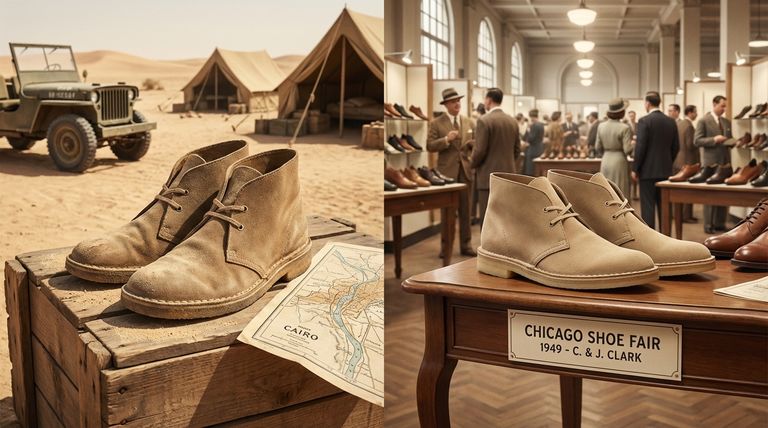
Contrary to its name, the desert boot was not unveiled in the desert but at the 1949 Chicago Shoe Fair. It was here that Nathan Clark, of the British C & J Clark company, first showcased the simple suede, crepe-soled boot that would become an icon of men's style.
While its official debut was in America, the desert boot's soul was forged years earlier out of military necessity in the North African campaigns of World War II, a history that became central to its global appeal.
From Battlefield Necessity to Style Icon
The story of the desert boot begins not in a design studio, but in the challenging terrain of the Western Desert.
The Problem with Standard-Issue Boots
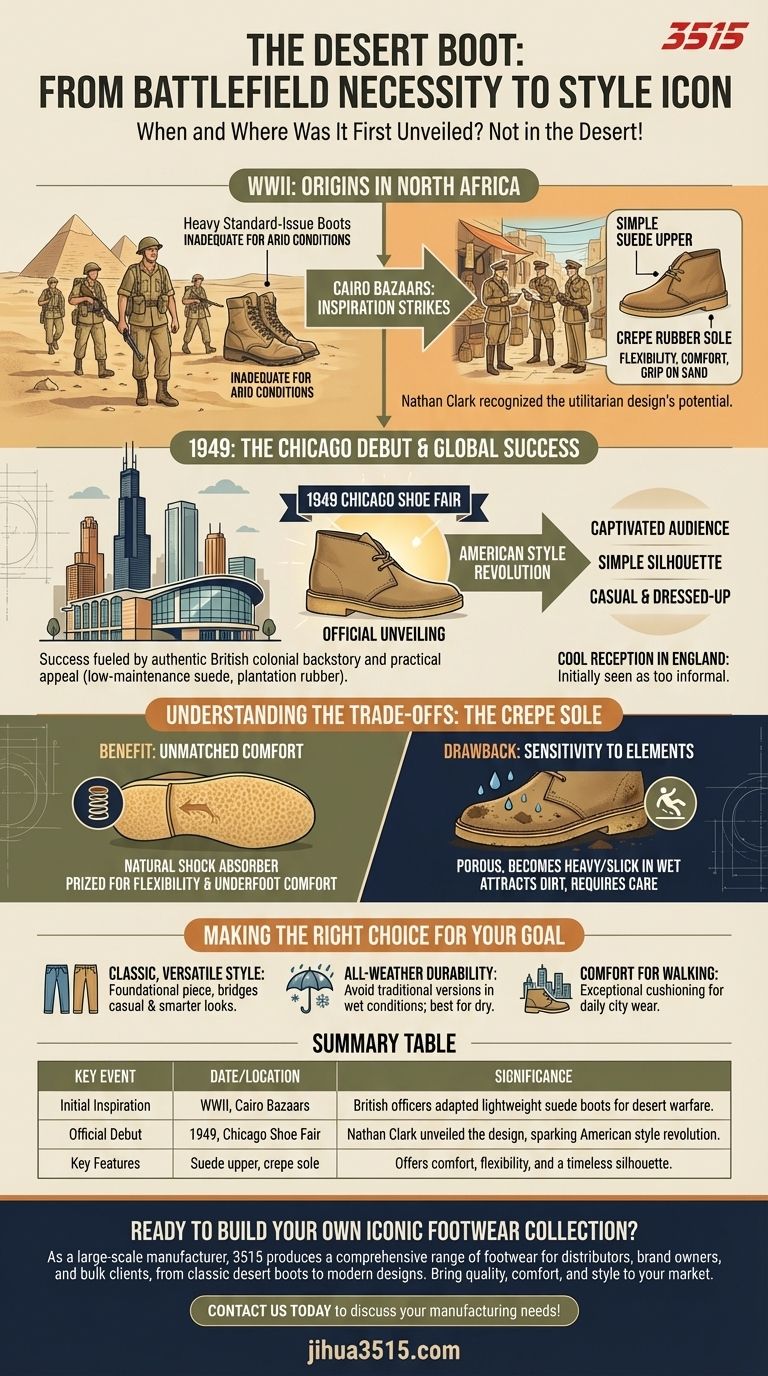
During World War II, British soldiers found their heavy, standard-issue military boots to be completely inadequate for the sandy, arid conditions.
They were cumbersome, hot, and ill-suited for the environment, prompting a search for a more practical alternative.
Inspiration in the Cairo Bazaars
The solution appeared in the markets of Cairo. British officers, including Nathan Clark, noticed fellow officers wearing lightweight, sand-colored ankle boots with suede uppers.
These boots were crafted by cobblers in the city's famous Khan el-Khalili bazaar, who had adapted a design originally worn by South African soldiers.
The Birth of a New Design
The key features were a simple suede upper tied close to the ankle and, most importantly, a crepe rubber sole. This combination provided flexibility, comfort, and excellent grip on sand.
Clark recognized the potential of this utilitarian design and brought the idea back to his family's shoe company in England.
The American Debut That Changed Everything
Despite its practical brilliance, the boot's journey to market was not straightforward.
A Cool Reception in England
Initially, the design faced a lack of interest in its home country. The simple, unlined construction was seen as too informal for the traditional British footwear market at the time.
The 1949 Chicago Shoe Fair
Undeterred, Nathan Clark took the boots to the Chicago Shoe Fair. The response from American style editors was immediate and overwhelmingly positive.
The shoe's simple silhouette and unique sole captivated an audience looking for a new blend of casual and dressed-up style.
Why It Succeeded in the US
The boot's success in America was fueled by its compelling backstory and practical appeal. It was marketed as authentic British colonial footwear with a direct military connection.
Features like the "plantation rubber" outsole and the fact that the suede "never needed to be polished" resonated perfectly with the growing American demand for comfortable, low-maintenance, and versatile clothing.
Understanding the Trade-offs
The very features that define the desert boot also create its primary limitations. The focus is on its signature crepe sole.
The Benefit: Unmatched Comfort
The natural crepe rubber sole is prized for its spongy, flexible nature. It acts as a natural shock absorber, providing a level of underfoot comfort that is difficult to match with harder synthetic soles.
The Drawback: Sensitivity to the Elements
This comfort comes at a price. Crepe soles are porous and can become heavy and slick in wet weather. They also tend to darken and pick up dirt easily, requiring more care to maintain their original appearance.
Making the Right Choice for Your Goal
The desert boot's history informs its function today. Understanding its origins helps you decide if it fits your needs.
- If your primary focus is classic, versatile style: The desert boot is a foundational piece that effortlessly bridges the gap between casual jeans and smarter chinos.
- If your primary focus is all-weather durability: Be aware that traditional suede and crepe-soled versions are best suited for dry conditions and are not an ideal choice for rain or snow.
- If your primary focus is comfort for walking: The crepe sole offers exceptional cushioning for city environments, making it a comfortable choice for daily wear.
The desert boot endures because it was born from function and perfected into timeless form.
Summary Table:
| Key Event | Date/Location | Significance |
|---|---|---|
| Initial Inspiration | WWII, Cairo Bazaars | British officers adapted lightweight suede boots for desert warfare. |
| Official Debut | 1949, Chicago Shoe Fair | Nathan Clark unveiled the design, sparking American style revolution. |
| Key Features | Suede upper, crepe sole | Offers comfort, flexibility, and a timeless silhouette. |
Ready to build your own iconic footwear collection? As a large-scale manufacturer, 3515 produces a comprehensive range of footwear for distributors, brand owners, and bulk clients. Our production capabilities encompass all types of shoes and boots, from classic styles like the desert boot to modern designs. Let us help you bring quality, comfort, and style to your market. Contact us today to discuss your manufacturing needs!
Visual Guide
Related Products
- Wholesale Lightweight Tactical Boots Custom Manufacturer for Desert & Combat Use
- Durable Military Combat Boots with Water Drainage for Wholesale & OEM
- Wholesale High-Traction Camo Boots - Custom Manufacturer for Brands
- Durable Leather Tactical Boots Wholesale & Custom Manufacturing for Brands
- Factory Direct Wholesale Rain Boots Durable Waterproof & Fully Customizable
People Also Ask
- What are the common types of combat boots? Find the Right Boot for Your Mission
- What specialized protections do tactical boots offer? Maximize Endurance with High-Performance Footwear
- What is the role of high-frequency acquisition hardware in technical skill analysis for outdoor and tactical boots?
- How is the compatibility of polymer materials demonstrated in smart footwear? Enhancing Tactical & Training Performance
- How does additive manufacturing equipment reduce environmental risks? Sustainable Tactics for Modern Footwear Production