To understand the desert boot's global popularity, you must look at its journey from a practical military solution to a civilian style staple. Born from necessity in WWII, its success was driven by its unique comfort, followed by adoption in the U.S., a wave of popularity among European youth, and finally, a cultural explosion in 1960s Britain that cemented its iconic status.
The desert boot's path from the North African desert to global wardrobes was not an accident. It was a direct result of its superior comfort and simple, versatile design, which allowed it to be embraced by soldiers, subcultures, and style-conscious consumers across the world.
From Battlefield Necessity to Style Icon
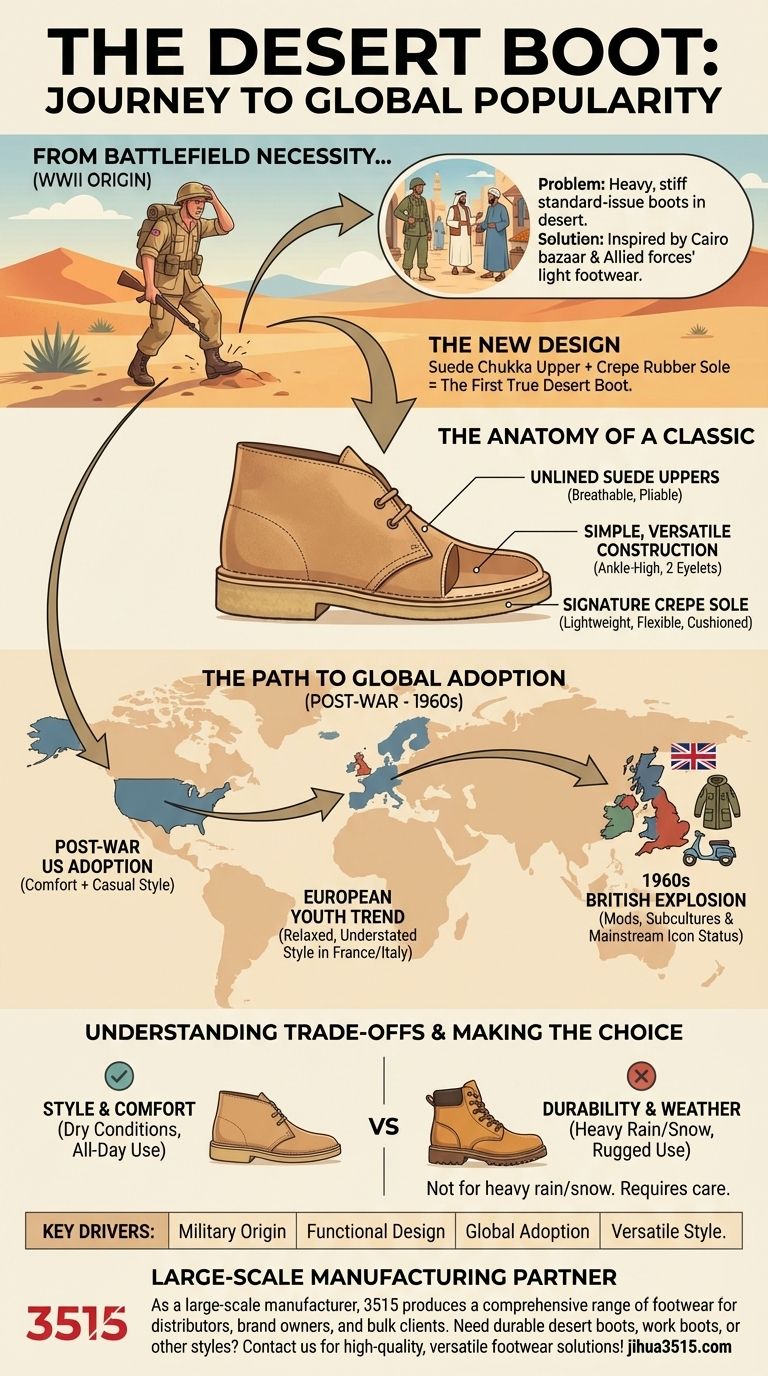
The story of the desert boot begins not in a design studio, but in the harsh conditions of the Second World War. Understanding this origin is key to understanding its lasting appeal.
A Problem in the Sand
During the Western Desert Campaign of WWII, British soldiers found their standard-issue military boots were heavy, stiff, and ill-suited for the sandy terrain. They were hot, uncomfortable, and inefficient.
The Local Solution
Soldiers noticed that traders in Cairo bazaars, as well as some South African forces they fought alongside, wore a much more practical style of footwear. These were typically ankle-high, unlined boots with a soft, flexible sole.
A New Design is Born
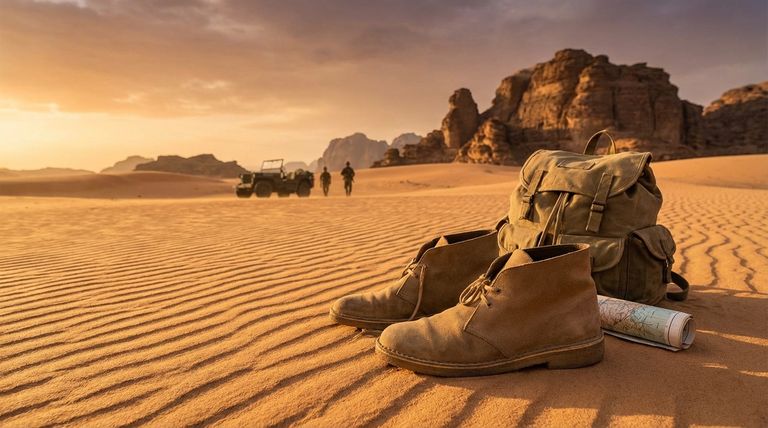
Inspired by these local and allied designs, British officers had cobblers in Cairo create a new boot. They combined a traditional suede chukka-style upper with a crepe rubber sole, which provided excellent grip and cushioning on sand without adding weight. This was the first true desert boot.
The Anatomy of a Classic
The specific features that made the desert boot so effective in the desert are the very same ones that made it popular with civilians. Its design is a masterclass in functional minimalism.
The Signature Crepe Sole
The crepe rubber sole is the boot's foundation. It's lightweight, incredibly flexible, and provides a soft, cushioned feel, making it far more comfortable for walking than traditional hard-soled shoes.
Unlined Suede Uppers
Using soft suede or leather for the uppers, often without a lining, made the boot breathable and pliable. It conformed to the foot instead of fighting against it, a stark contrast to the rigid military boots of the era.
Simple, Versatile Construction
The boot's classic form is defined by its simplicity: an ankle-high shaft, an open lacing system (typically with just two pairs of eyelets), and a rounded toe. This uncluttered silhouette allows it to pair easily with everything from jeans to casual suits.
The Path to Global Adoption
After the war, the boot's journey into civilian life was a gradual, international process that built momentum over two decades.
Post-War Introduction
The design was brought from the battlefield to the consumer market, first finding a niche with those who valued its unique comfort.
Crossing the Atlantic
The desert boot first gained significant commercial traction in the United States, where its combination of comfort and casual style resonated with post-war consumers.
Adoption by European Youth
From the U.S., the trend spread back across the ocean to continental Europe. Fashion-forward youth in France and Italy adopted the boot as a symbol of relaxed, understated style.
The British Style Explosion
The true tipping point came in the 1960s. The desert boot became a cornerstone of British youth subcultures, most notably the Mods. Its adoption by these influential groups propelled it from a niche product into a mainstream fashion icon, cementing its global recognition.
Understanding the Trade-offs
While celebrated for its style and comfort, the desert boot is a specialized piece of footwear. Its design strengths are also the source of its limitations.
Not an All-Weather Boot
The very features that make it perfect for dry conditions—suede uppers and a crepe sole—make it a poor choice for heavy rain or snow. Suede is susceptible to water damage, and crepe soles can be slippery on wet surfaces.
Durability Depends on Care
A well-made desert boot can last for years, but its longevity is directly tied to maintenance. The suede requires regular cleaning and protection, and the soft crepe sole will wear down faster than a hard rubber one with heavy use.
Making the Right Choice for Your Goal
The desert boot remains a timeless and versatile option, but its suitability depends entirely on your needs.
- If your primary focus is smart-casual style and all-day comfort: The desert boot is one of the best and most versatile footwear choices you can make.
- If your primary focus is rugged durability and all-weather performance: You should look for a traditional work boot with a welted, hard rubber sole and waterproofed leather.
Ultimately, the desert boot's enduring legacy is a powerful example of how a design born from pure function can become a timeless expression of style.
Summary Table:
| Key Driver of Popularity | Description |
|---|---|
| Military Origin | Born in WWII for superior comfort in desert terrain. |
| Functional Design | Crepe sole and unlined suede uppers for all-day comfort. |
| Global Adoption | Spread from the U.S. to European youth and 1960s British subcultures. |
| Versatile Style | Simple silhouette pairs with jeans, chinos, and casual suits. |
As a large-scale manufacturer, 3515 produces a comprehensive range of footwear for distributors, brand owners, and bulk clients. Whether you need durable desert boots, work boots, or any other style, our production capabilities ensure high-quality, versatile footwear tailored to your market. Contact us today to discuss how we can support your business with reliable, stylish footwear solutions!
Visual Guide
Related Products
- Wholesale Lightweight Tactical Boots Custom Manufacturer for Desert & Combat Use
- Durable Military Combat Boots with Water Drainage for Wholesale & OEM
- Durable Spiked Camouflage Boots Wholesale & Factory Production
- Wholesale High-Traction Camo Boots - Custom Manufacturer for Brands
- Durable Leather Tactical Boots Wholesale & Custom Manufacturing for Brands
People Also Ask
- What are the common types of combat boots? Find the Right Boot for Your Mission
- What specialized protections do tactical boots offer? Maximize Endurance with High-Performance Footwear
- How is the compatibility of polymer materials demonstrated in smart footwear? Enhancing Tactical & Training Performance
- What are the main construction similarities between tactical boots and tactical sneakers? Built for Performance & Durability
- How does additive manufacturing equipment reduce environmental risks? Sustainable Tactics for Modern Footwear Production