
Hikers today utilize a wide spectrum of footwear, far beyond the classic heavy boot. The most common options include traditional hiking boots, lighter hiking shoes, and agile trail-running shoes. Some even opt for minimalist sandals or standard sneakers for specific, less-demanding conditions, with the final choice depending heavily on the terrain and personal preference.
The core decision is not about finding the single "best" type of hiking footwear, but about matching the right tool to the job. Your choice represents a direct trade-off between stability and weight, and the correct balance depends entirely on your ankles, your pack, and the trail ahead.
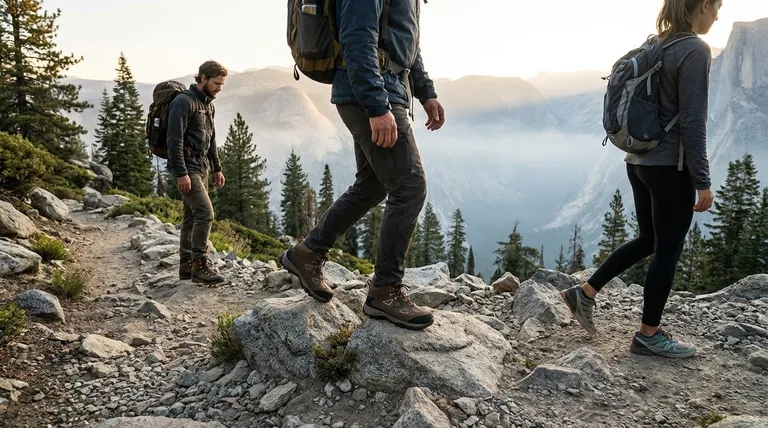
The Spectrum of Hiking Footwear
Understanding the primary categories is the first step. Each type is designed to solve a different problem on the trail, from maximum protection to maximum agility.
The Classic: Hiking Boots
Traditional hiking boots are built with high-cut designs that extend over the ankle. They offer the most significant level of support and stability.
Their rigid construction is ideal for carrying heavy packs (over 30 pounds) and navigating rough, unpredictable terrain where ankle protection is paramount.
The Agile Contender: Trail Runners
Trail runners are essentially running shoes with enhanced features for the trail, such as more aggressive tread and durable materials. They prioritize being lightweight and flexible.
For hikers with strong ankles and lighter packs, trail runners provide excellent comfort and reduce fatigue on well-maintained or moderate trails.
The Hybrid: Hiking Shoes
Hiking shoes are a popular middle ground. They are built like a low-cut version of a hiking boot, often sharing the same sturdy sole and protective features.
They offer more support and durability than a trail runner but without the weight and bulk of a full boot, making them a versatile choice for a wide range of day hikes.
Understanding the Key Trade-offs
Choosing footwear is an exercise in balancing competing priorities. There is no perfect shoe, only the one best suited for a specific set of conditions.
Support vs. Weight
This is the central dilemma. Heavier, more rigid boots provide superior ankle support, which is critical when carrying a heavy load that can alter your center of gravity.
Conversely, lighter shoes reduce the energy you expend with every step, leading to less fatigue over a long day. A pound on your feet can feel like five pounds on your back.
Protection vs. Agility
Thick soles and sturdy uppers on boots protect your feet from sharp rocks and impacts. The high-cut design helps prevent ankle sprains on uneven ground.
Lighter, more flexible trail runners allow for a more natural foot motion and greater agility, which can help you feel more nimble and connected to the trail.
The Critical Role of Fit
Regardless of the type you choose, proper fit is the most crucial factor for comfort and performance. An ill-fitting shoe can lead to blisters, hot spots, and pain.
It is highly recommended to visit an outdoor specialty store to be professionally fitted. An expert can analyze your foot shape and help you find the right size and model for your needs.
Making the Right Choice for Your Hike
To select the best footwear, start by defining your primary goal on the trail.
- If your primary focus is maximum stability for rugged terrain or heavy packs: A traditional, high-cut hiking boot is the most reliable choice for ankle protection.
- If your primary focus is speed and comfort on well-maintained trails: A lightweight trail runner offers the agility and breathability you need, assuming you have solid ankle strength.
- If your primary focus is all-around versatility for day hikes: A low-cut hiking shoe provides an excellent balance of support, protection, and manageable weight.
Ultimately, the best hiking footwear is the one you forget you are wearing.
Summary Table:
| Footwear Type | Best For | Key Features |
|---|---|---|
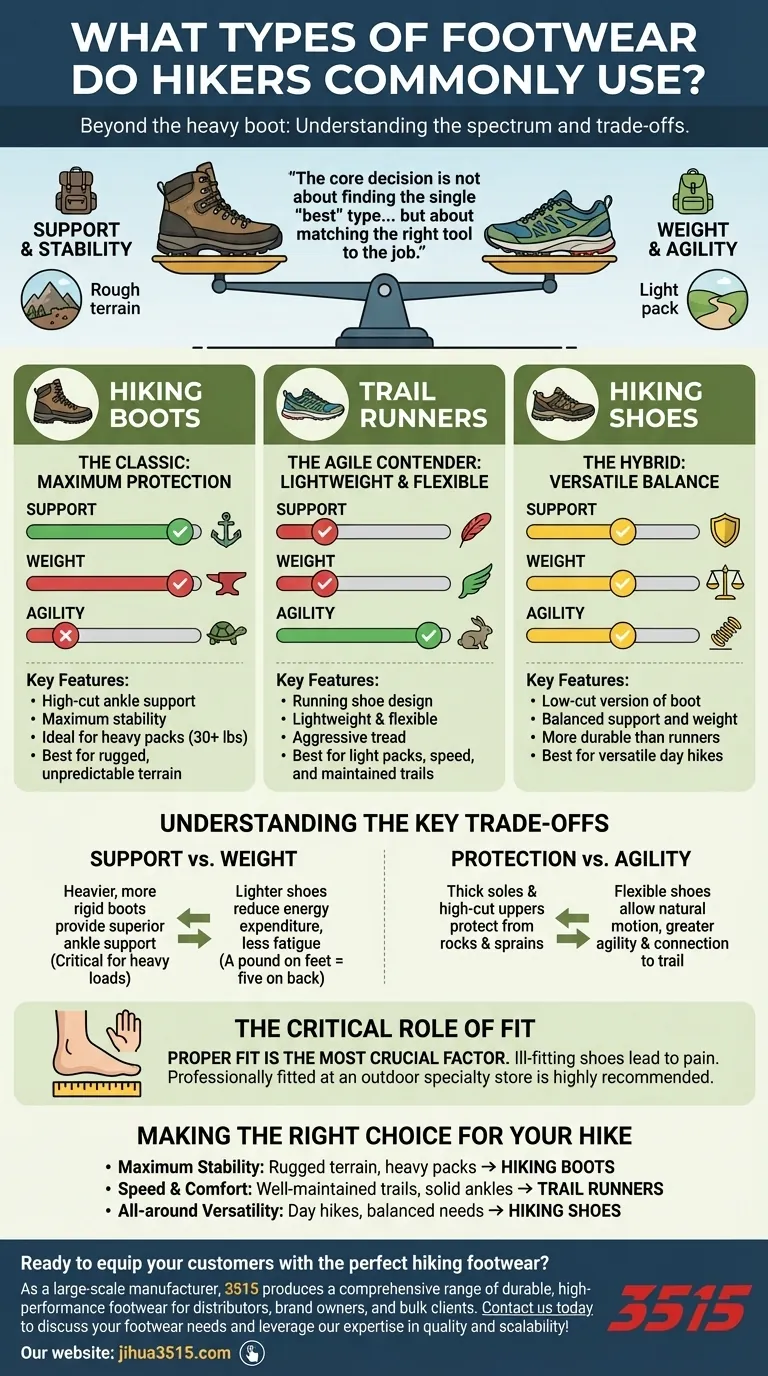
| Hiking Boots | Rugged terrain, heavy packs | High-cut ankle support, maximum stability |
| Trail Runners | Speed, light packs, maintained trails | Lightweight, flexible, agile |
| Hiking Shoes | Versatile day hikes | Low-cut, balanced support and weight |
Ready to equip your customers with the perfect hiking footwear?
As a large-scale manufacturer, 3515 produces a comprehensive range of durable, high-performance footwear for distributors, brand owners, and bulk clients. Whether you need rugged hiking boots, agile trail runners, or versatile hiking shoes, we have the production capabilities to meet your demands.
Contact us today to discuss your footwear needs and leverage our expertise in quality and scalability!
Visual Guide
Related Products
- Durable Rubber Sole Outdoor Shoes Wholesale & Custom Manufacturing
- Wholesale High-Traction Camo Boots - Custom Manufacturer for Brands
- Wholesale Lightweight Tactical Boots Custom Manufacturer for Desert & Combat Use
- Wholesale Durable Camouflage Canvas Shoes with High-Traction Cleated Rubber Sole
- Wholesale Waterproof Tactical Boots Custom Suede & High-Traction Soles
People Also Ask
- What is the function of the sole in outdoor shoes? Find the Perfect Grip and Support
- What role do outdoor shoes and sneakers play in navigating external terrains? Engineered Stability for Every Surface
- How is AI utilized in the design of outdoor and safety footwear? Harnessing Big Data for Market-Driven Shoe Innovation
- Why is durability important when selecting outdoor shoes? A Guide to Safety & Long-Term Value
- What are the key components of outdoor shoes that affect comfort and sturdiness? A Guide to Durable, High-Performance Footwear



















