For suede, nubuck, and fabric hiking boots, the best waterproofing products are specialized sprays or water-based creams. Unlike heavy waxes designed for full-grain leather, these treatments are formulated to restore water repellency without clogging the material's pores or damaging the delicate nap of suede and nubuck.
The core principle is not to create an impenetrable barrier, but to restore the boot's original Durable Water Repellent (DWR) coating. This ensures water beads up and rolls off the surface while allowing the material and any underlying waterproof membrane to breathe effectively.
Why These Materials Require a Specific Approach
Traditional waterproofing methods for leather boots, like heavy waxes and greases, are fundamentally incompatible with modern fabric, suede, or nubuck footwear. Using the wrong product can permanently damage your boots and impair their performance.
The Role of the DWR Coating
Most fabric and suede hiking boots come from the factory with a DWR coating. This is a chemical finish that causes water to bead on the surface. Over time, this coating wears off due to abrasion, dirt, and use, causing the boot to "wet out" or become saturated.
The Problem with Heavy Waxes
Applying a wax-based product to these materials is a critical mistake. It will mat down the textured nap of suede and nubuck, clog the weave of synthetic fabrics, and severely compromise the breathability of the boot's built-in waterproof membrane (like GORE-TEX).
The Advantage of Sprays and Creams
Modern waterproofing sprays and water-based creams are specifically designed to bond with the fibers of the material. They coat them with a hydrophobic layer without sealing the gaps between them, thus maintaining the crucial breathability your feet depend on for comfort.
The Correct Waterproofing Process
Effective waterproofing is as much about the process as it is about the product. Following these steps ensures the treatment will bond correctly and provide maximum protection.
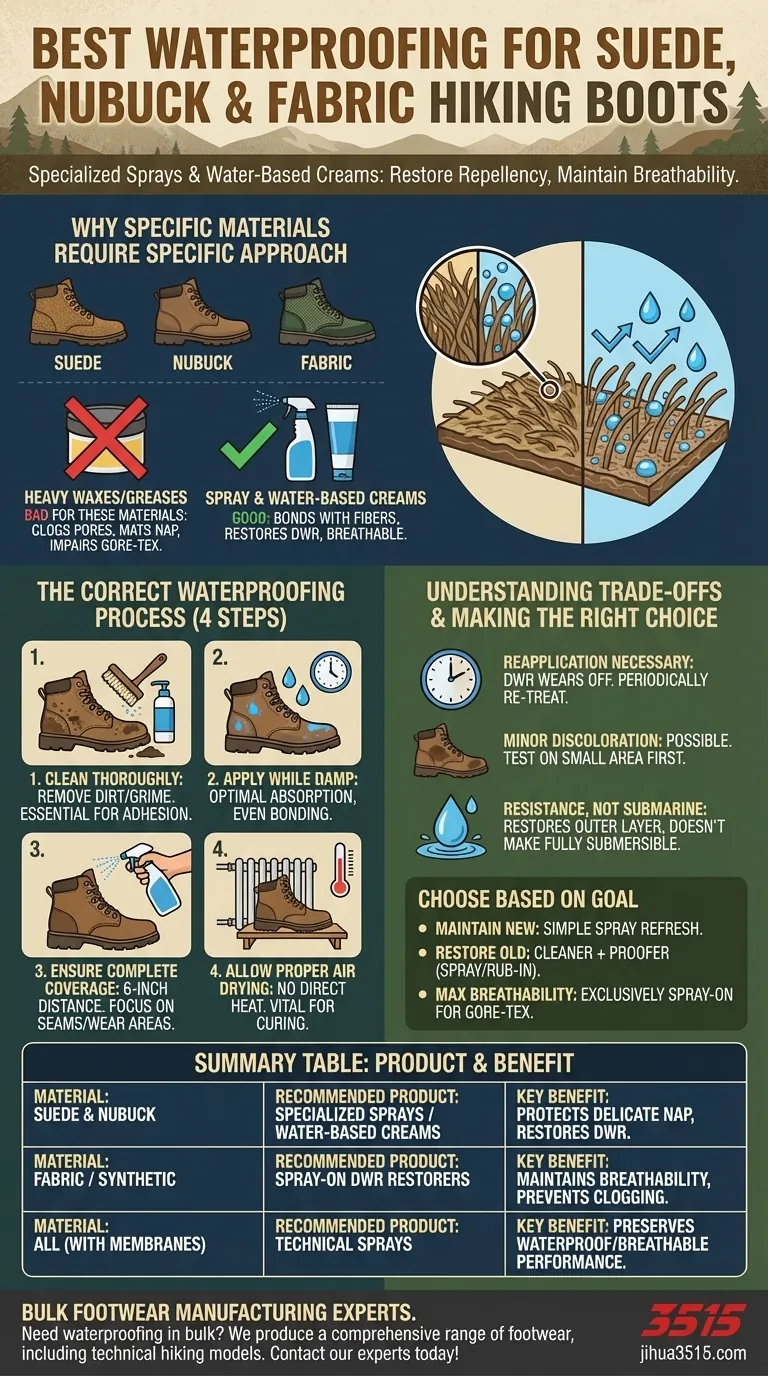
Step 1: Clean Your Boots Thoroughly
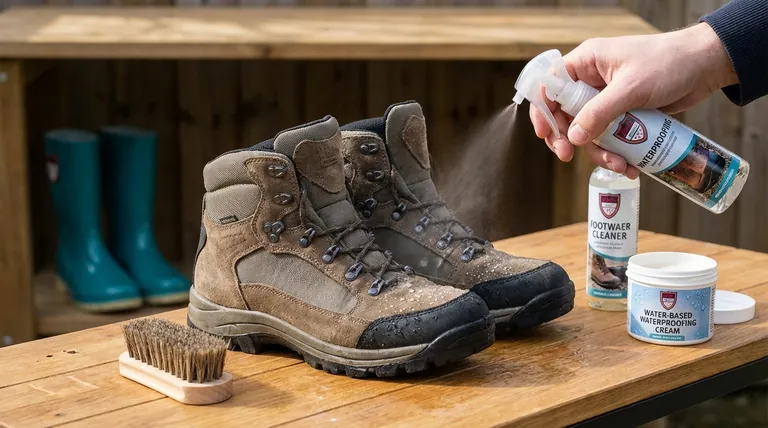
You cannot waterproof a dirty boot. Dirt and grime prevent the treatment from adhering to the boot's surface. Remove the laces and insoles, then use a specialized footwear cleaner and a soft brush to scrub away all mud and debris.
Step 2: Apply While the Boots Are Damp
Most modern DWR-restoring treatments work best when applied to damp, clean boots. This allows the formula to soak into the material more evenly and bond more effectively as it dries.
Step 3: Ensure Complete and Even Coverage
Hold spray-on treatments about six inches from the boot. Apply a thin, even layer across the entire surface. Pay special attention to high-wear areas, seams, and the area around the tongue and hardware, as these are common failure points.
Step 4: Allow Proper Drying Time
Let the boots air dry completely at room temperature, away from any direct heat sources like a fire or radiator. Rushing this process can prevent the treatment from curing properly, significantly reducing its effectiveness and longevity.
Understanding the Trade-offs
No waterproofing solution is a one-time, permanent fix. Understanding the limitations helps you set realistic expectations and properly care for your gear.
Reapplication is Necessary
The DWR coating you reapply will eventually wear off, just like the factory finish did. You will need to re-treat your boots periodically, typically every few months or after a particularly long and wet series of hikes.
Minor Discoloration is Possible
Some treatments can slightly darken the color of suede or nubuck. This is often unavoidable. It is always best practice to test any new product on a small, inconspicuous spot first to see how it affects the material.
Restoring Resistance, Not Creating a Submarine
Applying a spray restores water resistance to the boot's outer material. It prevents saturation and helps the internal waterproof membrane do its job. It will not, however, make a non-waterproof boot fully submersible.
Making the Right Choice for Your Gear
Your approach should be tailored to the condition of your boots and your primary hiking environment.
- If your primary focus is maintaining new boots: A simple, high-quality waterproofing spray is all you need to periodically refresh the factory DWR coating.
- If your primary focus is restoring older, saturated boots: Use a two-step process involving a technical footwear cleaner followed by a spray-on or rub-in proofer for maximum effectiveness.
- If your primary focus is maximum breathability in hot climates: Stick exclusively to spray-on treatments designed for GORE-TEX or other breathable membranes to ensure you don't impede moisture transfer.
Properly treating your boots is a simple act of maintenance that pays massive dividends in comfort, performance, and the longevity of your gear.
Summary Table:
| Material | Recommended Product Type | Key Benefit |
|---|---|---|
| Suede & Nubuck | Specialized Sprays / Water-based Creams | Protects delicate nap, restores DWR coating |
| Fabric / Synthetic | Spray-on DWR Restorers | Maintains breathability, prevents clogging |
| All (with membranes like GORE-TEX) | Technical Sprays | Preserves waterproof/breathable performance |
Need to waterproof your hiking boots in bulk? As a large-scale manufacturer, 3515 produces a comprehensive range of footwear for distributors, brand owners, and bulk clients. Our production capabilities encompass all types of shoes and boots, including technical hiking models requiring specialized waterproofing treatments. Let us help you equip your customers with durable, high-performance footwear – contact our experts today to discuss your manufacturing needs!
Visual Guide
Related Products
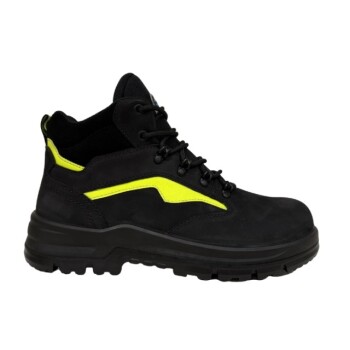
- Wholesale Premium Waterproof Nubuck Safety Shoes Boots
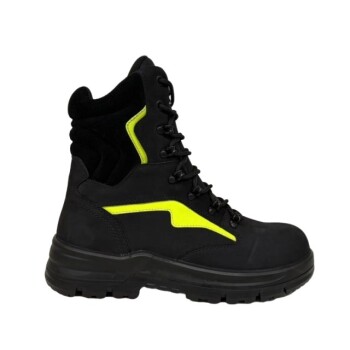
- Premium Waterproof Nubuck Safety Boots for Wholesale
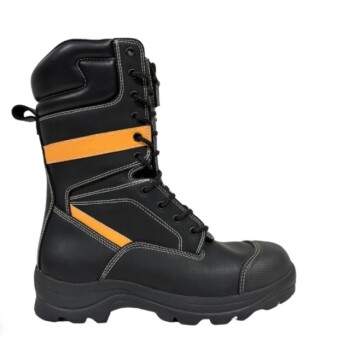
- Heavy-Duty Waterproof Nubuck Safety Boots Safety Shoes for Bulk Supply
- Wholesale Waterproof Tactical Boots Custom Suede & High-Traction Soles
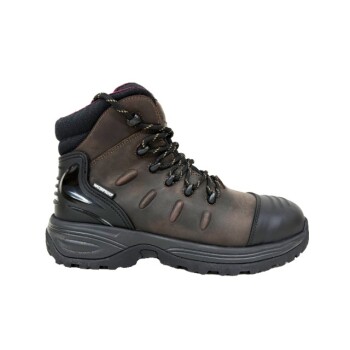
- Premium Wholesale Waterproof Safety Boots High Performance Protection for Industrial Markets
People Also Ask
- Why are waterproof safety boots recommended for certain work environments? Essential Protection for Wet & Hazardous Jobs
- What materials are commonly used in waterproof boots? The Complete Guide to Durable, Breathable Protection
- What are the drawbacks of waterproof boots? The Breathability vs. Protection Trade-Off
- What is the advantage of one-piece construction in waterproof boots? Unbeatable Seamless Protection
- What is the difference between waterproof, water-resistant, and water-repellent boots? Choose the Right Protection for Your Feet