
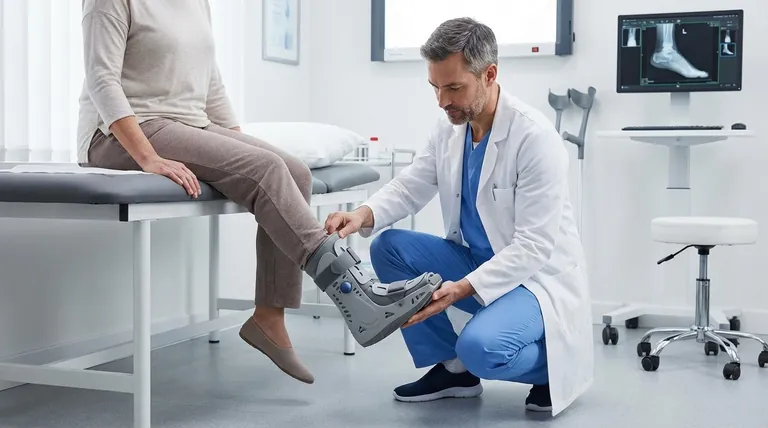
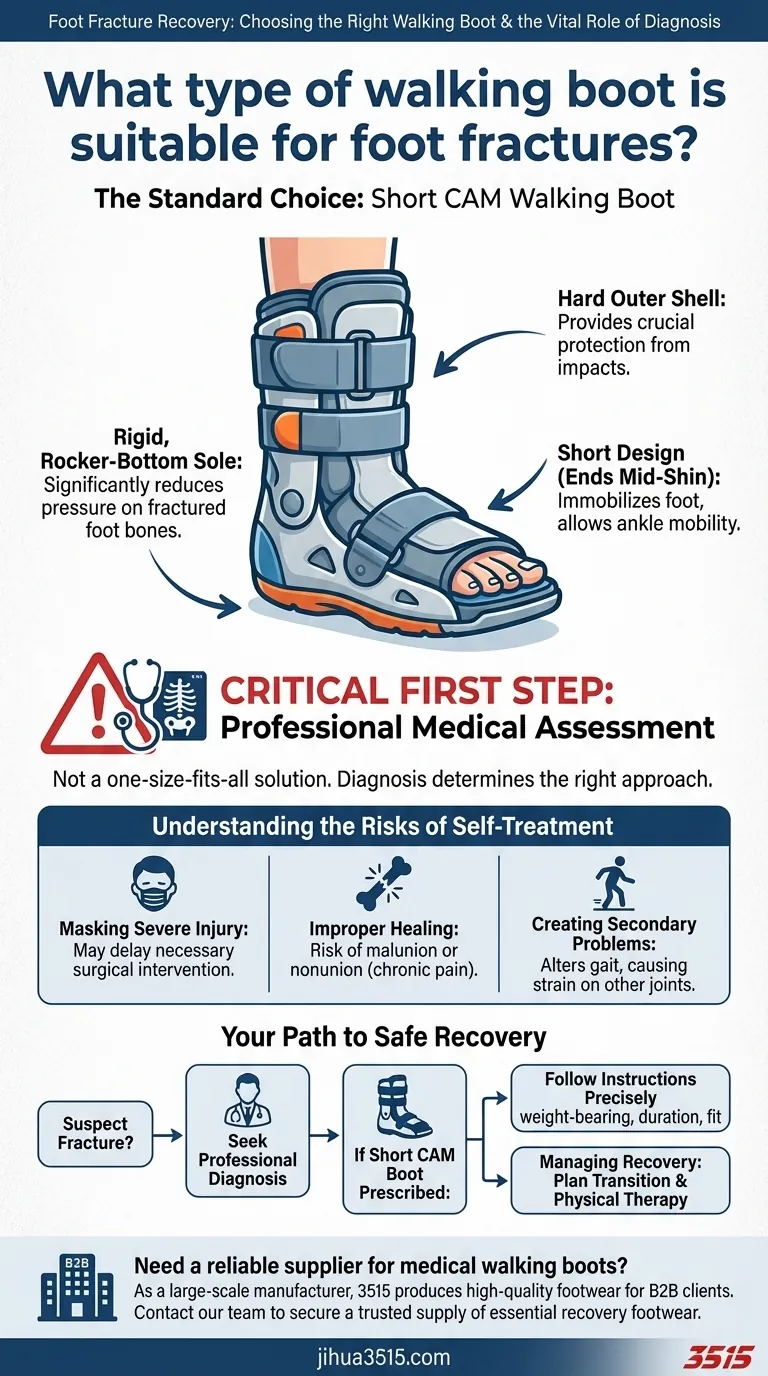
For a foot fracture, the most commonly suitable option is a short CAM (Controlled Ankle Motion) walking boot. This type of boot is specifically designed to protect the bones in the foot with a rigid sole and a protective shell over the forefoot, while still permitting the ankle to move. This targeted support immobilizes the injured area without unnecessarily restricting the lower leg.
While a short CAM boot is the standard choice for many foot fractures, this is not a one-size-fits-all solution. The critical first step is a professional medical assessment, as the right approach is determined by the precise location and severity of your specific injury.
Why a "Short CAM Boot" is the Starting Point
A short CAM boot, often called a "fracture boot," provides a balance of protection and functional mobility that is ideal for healing many types of foot injuries. Its design is intentional and serves several key purposes.
Engineered for Foot Protection
The boot features a rigid, rocker-bottom sole. This design significantly reduces the pressure and flexion forces on the bones of the foot (like the metatarsals) during walking, which is essential for allowing a fracture to heal.
The hard outer shell also provides crucial protection against accidental bumps and impacts, safeguarding the vulnerable injured area.
Preserving Ankle Mobility
The "short" design, which typically ends mid-shin, is deliberate. It immobilizes the foot while allowing the ankle joint to retain a significant range of motion.
This is a key distinction from a "tall" boot, which is used for ankle or lower leg fractures where immobilizing the ankle is the primary goal. For a foot fracture, unnecessary ankle restriction is often avoided.
The Critical Role of Professional Diagnosis
A walking boot is a medical device, not a simple accessory. Applying one without a proper diagnosis can delay healing or cause further harm.
Not All Fractures Are Equal
The human foot has 26 bones. A simple toe fracture requires a very different level of support than a complex mid-foot fracture (like a Lisfranc injury) or a heel fracture.
A podiatrist or orthopedic specialist is trained to assess the specific injury using imaging like X-rays to determine the true nature of the break.
Determining the Correct Level of Immobilization
Based on their assessment, a medical professional will decide if a boot is the appropriate tool.
In some cases, a less restrictive surgical shoe might be sufficient. In others, a more rigid cast that allows for no movement at all may be necessary for proper healing.
Ensuring Proper Fit and Use
A poorly fitted boot can create pressure points, leading to sores and skin breakdown. A professional ensures the boot is the correct size and teaches you how to use it properly, including how much weight, if any, you can put on the foot.
Understanding the Risks of Self-Treatment
Choosing to use a walking boot without a confirmed diagnosis introduces significant risks that can compromise your recovery.
Masking a More Severe Injury
What feels like a minor fracture could be a more complex injury requiring surgical intervention. Using a boot without a diagnosis can mask the severity and lead to a decision to operate being made too late, resulting in long-term complications.
Improper Healing
If the fractured bones are not properly aligned and immobilized, they can heal in the wrong position (a "malunion") or fail to heal at all (a "nonunion"). Both outcomes can lead to chronic pain, arthritis, and functional disability.
Creating Secondary Problems
Walking in a boot alters your natural gait. This can place new stress on your other foot, knee, hip, and lower back, potentially causing secondary pain or injury over time.
Making the Right Choice for Your Recovery
To ensure a safe and effective recovery, your actions should always be guided by professional medical advice.
- If you suspect a foot fracture: Your immediate priority is to seek a professional diagnosis from a podiatrist, orthopedic specialist, or emergency room.
- If a short CAM boot is prescribed: Focus on following your doctor's instructions precisely regarding duration of wear, weight-bearing status, and proper fitting.
- If you are managing your recovery: Ask your healthcare provider about a plan for transitioning out of the boot and any recommended physical therapy to restore strength and mobility.
Ultimately, the right walking boot is not a product you choose, but a medical tool prescribed to facilitate your specific path to healing.
Summary Table:
| Key Feature | Benefit for Foot Fracture Recovery |
|---|---|
| Rigid, Rocker-Bottom Sole | Reduces pressure on fractured bones during walking. |
| Hard Outer Shell | Protects the foot from accidental bumps and impacts. |
| Short Design (Ends Mid-Shin) | Immobilizes the foot while allowing ankle mobility. |
| Professional Fit Required | Ensures proper immobilization and prevents secondary issues. |
Need a reliable supplier for medical walking boots?
As a large-scale manufacturer, 3515 produces a comprehensive range of high-quality footwear, including specialized medical boots for distributors, brand owners, and bulk clients. Our production capabilities ensure durable, well-designed products that meet the specific needs of healthcare providers and their patients.
Contact our team today to discuss your requirements and secure a trusted supply of essential recovery footwear.
Visual Guide
Related Products
- Wholesale High-Traction Camo Boots - Custom Manufacturer for Brands
- Wholesale Durable Camouflage Canvas Shoes with High-Traction Cleated Rubber Sole
People Also Ask
- What are the key features of the new line of camo boots? Built for Extreme Cold & Rugged Terrain
- Are camo boots necessary for hunting success? Prioritize Performance Over Pattern
- How does the Rank Score Test identify the primary causes of premature failure in tactical and work boots? Key Insights
- What is the technical logic behind using closed-eye testing for tactical boots? Unlocking Peak Footwear Stability
- What shoes to wear for a security job? Durable, Protective Footwear for Long Shifts

