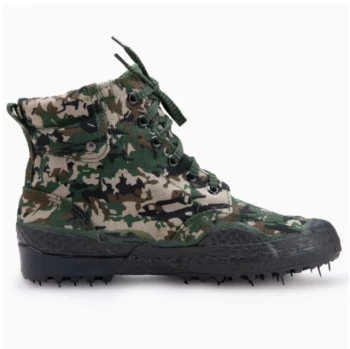
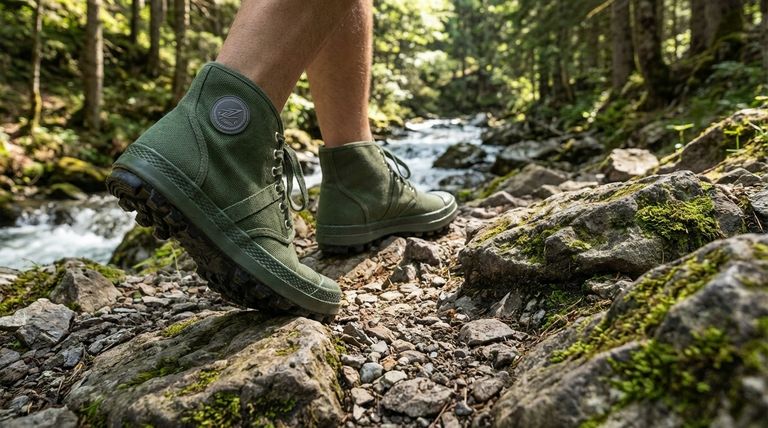
For rocky and uneven terrain, the most suitable footwear is a hiking boot designed specifically for stability and protection. These boots feature rugged soles for superior grip and a supportive structure that secures your foot, preventing injury and fatigue on unpredictable surfaces.
The core principle is not just to cover your feet, but to create a stable platform that protects you from the terrain. The effectiveness of this platform is determined by two key elements: the design of the sole and the structure of the upper support system.
The Foundation: Why Sole Design is Paramount
The sole of your boot is your primary point of contact with the ground. On rocky or uneven surfaces, its design is the single most important factor for safety and performance.
Maximizing Traction
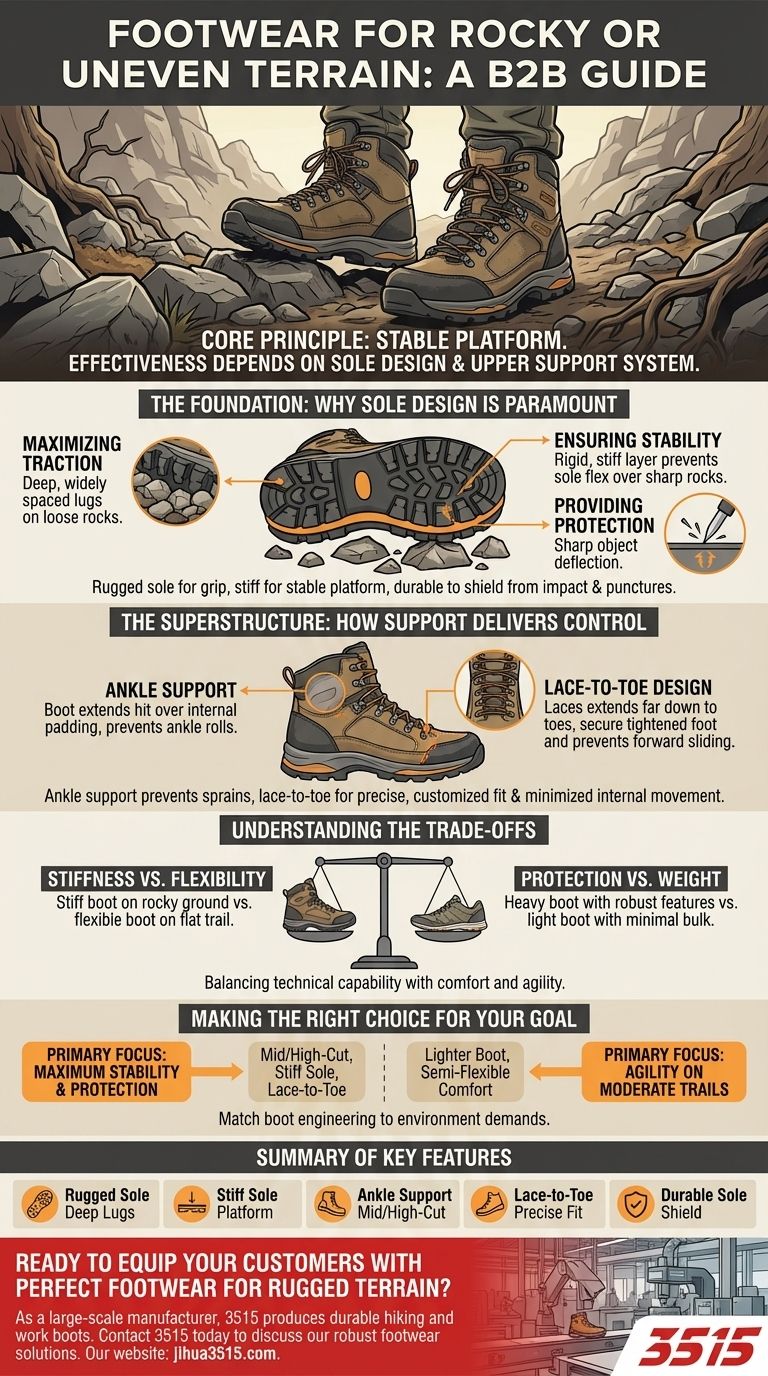
A rugged sole with deep, widely-spaced lugs (the bumps on the outsole) is non-negotiable. This design provides significant ground contact, allowing the boot to grip firmly on shifting rocks, loose dirt, and slanted surfaces.
Ensuring Stability
A stiff or semi-stiff sole prevents the boot from flexing excessively when you step on sharp rocks or roots. This rigidity creates a stable platform, reducing the strain on the arches of your feet and minimizing the risk of a twisted ankle.
Providing Protection
Beyond grip, a thick, durable sole acts as a protective shield. It absorbs impact and prevents sharp objects from bruising or puncturing the bottom of your foot, which is a common hazard on rocky trails.
The Superstructure: How Support Delivers Control
While the sole provides the foundation, the upper portion of the boot is what locks your foot in place, turning that stable base into controlled movement.
The Role of Ankle Support
Hiking boots, by their nature, extend over the ankle. This additional height provides crucial support, helping to prevent common sprains and twists that occur when your foot rolls on an unstable surface.
The Advantage of Lace-to-Toe Design
For maximum control on uneven ground, a lace-to-toe system is highly recommended. This design extends the laces further down towards the toes, allowing for a much more precise and customized fit.
By tightening these laces, you prevent your foot from sliding forward on descents and minimize internal movement. This enhances your overall control and reduces friction that can lead to blisters.
Understanding the Trade-offs
Choosing the perfect footwear always involves balancing competing factors. Understanding these trade-offs is key to selecting the right boot for your specific needs.
Stiffness vs. Flexibility
A very stiff boot is excellent for technical, rocky terrain but can feel clumsy and fatiguing on flat, well-maintained trails. A more flexible boot is comfortable for walking but offers far less protection and stability on uneven ground.
Protection vs. Weight
Heavier, more robust boots offer maximum protection and support but require more energy to lift with every step. Lighter boots increase agility and reduce fatigue over long distances but sacrifice a degree of durability and protection.
Making the Right Choice for Your Goal
Your ideal footwear depends entirely on the specific demands of the terrain and your activity.
- If your primary focus is maximum stability and protection for challenging terrain: Prioritize a mid or high-cut hiking boot with a stiff sole and a lace-to-toe design.
- If your primary focus is agility on moderately uneven trails: Consider a lighter hiking boot with a semi-flexible sole to balance support with comfort and reduce fatigue.
Ultimately, selecting the right footwear is about matching the engineering of the boot to the demands of the environment.
Summary Table:
| Feature | Why It Matters for Rocky Terrain |
|---|---|
| Rugged Sole with Deep Lugs | Provides superior grip on loose rocks and uneven surfaces. |
| Stiff or Semi-Stiff Sole | Creates a stable platform to prevent ankle twists on sharp rocks. |
| Ankle Support (Mid/High-Cut) | Locks the ankle in place to prevent sprains on unstable ground. |
| Lace-to-Toe Design | Allows for a precise fit to prevent foot slippage and blisters. |
| Durable, Thick Sole | Acts as a shield against sharp objects and absorbs impact. |
Ready to equip your customers with the perfect footwear for rugged terrain?
As a large-scale manufacturer, 3515 produces a comprehensive range of durable hiking and work boots designed for stability and protection on the most challenging ground. Our production capabilities cater to the specific needs of distributors, brand owners, and bulk clients.
Contact 3515 today to discuss how our robust footwear solutions can enhance your product line and meet the demands of your adventurous customers.
Visual Guide
Related Products
- Wholesale High-Traction Camo Boots - Custom Manufacturer for Brands
- Durable Rubber Sole Outdoor Shoes Wholesale & Custom Manufacturing
- Durable Spiked Camouflage Boots Wholesale & Factory Production
- Wholesale Lightweight Tactical Boots Custom Manufacturer for Desert & Combat Use
- Wholesale Waterproof Tactical Boots Custom Suede & High-Traction Soles
People Also Ask
- What are the key features of the new line of camo boots? Built for Extreme Cold & Rugged Terrain
- Are camo boots necessary for hunting success? Prioritize Performance Over Pattern
- How does the Rank Score Test identify the primary causes of premature failure in tactical and work boots? Key Insights
- What is the technical logic behind using closed-eye testing for tactical boots? Unlocking Peak Footwear Stability
- What shoes to wear for a security job? Durable, Protective Footwear for Long Shifts