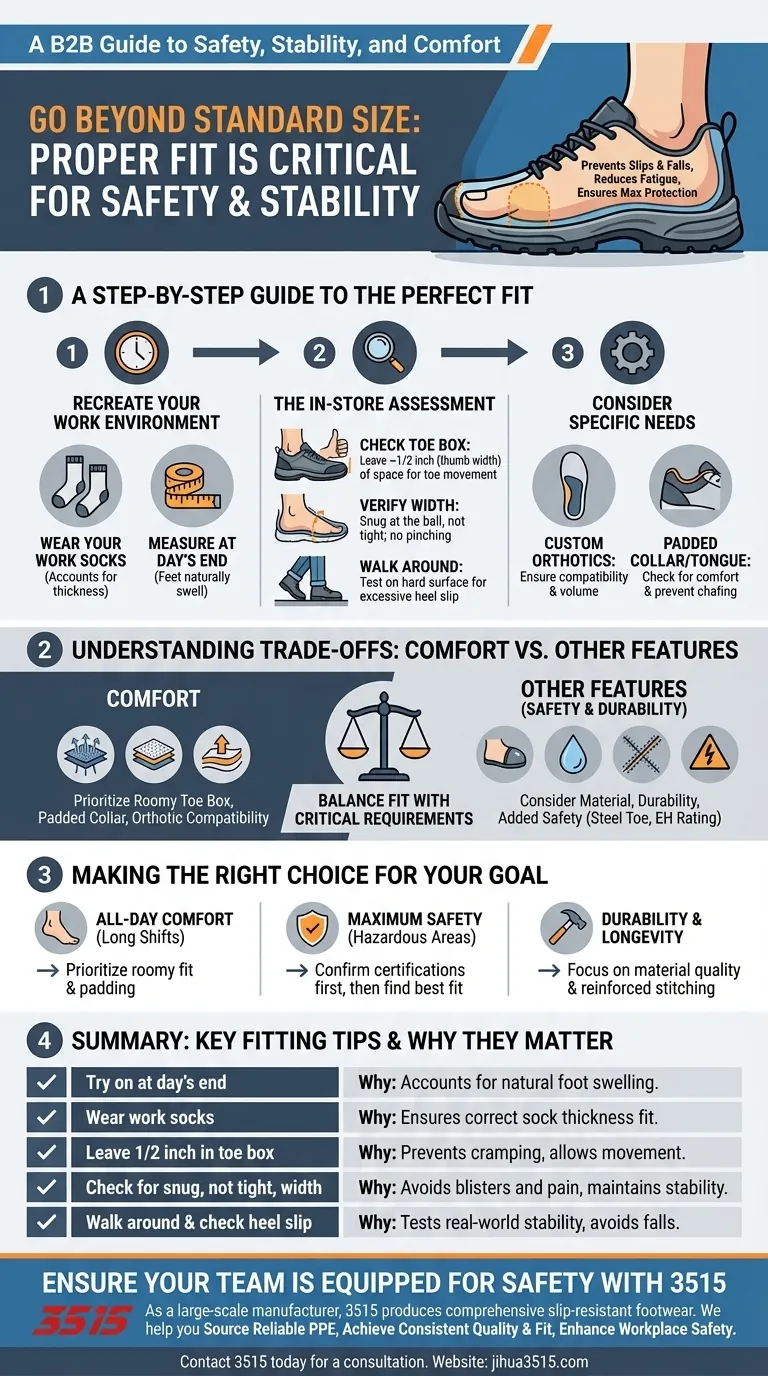
To ensure a proper fit for slip-resistant work shoes, you must go beyond your standard shoe size. It is critical to try them on at the end of the day with your work socks, ensure there is about a half-inch of space in the toe box, and confirm that the width is snug but not tight. This comprehensive approach prevents discomfort and ensures the shoe can provide maximum stability and safety during long shifts.
The core issue is that an improper fit undermines the very safety features you're paying for. A shoe that is too loose or too tight compromises your balance and stability, effectively negating the benefits of its slip-resistant outsole.
Why a Precise Fit is a Non-Negotiable Safety Feature
A common mistake is treating work shoes like casual footwear. The demands of a work environment, especially one with slip hazards, mean that the shoe is an essential piece of personal protective equipment (PPE).
The Link Between Fit and Stability
A shoe that is too large allows your foot to slide internally during movement. This slight shift in momentum can be enough to cause a loss of balance on a wet or oily surface, leading to a fall.
Preventing Foot Fatigue and Injury
A shoe that is too tight can cause blisters, bunions, and general foot pain. Over a long shift, this discomfort is distracting and leads to fatigue, which increases the risk of accidents.
Accommodating for Real-World Conditions
Your feet naturally swell throughout a long workday. Trying on shoes at the end of the day, when your feet are at their largest, ensures a comfortable fit from the beginning to the end of your shift.
A Step-by-Step Guide to the Perfect Fit
Follow these steps methodically when you are trying on new slip-resistant footwear. This is not a process to be rushed.
1. Recreate Your Work Environment
Before you even put the shoe on, create the right conditions.
Bring Your Work Socks: Always try on new shoes with the exact type of socks you wear at work. The thickness of your socks can significantly alter the fit.
Measure Your Feet: Don't assume you know your size. Get your feet professionally measured, as sizes can change over time. Measure both feet, as one is often slightly larger.
2. The In-Store Assessment
Once you have the shoes, perform these critical checks.
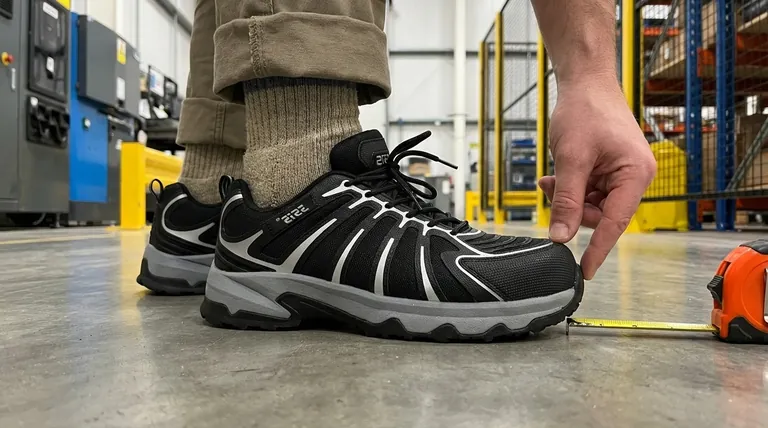
Check the Toe Box: Ensure there is about a half-inch of space (roughly a thumb's width) between your longest toe and the end of the shoe. Your toes should not touch the front and should have room to wiggle freely.
Verify the Width: The shoe should feel snug around the ball of your foot without pinching. If it feels overly tight on the sides, ask for a wider size.
Walk Around: Spend several minutes walking on a hard surface, not just a carpeted one. Pay attention to whether your heel slips. A small amount of movement is normal, but excessive slipping indicates a poor fit.
3. Consider Your Specific Needs
Your job might require more than just a standard fit.
Custom Orthotics: If you use custom insoles, bring them with you. Ensure the shoe has a removable insole and that your orthotic fits inside without cramping the shoe's volume.
Padded Collar and Tongue: Check that the padding around the ankle and on the tongue feels comfortable and doesn't chafe or dig into your foot. This is crucial for preventing irritation during long hours.
Understanding the Trade-offs: Comfort vs. Other Features
Selecting the right shoe involves balancing fit with other critical safety and durability requirements. An excellent fit in a shoe that isn't built for your environment is a wasted investment.
Material and Construction Matter
The upper material impacts both comfort and safety. Breathable mesh is great for hot, dry environments, but waterproof synthetics are necessary for wet conditions. Don't sacrifice the right material for a slightly better fit.
Durability and Stitching
Look for reinforced stitching, especially in high-stress areas. A comfortable shoe that falls apart after a few months is not a good choice. Durability is a key part of the value equation.
Added Safety Requirements
Your job may require features like a steel toe for impact protection, electrical hazard (EH) rating, or puncture resistance. These features can change the fit and feel of a shoe, making an in-person fitting even more critical.
Making the Right Choice for Your Goal
Your final decision should be guided by your specific work environment and physical needs.
- If your primary focus is all-day comfort for long shifts on your feet: Prioritize a roomy toe box, a padded collar, and compatibility with your custom orthotics if you use them.
- If your primary focus is maximum safety in a hazardous area: Confirm the shoe has the necessary certifications (e.g., steel toe, EH rating) first, and then find the best possible fit among the compliant options.
- If your primary focus is durability and longevity: Pay close attention to the upper material and the quality of the stitching, ensuring the shoe can withstand the rigors of your job without compromising on a secure fit.
Ultimately, think of your work shoe not as an accessory, but as a critical tool engineered to keep you safe and productive.
Summary Table:
| Key Fitting Tip | Why It Matters |
|---|---|
| Try on shoes at the end of the day | Accounts for natural foot swelling during a long shift. |
| Wear your work socks | Ensures the fit accounts for the correct sock thickness. |
| Leave a half-inch in the toe box | Prevents toe cramping and allows for natural movement. |
| Check for a snug, not tight, width | Avoids blisters and pain while maintaining stability. |
| Walk around and check for heel slip | Tests real-world stability; excessive slipping is a red flag. |
Ensure Your Team is Equipped for Safety
As a large-scale manufacturer, 3515 produces a comprehensive range of slip-resistant footwear for distributors, brand owners, and bulk clients. Our production capabilities encompass all types of safety shoes and boots, engineered for superior fit, durability, and protection.
We help you:
- Source reliable PPE that meets your exact safety standards (steel toe, EH rating, etc.).
- Achieve consistent quality and fit across large orders for your workforce.
- Enhance workplace safety with footwear that combines certified protection with all-day comfort.
Ready to equip your team with high-quality, properly fitting work shoes? Contact 3515 today for a consultation and let us provide the durable safety solutions your business needs.
Visual Guide
Related Products
- Wholesale Durable 6-Inch Work Boots | Custom & Private Label Manufacturer
- Durable Leather Moc Toe Work Boots for Wholesale & Custom Manufacturing
- Durable Goodyear Welt Leather Work Boots for Wholesale & Private Label
- Premium Suede Sport Safety Shoes for Wholesale & Bulk Orders
- Durable Leather Work Boots Wholesale Manufacturer & Custom Factory
People Also Ask
- What are the pros and cons of steel toe work boots? A Guide to Maximum Protection vs. Comfort
- What is the history of steel toe work boots? From German Invention to Modern Safety Standard
- What are the different types of steel toe work boots? Choose the Right Boot for Your Job
- How much weight can steel toe work boots withstand? Unpacking the 3,372 lb. Safety Standard
- Is there any truth to the myth about steel toe boots causing toe injuries upon impact? Debunking Common Safety Concerns