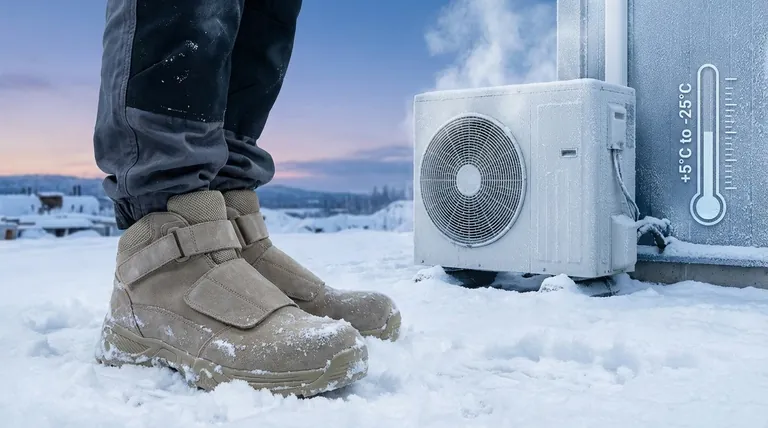
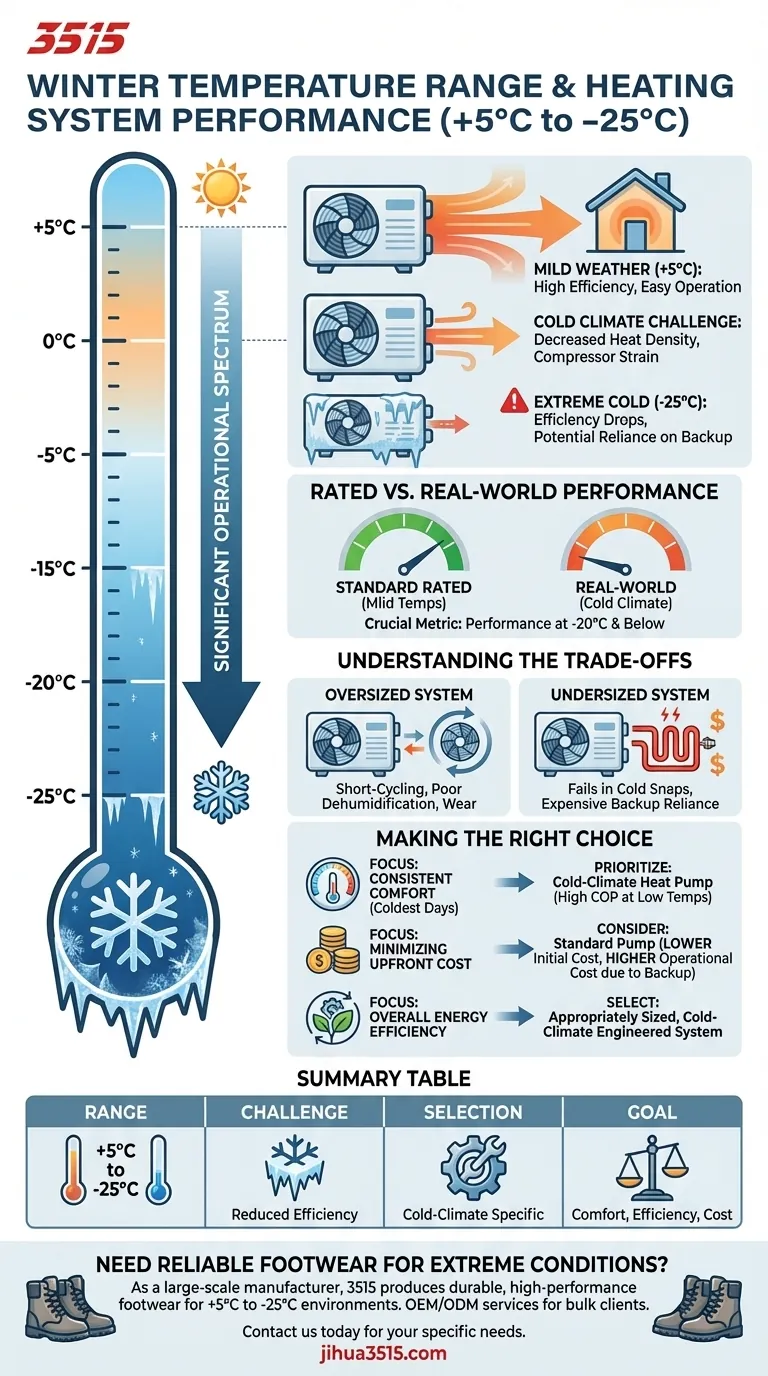
In winter, your location experiences a temperature range of +5°C down to -25°C. This is a significant operational spectrum that directly influences the performance and efficiency of any heating system, particularly air source heat pumps.
Understanding this specific temperature range is not just about weather; it's the critical first step in selecting a heating system that can deliver consistent comfort and predictable energy costs without relying on inefficient backup sources.
Why This Temperature Range Matters
The effectiveness of many modern heating systems, especially air source heat pumps, is directly tied to the outdoor ambient temperature. A system that works perfectly at +5°C may struggle or become inefficient at -25°C.
The Challenge of Cold Climates
As outside temperatures drop, the density of heat in the air decreases.
An air source heat pump works by extracting heat from the outdoor air and transferring it indoors. When the temperature falls to extremes like -25°C, there is far less thermal energy available to capture.
This forces the system's compressor to work much harder to extract the necessary heat, which can dramatically reduce its efficiency.
Defining "Rated" vs. "Real-World" Performance
Manufacturers often provide performance data at standardized, moderate temperatures.
However, the crucial metric for your climate is the unit's performance at the lower end of your spectrum. A system must be specifically designed for cold climates to maintain high efficiency and heating capacity at temperatures like -20°C and below.
Understanding the Trade-offs
Simply choosing a system with the highest possible power rating is not always the best solution. It's crucial to understand the balance between performance, cost, and efficiency.
Oversizing vs. Undersizing
An oversized system might handle the coldest days with ease but will "short-cycle" (turn on and off frequently) during milder +5°C weather. This leads to poor dehumidification in summer, reduced efficiency, and increased wear on components.
Conversely, an undersized system will be efficient in mild weather but will fail to keep your home warm during the coldest snaps, forcing it to rely heavily on expensive auxiliary or backup heating.
The Role of Backup Heat
Many standard heat pumps require an auxiliary heat strip (essentially an electric furnace) to take over when temperatures drop too low. This backup heat is significantly less efficient and can lead to unexpectedly high electricity bills.
A true cold-climate heat pump is engineered to minimize or eliminate the need for this inefficient backup, even at temperatures well below freezing.
Making the Right Choice for Your Climate
Your specific temperature range of +5°C to -25°C requires careful system selection to ensure both comfort and cost-effectiveness.
- If your primary focus is consistent comfort on the coldest days: Prioritize a cold-climate heat pump system with a high Coefficient of Performance (COP) rating specifically at low temperatures (e.g., -15°C or lower).
- If your primary focus is minimizing upfront cost: A standard heat pump may be cheaper initially, but you must account for the higher operational costs associated with using less efficient backup heating during cold snaps.
- If your primary focus is overall energy efficiency: Select a system appropriately sized for your home that is specifically engineered for cold climates, ensuring it can operate efficiently across your entire winter temperature spectrum.
Matching your heating technology to your climate's specific demands is the most important decision you can make for long-term satisfaction.
Summary Table:
| Consideration | Impact on Heating System |
|---|---|
| Temperature Range | +5°C to -25°C |
| Key Challenge | Reduced heat pump efficiency at very low temperatures |
| System Selection | Requires a cold-climate specific heat pump |
| Primary Goal | Balance comfort, efficiency, and cost for your climate |
Struggling to find reliable footwear for extreme winter conditions?
As a large-scale manufacturer, 3515 produces a comprehensive range of durable, high-performance footwear and boots designed to withstand harsh environments, from +5°C down to -25°C. We provide OEM and ODM services for distributors, brand owners, and bulk clients seeking quality and reliability.
Contact us today to discuss your specific needs and discover how we can be your trusted manufacturing partner.
Visual Guide
Related Products
- Lightweight Breathable Sneakers with Wet-Traction Grip for Wholesale & Private Label
- Premium Insulated Safety Boots and Shoes for Wholesale & Bulk Orders
- Wholesale Durable Safety Boots Manufacturer Customizable Steel Toe Work Boots
- Wholesale Breathable Perforated Slip-On Loafers Custom Manufacturing
- Comfortable Block Heel Pumps Wholesale & Custom Factory Production
People Also Ask
- Why are breathable sneakers necessary for tropical commuting? Stay Cool and Dry in High Humidity
- What role do lightweight training shoes play in urban traffic? Boost Agility and Reaction for Safer City Navigation
- How do lightweight shoes provide support? The Science of Efficient Cushioning & Stability
- What are the style advantages of lightweight shoes? Sleek, Versatile & Modern Comfort
- How do lightweight shoes contribute to healthier feet? Reduce Fatigue & Prevent Foot Problems