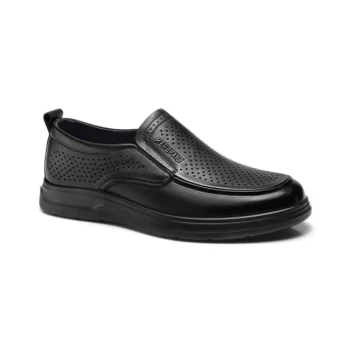
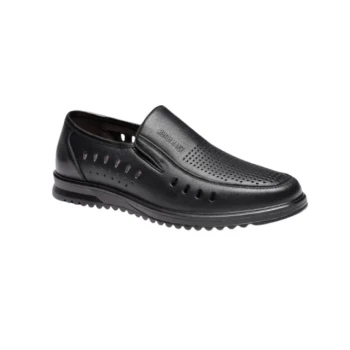
The core technologies in modern slip-resistant shoes focus on maximizing the sole's contact with the ground, actively channeling away liquids, and ensuring all-day comfort for the wearer. Innovations include specialized rubber compounds, microscopic tread patterns known as Nano-Grip, and sole designs engineered to prevent hydroplaning by draining fluids.
True slip resistance is not achieved by a single feature, but through a system of technologies working together. The most effective shoes combine an advanced outsole tread design with materials and features that manage environmental hazards while providing the comfort necessary for consistent, all-day use.
The Foundation: Maximizing Sole-to-Floor Contact
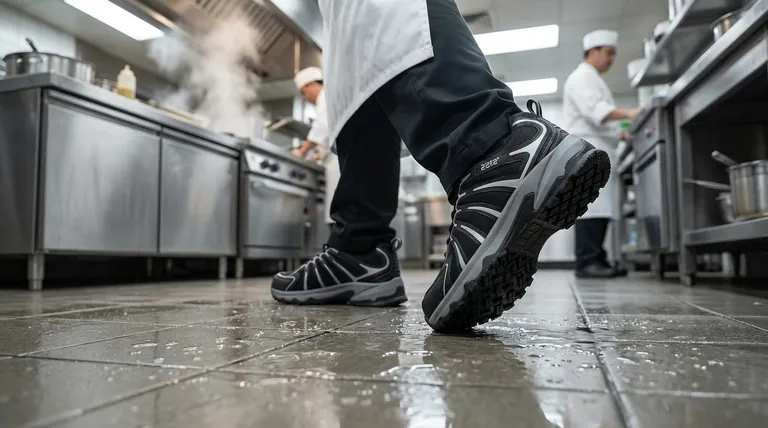
The primary goal of any slip-resistant shoe is to maintain as much friction as possible between the sole and the walking surface, even when contaminants like water or oil are present.
The Critical Role of Material
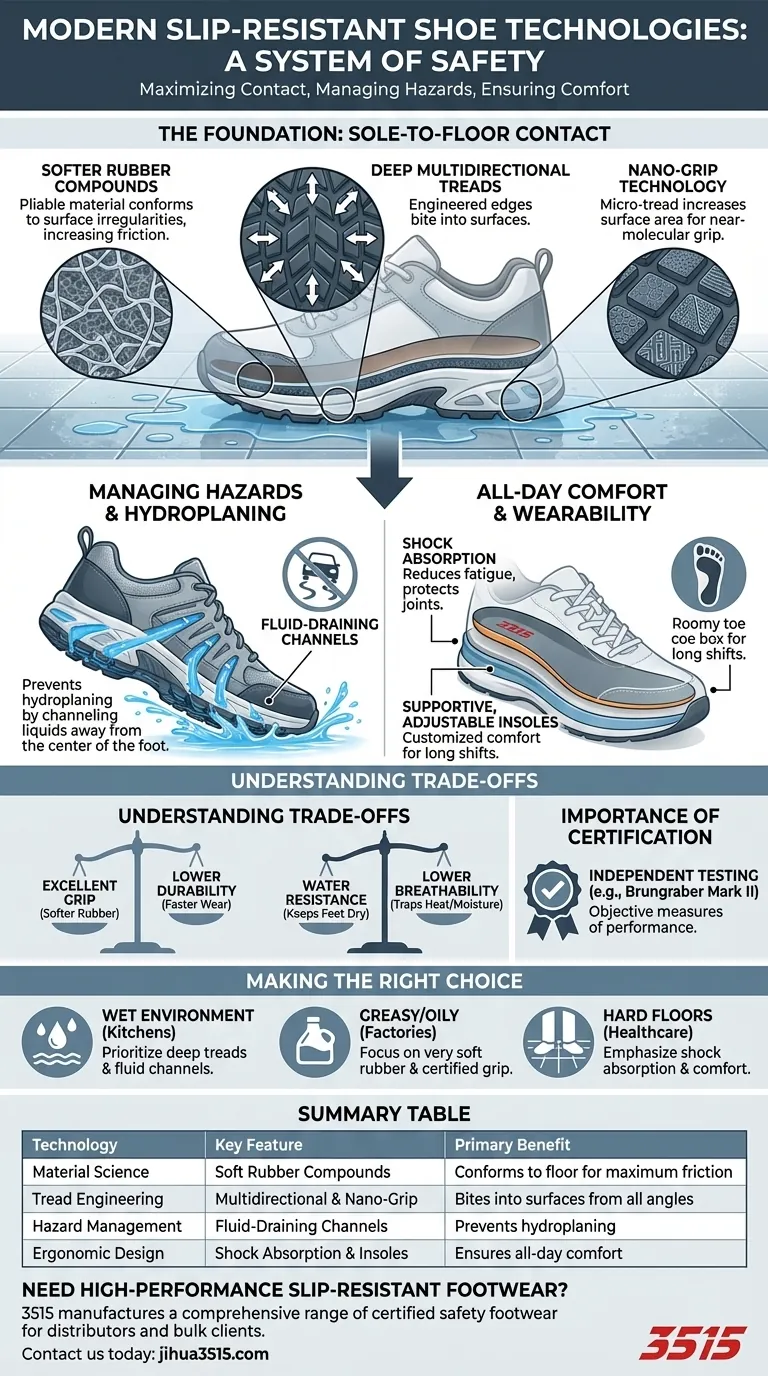
The outsole is typically made from a softer rubber compound. Unlike the harder rubber on a hiking boot, this softer material is more pliable and can conform better to microscopic irregularities on a floor surface, significantly increasing the contact area and grip.
The Science of Tread Design
Effective slip-resistant shoes feature deep, multidirectional grooves or tread patterns. These patterns are not random; they are engineered to create multiple sharp edges that can bite into the walking surface for better traction from any angle.
Pushing the Limits with Micro-Tread
Some of the most advanced shoes incorporate Nano-Grip technology. This involves creating microscopic patterns within the larger tread blocks, further increasing the sole's surface area to establish a secure grip at a near-molecular level.
Beyond Grip: Managing Workplace Hazards
A great tread is only part of the solution. The shoe must also be able to handle the specific environmental challenges that cause slips in the first place.
Preventing Hydroplaning
The most common cause of slipping is a thin layer of liquid that lifts the shoe off the floor, similar to a car hydroplaning on a wet road. Fluid-draining soles feature carefully designed channels that actively push liquids out and away from the center of the foot, ensuring the rubber tread stays in direct contact with the floor.
Ensuring All-Day Safety and Wearability
A shoe is only effective if it's worn. Modern designs incorporate ergonomic features to reduce fatigue and encourage consistent use. These include shock absorption materials in the midsole to protect joints and supportive, often adjustable insoles to provide customized comfort. A roomy toe box is also common to accommodate natural foot swelling over a long shift.
Understanding the Trade-offs
No single shoe is perfect for every situation. Understanding the inherent compromises in design is key to selecting the right tool for the job.
Grip vs. Durability
The softer rubber compounds that provide excellent grip also tend to wear down faster than harder materials. This means the most effective slip-resistant shoes may need to be replaced more frequently to maintain peak performance, a critical factor when considering long-term value.
Water Resistance vs. Breathability
While water resistance is crucial for keeping feet dry and safe from hot liquids or chemicals, it can also trap heat and moisture. This can lead to discomfort, making breathability an important consideration for workers in hot environments who are not exposed to significant splash hazards.
The Importance of Certification
Marketing claims can be misleading. Independent testing provides an objective measure of performance. Look for shoes that meet industry standards, such as those validated by the Brungraber Mark II Test or similar slip-resistance certifications, to ensure you are getting proven technology.
Making the Right Choice for Your Environment
Your specific workplace hazards should guide your final decision.
- If your primary focus is a wet environment (e.g., kitchens, dish rooms): Prioritize shoes with deep, open tread patterns and dedicated fluid-draining channels to prevent hydroplaning.
- If your primary focus is a greasy or oily environment (e.g., industrial factories, auto shops): Look for certified shoes made from a very soft rubber compound that can maintain grip on viscous fluids.
- If your primary focus is all-day comfort on hard floors (e.g., healthcare, event staff): Emphasize features like superior shock absorption, supportive insoles, and a lightweight, accommodating fit.
Ultimately, the best slip-resistant shoe is one that intelligently combines material science, tread engineering, and ergonomic design to solve the specific safety challenges you face every day.
Summary Table:
| Technology | Key Feature | Primary Benefit |
|---|---|---|
| Material Science | Soft Rubber Compounds | Conforms to floor for maximum friction |
| Tread Engineering | Multidirectional & Nano-Grip Patterns | Bites into surfaces from all angles |
| Hazard Management | Fluid-Draining Channels | Prevents hydroplaning on wet floors |
| Ergonomic Design | Shock Absorption & Supportive Insoles | Ensures all-day comfort and wearability |
Need high-performance, certified slip-resistant footwear for your team?
As a large-scale manufacturer, 3515 produces a comprehensive range of safety footwear for distributors, brand owners, and bulk clients. Our production capabilities encompass all types of slip-resistant shoes and boots, engineered with the latest technologies to protect your workforce and meet industry standards.
Contact us today to discuss your specific needs and discover how we can provide durable, comfortable, and certified safety solutions for your business.
Visual Guide
Related Products
- Heavy-Duty Waterproof Nubuck Safety Boots Safety Shoes for Bulk Supply
- Premium Suede Sport Safety Shoes for Wholesale & Bulk Orders
- Durable Leather Moc Toe Work Boots for Wholesale & Custom Manufacturing
- Advanced KPU Athletic Safety Shoe with Steel Toe Cap Anti-Slip Rotary Lacing System
- Durable High-Traction Canvas Sneakers Wholesale & Custom Manufacturing
People Also Ask
- What primary protective functions do professional safety boots provide in urban solid waste recovery and waste picking processes? Discover Dual-Layer Protection.
- How do safety boots reduce cutting hazards? Essential Protection for Your Workforce
- Which organizations develop safety standards for work boots? Ensure Compliance & Worker Safety
- What are the common types of safety boots and their primary uses? A Guide to Industrial Footwear
- Why is ankle and arch support important in safety footwear? Prevent Injury & Fatigue