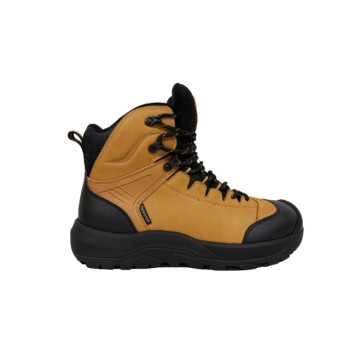
Piezoresistive polymer composite sensors provide a critical balance between high-fidelity measurement and physical unobtrusiveness. Technically, they distinguish themselves through a broad pressure-sensing range of 1 to 5 kg/cm², high sensitivity that remains stable under frequent plantar impact, and an ultra-thin profile derived from micro-machining techniques that allows for seamless integration into insoles without altering the wearer's gait.
The core value of this technology lies in its ability to deliver laboratory-grade stability and sensitivity within a form factor that is sufficiently thin and comfortable for long-term, daily monitoring in real-world scenarios.
Performance and Data Integrity
Broad Dynamic Sensing Range
These sensors are engineered to handle a pressure variance specifically between 1 and 5 kg/cm². This range is critical for capturing the nuances of plantar pressure, covering everything from light shifting of weight to the peak forces exerted during a standard gait cycle.
Stability Under Repetitive Stress
Footwear sensors face a unique challenge: the constant, repetitive impact of walking. Piezoresistive polymer composites maintain high stability despite these frequent plantar impacts, ensuring that data accuracy does not degrade over the course of a day.
High Sensitivity
The material properties of the composite allow for rapid response to pressure changes. This ensures that the sensor captures immediate fluctuations in weight distribution, providing a granular view of biomechanical movement.
Physical Integration and Usability
Micro-Machined Form Factor
The sensors are manufactured using precise micro-machining techniques. This manufacturing process is what enables the creation of the sensor's extremely low-profile architecture.
Ultra-Thin Profile
Because the sensors are physically ultra-thin, they do not add significant bulk to the insole. This prevents the "princess and the pea" effect, where a bulky sensor might cause discomfort or force the user to alter how they walk to avoid irritation.
Suitability for Long-Term Monitoring
The combination of durability and physical imperceptibility makes these sensors ideal for long-term daily use. They can be deployed across various footwear types without requiring the user to compromise on comfort, ensuring higher compliance and more consistent data collection.
Understanding the Operational Limits
Defined Pressure Ceiling
While the sensing range is broad, it is not infinite. The sensors are optimized for the 1 to 5 kg/cm² window. Applications requiring the measurement of extreme impact forces exceeding this threshold may require alternative or supplemental sensing solutions to avoid signal saturation.
Making the Right Choice for Your Goal
To maximize the value of piezoresistive polymer composite sensors, align their specifications with your specific monitoring objectives:
- If your primary focus is gait analysis in daily life: These sensors are ideal because their ultra-thin profile ensures the user walks naturally, providing valid, uncompensated biomechanical data.
- If your primary focus is durability during active use: The material's stability under frequent impact makes it a reliable choice for monitoring continuous walking or standing without rapid sensor degradation.
- If your primary focus is versatile deployment: The ability to integrate these thin sensors into various footwear types allows for a single sensing solution across a diverse user base.
Success with smart insoles depends on selecting a sensor that survives the environment while remaining invisible to the user.
Summary Table:
| Feature | Technical Advantage | Impact on User Experience |
|---|---|---|
| Sensing Range | 1 to 5 kg/cm² | Captures full gait cycle from light shifting to peak force |
| Profile Thickness | Ultra-thin micro-machined design | Seamless integration without altering natural gait |
| Durability | High stability under frequent impact | Reliable long-term data without performance degradation |
| Sensitivity | Rapid response to pressure changes | Granular, real-time biomechanical movement tracking |
Elevate Your Footwear Line with Advanced Smart Sensing Technology
As a large-scale manufacturer serving global distributors and brand owners, 3515 offers more than just production—we provide the technical expertise to integrate cutting-edge features into high-performance footwear. Whether you are looking to develop specialized Safety Shoes, tactical boots, or smart training sneakers, our comprehensive production capabilities ensure your products lead the market in both innovation and durability.
Why partner with 3515?
- Flagship Quality: Industry-leading standards in Safety and Work footwear.
- Versatile Portfolio: Expertise across outdoor, athletic, and formal dress shoes.
- Scalable Solutions: Optimized for bulk requirements and brand-specific customization.
Ready to transform your footwear offerings? Contact us today to discuss your project and see how our manufacturing excellence can drive your brand's success.
References
- Hsiao‐Lung Chan, Ya‐Ju Chang. Deep Neural Network for the Detections of Fall and Physical Activities Using Foot Pressures and Inertial Sensing. DOI: 10.3390/s23010495
This article is also based on technical information from 3515 Knowledge Base .
Related Products
- Wholesale Durable Safety Boots Manufacturer Customizable Steel Toe Work Boots
- Lightweight Breathable Sneakers with Wet-Traction Grip for Wholesale & Private Label
- Wholesale Breathable Athletic Sneakers - Custom Lightweight Cushioned Footwear Manufacturer
- Durable Rubber Sole Outdoor Shoes Wholesale & Custom Manufacturing
- Durable Leather Work Boots for Wholesale & Custom Manufacturing
People Also Ask
- What are the pros and cons of steel toe work boots? A Guide to Maximum Protection vs. Comfort
- What are the different types of steel toe work boots? Choose the Right Boot for Your Job
- What is the history of steel toe work boots? From German Invention to Modern Safety Standard
- How much weight can steel toe work boots withstand? Unpacking the 3,372 lb. Safety Standard
- What are some common myths about steel toe work boots? Debunked for Modern Workers